
You search for Troll Coin and suddenly hit a wall of confusion. Is it one thing? Three things? Ten? Here’s the messy truth: "Troll Coin" isn’t a single asset. It’s a brand name slapped onto several different cryptocurrencies over the last decade. Some are old-school mining projects from 2014. Others are shiny new meme tokens on Solana or Ethereum. They share a ticker-TROLL-and a vibe, but they have almost nothing else in common.
If you’re trying to buy, mine, or just understand what people are talking about, you need to know which TROLL you’re looking at. One has a market cap of $50 million. Another barely clears $30,000. Mixing them up could cost you real money. This guide breaks down the family tree, explains how they work, and tells you what each one actually does.
The Original Trollcoin: The 2014 Legacy Chain
Trollcoin (one word) is the grandfather of this whole mess. Launched on March 14, 2014, by an anonymous developer, it started as a parody currency. Think of it as the crypto equivalent of a joke that stuck around too long. Later, a project lead named Karl Wickman took over management, steering it away from pure chaos toward a niche utility: tipping.
This isn’t just a token on someone else’s blockchain. It runs on its own decentralized network. Technically, it uses a hybrid consensus mechanism. That means it combines Proof-of-Work (using the Scrypt algorithm, similar to Litecoin) with Proof-of-Stake. Why bother with both? It allows hobbyist miners to secure the network while letting holders earn rewards by staking their coins. The total supply is capped at roughly 592.8 million TROLL.
So, why would anyone use a coin from 2014 today? Mostly for nostalgia and specific social integrations. The original Trollcoin ecosystem built tools like the "Trollcoinbot," which allowed users to tip streamers on Twitch or friends on Twitter using TROLL. It’s a micro-cap asset, hovering around a $460,000 market cap as of late August 2026. Liquidity is thin. You won’t find it on major exchanges like Binance or Coinbase easily. It lives in the dark corners of legacy forums and specialized altcoin exchanges. If you see "TROLL" priced under $0.001 with low volume, you’re likely looking at this legacy chain.
Solana TROLL: The Modern Meme Powerhouse
Now, let’s jump to the big player. When most traders talk about TROLL in 2026, they mean the Solana-based memecoin. This token exploded in popularity, riding the wave of Solana’s high-speed, low-cost transactions. Unlike the 2014 version, this TROLL has no mining, no staking rewards, and no complex consensus mechanism. It’s a pure speculative asset driven by community hype and internet culture.
The numbers tell the story. As of August 30, 2026, Solana TROLL commands a market capitalization near $49.8 million. Daily trading volumes exceed $2.6 million. Compare that to the original Trollcoin’s few hundred thousand dollars in value, and the difference is stark. This token leverages the "troll face" meme aesthetic, appealing to degens who want fast trades and viral potential.
However, high reward comes with high risk. Data shows that nearly half of the total supply sits in the wallets of a few large holders, often called whales. If one whale decides to sell, the price can crash instantly. In May 2026, TROLL jumped 80% in a single day during a speculation mania, only to correct sharply afterward. There is no intrinsic utility here. No tipping bots. No merchandise stores. Just pure entertainment and gambling on sentiment. If you’re buying Solana TROLL, you’re betting on the community staying loud, not on the technology solving a problem.
Cronos and Ethereum Variants: The Middle Children
Between the legacy chain and the Solana giant sit two other notable implementations: Cronos TrollCoin and Ethereum TROLL. These are smart-contract tokens, meaning they don’t have their own blockchains. They live on existing networks.
Cronos TrollCoin operates on the Cronos Chain, an EVM-compatible blockchain backed by Crypto.com. Its main gimmick is deflation. Every time someone sells the token, 1% of the transaction is burned forever. Theoretically, this reduces supply over time, creating scarcity. But in practice, the market cap remains tiny-around $26,000 to $30,000. It’s a ghost town compared to Solana TROLL. Liquidity pools are shallow, meaning a $500 buy order can move the price significantly. It’s popular among a small, dedicated group of "Crofam" members, but it hasn’t broken out into the mainstream.
Then there’s the Ethereum version, often branded under TrollERC20. This token markets itself aggressively as "pure troll energy." It rejects the idea of utility entirely. No promises of future apps, no partnerships. Just memes. With a price hovering around $0.000018, it sees modest daily volume of about $98,000. It serves as a social identity token for Ethereum users who enjoy the trolling aesthetic but prefer the security and familiarity of the Ethereum network. Like its Cronos cousin, it lacks significant liquidity or development activity beyond marketing campaigns.

Comparing the TROLL Family
To keep things straight, look at the attributes side-by-side. Each entity solves a different problem-or no problem at all.
| Feature | Original Trollcoin (2014) | Solana TROLL | Cronos TrollCoin | Ethereum TROLL |
|---|---|---|---|---|
| Blockchain | Custom PoW/PoS Chain | Solana | Cronos | Ethereum |
| Market Cap (Aug 2026) | ~$460,000 | ~$49.8 Million | ~$30,000 | ~$18,000 |
| Total Supply | 592.8 Million | 1 Billion | 1 Billion | Varies |
| Main Use Case | Tipping, Mining | Speculation, Memes | Deflationary Trading | Social Identity |
| Liquidity | Low | High | Very Low | Low |
| Risk Level | Medium (Niche) | High (Volatility) | Extreme (Illiquidity) | High (Hype-dependent) |
How to Buy and Interact with Each TROLL
Your strategy depends entirely on which coin you choose. For the Original Trollcoin, you might need to compile software if you want to run a full node. Users typically download the Qt wallet, install dependencies like Berkeley DB, and sync the blockchain. It’s technical. Alternatively, you can buy it on smaller exchanges like CoinEx or TradeOgre. Once you have it, you can send it to the Trollcoin Cloud Platform to tip on Twitch or Discord. It feels like using an old-school digital currency.
For Solana TROLL, the process is modern and frictionless. Connect a Phantom or Solflare wallet to a DEX like Raydium or Jupiter. Swap SOL for TROLL directly. Gas fees are negligible, often less than a cent. Because of the high volume, you can enter and exit positions quickly. However, always check the contract address. Scammers love to create fake copies of popular Solana memes. Verify the token address through CoinGecko or the official project channel before swapping.
Buying Cronos or Ethereum TROLL requires bridging assets if you aren’t already on those chains. For Cronos, connect MetaMask to the Cronos network. Swap WCRO for TROLL on MM Finance. Be careful with slippage settings; because liquidity is so low, a standard 1% slippage might fail your trade. You may need to set it to 5% or higher, which increases your cost basis. For Ethereum TROLL, simply swap ETH for TROLL on Uniswap. Watch out for gas fees, which can sometimes exceed the value of small trades.
The Risks: Whales, Hype, and Obsolescence
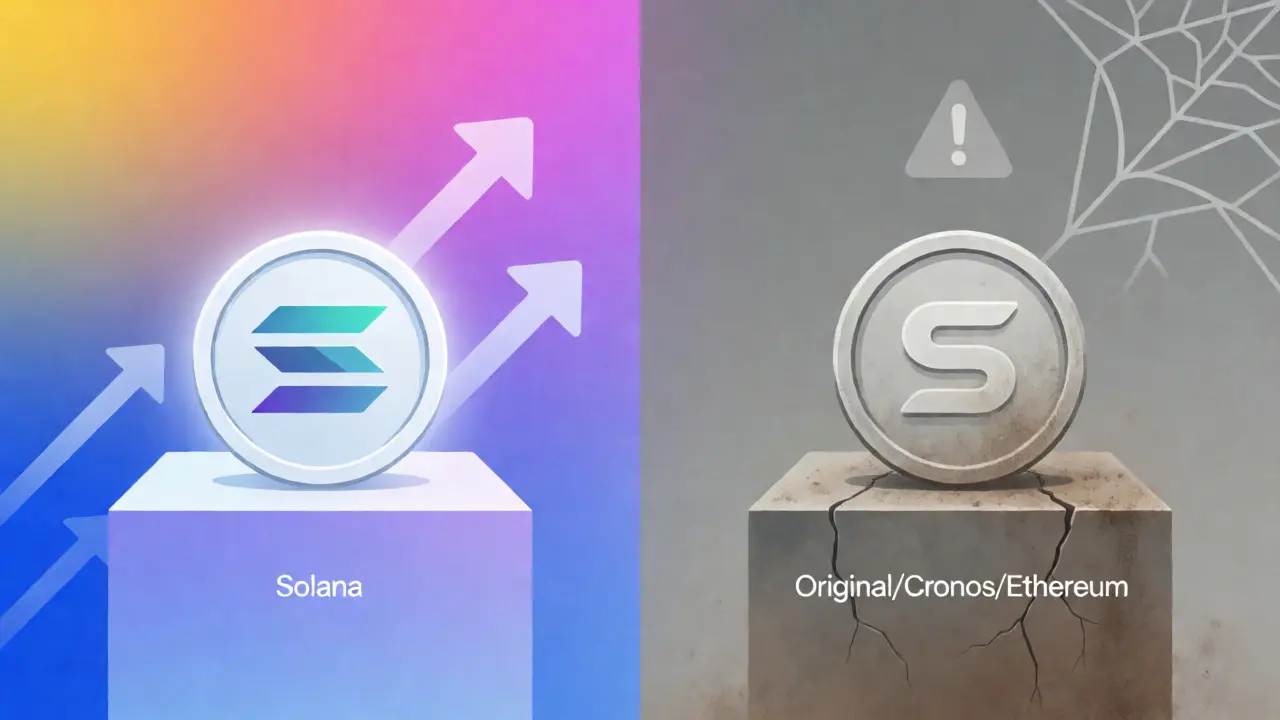
Investing in any TROLL variant is risky. The primary danger for Solana TROLL is concentration. If the top ten wallets hold 40-50% of the supply, they control the narrative. A coordinated sell-off can wipe out retail investors’ gains in minutes. There is no fundamental floor price. The value exists only because people believe others will pay more later.
For the older variants like Original Trollcoin and Cronos TrollCoin, the risk is irrelevance. Technology moves fast. The 2014 codebase is ancient by crypto standards. While it still works, it lacks the features of modern chains. Smart contracts are limited, and developer activity is sparse. If the community loses interest, these coins can slowly bleed value until they become untradeable ghosts. The Cronos version faces competition from newer, flashier memes on the same chain. Without constant marketing, it risks being forgotten.
Don’t confuse branding with backing. Just because Elon Musk once added "Chief Troll Officer" to his bio doesn’t mean he invested in Solana TROLL. Correlation is not causation. Always do your own research on the actual tokenomics, not just the headlines.
Frequently Asked Questions
Is Troll Coin the same as Dogecoin?
No. While both are meme coins, they differ significantly. Dogecoin launched in 2013, has a massive community, and uses a Proof-of-Work algorithm similar to Bitcoin. Troll Coin refers to multiple assets, including the 2014 Trollcoin and newer Solana/Ethereum tokens. Dogecoin has far higher liquidity, adoption, and market cap than any TROLL variant.
Can I mine Troll Coin?
You can mine the original 2014 Trollcoin using Scrypt miners. However, the newer Solana, Ethereum, and Cronos TROLL tokens cannot be mined. They are pre-mined or minted via smart contracts and distributed through sales or liquidity pools.
Which TROLL has the highest market cap?
As of August 2026, the Solana-based TROLL token has the highest market cap, valued at approximately $49.8 million. The original Trollcoin is second, with a market cap around $460,000. The Cronos and Ethereum versions are significantly smaller.
Does Troll Coin have real utility?
Utility varies. The original Trollcoin supports tipping on platforms like Twitch via bots. Solana TROLL has no inherent utility beyond speculation and community engagement. Cronos TrollCoin offers a deflationary burn mechanism. Most analysts view these assets primarily as speculative instruments rather than functional currencies.
Where can I buy Solana TROLL?
You can buy Solana TROLL on decentralized exchanges like Raydium, Jupiter, or Orca. Some centralized exchanges may also list it, but DEXs offer the most direct access. Ensure you are using the correct contract address to avoid scams.
Final Thoughts: Which TROLL Fits Your Portfolio?
If you’re a collector or nostalgic for early crypto days, the original Trollcoin offers a tangible piece of history. It’s cheap, active enough to interact with, and technically interesting due to its hybrid consensus. If you’re a trader chasing volatility and quick flips, Solana TROLL provides the liquidity and momentum you need. Just remember to take profits when the hype peaks.
For everyone else, the Cronos and Ethereum variants are largely dead weight unless you have a specific reason to hold them. They lack the volume to support serious trading and the utility to justify long-term holding. Always verify the ticker and blockchain before sending funds. In the world of meme coins, a wrong click can mean losing your entire position to a copycat scam.
Author
Ronan Caverly
I'm a blockchain analyst and market strategist bridging crypto and equities. I research protocols, decode tokenomics, and track exchange flows to spot risk and opportunity. I invest privately and advise fintech teams on go-to-market and compliance-aware growth. I also publish weekly insights to help retail and funds navigate digital asset cycles.