
Everyone wants the next big thing. You scroll through Twitter, see a flashy logo, and wonder if you can get in early on the next WENLAMBO (WLBO) success story. But here is the cold truth: most "airdrops" in the meme coin space aren't what they seem. They are often just complex fee structures disguised as free money. If you are looking for WLBO airdrop details, you need to understand that this project doesn't have a traditional one-time distribution event like Ethereum or Arbitrum did. Instead, it uses an ongoing reflection model. Let's break down exactly how this works, where your tokens come from, and whether the hype matches the reality.
How the WLBO Reward System Actually Works
You might be asking, "Where do I claim my airdrop?" The answer is simple: you don't. In the world of WLBO, a deflationary BEP-20 token on the Binance Smart Chain, the "airdrop" is built into every transaction. It’s a continuous passive income mechanism rather than a snapshot-based giveaway. When someone buys or sells WLBO, a 10% tax is taken. This isn't just going into a developer's pocket. It gets split three ways:
- 4% Holder Reflections: This portion is redistributed to all existing holders. Your wallet balance grows automatically without you doing anything. This is the closest thing to an "airdrop" you will find here.
- 4% Charity Wallet: The project claims to donate this amount quarterly to various causes. This adds a moral layer to the speculative trading.
- 2% Burn: These tokens are sent to a dead address, permanently removing them from circulation. This reduces supply, theoretically supporting the price if demand stays steady.
This structure means your "airdrop" depends entirely on other people trading. If trading volume dries up, your reflections stop. It is a zero-sum game where new buyers pay for the rewards of old holders. Understanding this dynamic is crucial before you put any money into WLBO.
Tokenomics and Supply Breakdown
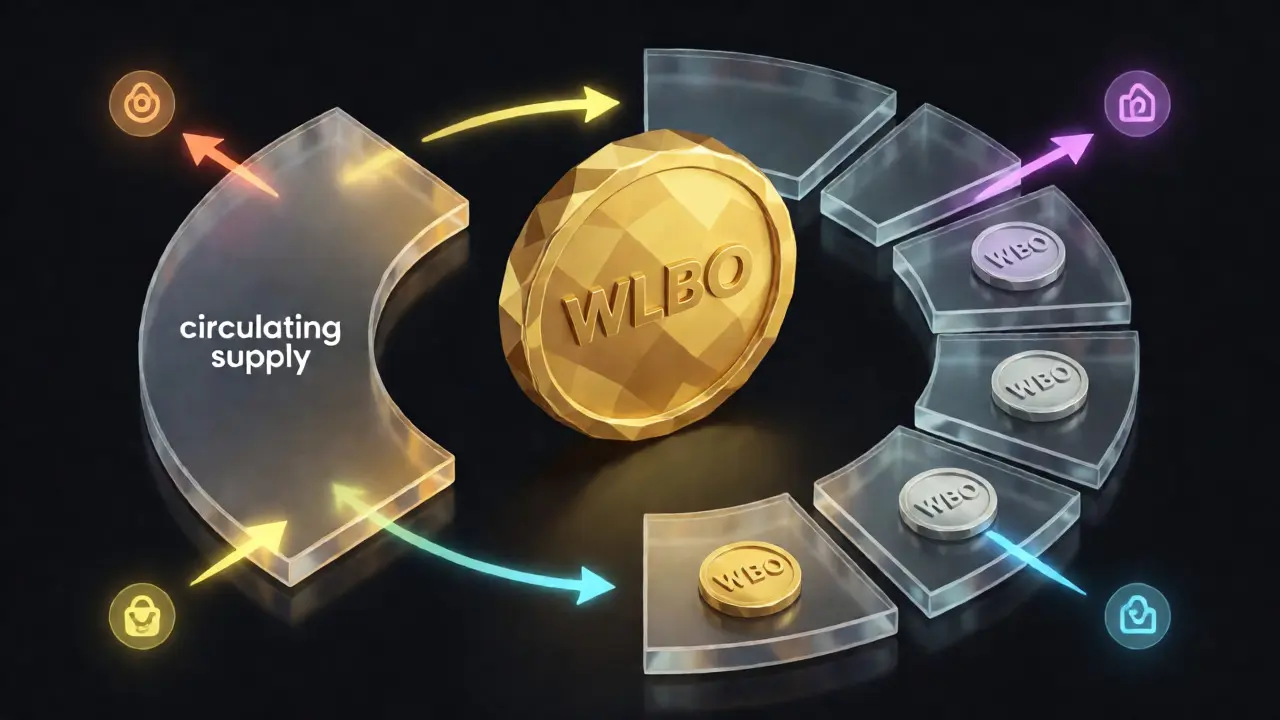
To judge the potential of any crypto asset, you look at the numbers. WENLAMBO launched with a total supply of 100 million tokens. As of recent reports, about 56 million are circulating. That leaves a significant chunk locked or burned, but the exact status of the remaining supply needs verification from the smart contract directly, not just marketing pages.
| Metric | Value | Impact on User |
|---|---|---|
| Total Supply | 100,000,000 WLBO | Limited scarcity compared to Bitcoin. |
| Circulating Supply | ~56,000,000 WLBO | High liquidity available for trading. |
| Transaction Tax | 10% | High friction; requires strong volume to profit. |
| Network | Binance Smart Chain (BEP-20) | Low gas fees, easy wallet integration. |
| Reward Mechanism | Reflection & Burn | Passive accumulation via holder taxes. |
The 10% tax is high by modern standards. Many newer projects use 2-5% taxes to encourage frequent trading. With WLBO, you need a 10% price increase just to break even on a buy-sell cycle, plus the spread. This makes short-term scalping difficult unless the market is extremely bullish.
The "Lambo" Branding and Community Giveaways
The name WENLAMBO plays heavily on the crypto meme culture of "When Lambo?" The project tries to lean into this with community events. While there is no massive initial airdrop campaign documented in major news outlets, the team has mentioned weekly giveaways. These aren't automatic drops to everyone who holds a single token. They are typically raffles or contests requiring social media engagement, such as retweeting posts or joining Telegram groups.
Prizes range from additional WLBO tokens to experiential rewards, like track days driving Lamborghini vehicles. This aligns with the branding but serves mostly as marketing fuel. If you are hunting for a WLBO airdrop, keep an eye on their official social channels for these specific contest announcements. Don't expect free tokens just for holding; you usually have to work for the extra prizes.
Market Performance and Liquidity Risks
Here is where things get tricky. Recent data shows WLBO trading at near-zero prices with minimal 24-hour change. This isn't necessarily a bug; it reflects low trading volume. In the meme coin sector, liquidity is king. If the liquidity pool is shallow, a small sell order can crash the price by 20% or more. Conversely, a small buy order can spike it. For WLBO, the lack of significant volume suggests it may have passed its peak hype cycle or failed to sustain community interest after launch.
Compare this to active airdrop farming on platforms like Hyperliquid or Base, where users interact with protocols to earn points. WLBO relies on passive holding. If the community shrinks, the reflections dry up because fewer transactions mean less tax collected to redistribute. It is a fragile ecosystem dependent on constant new blood entering the chart.
Is WLBO Worth Your Time?
If you are a beginner, you might think this is a safe bet because of the charity angle. However, "charity" in crypto often lacks transparency. Has WLBO actually donated? Who received the funds? Without independent audits or clear proof-of-donation links, treat the charity claim as marketing until proven otherwise. The real value proposition here is speculation on the meme narrative, not utility or technology.
For experienced traders, WLBO represents a high-risk, high-reward play typical of BSC reflection tokens. The deflationary burn helps long-term scarcity, but only if the token survives the initial hype decay. Most similar tokens fade into obscurity within six months. Check the lock status of the liquidity pool. If the developers haven't locked the LP tokens, they could pull the rug anytime, rendering your "airdropped" reflections worthless.
Strategies for Engaging with WLBO
If you decide to participate, don't just buy and pray. Here is a practical approach:
- Verify the Contract Address: Always copy the contract address from CoinMarketCap or CoinGecko. Scam clones with similar names are rampant on BSC.
- Monitor Volume: Use tools like DEXTools to watch daily trading volume. If volume drops below $5,000 per day, exit strategy should be considered.
- Participate in Contests: Since there is no mass airdrop, engage in their social giveaways to offset your entry cost.
- Set Stop-Losses: Given the volatility, automated stops can protect you from sudden dumps caused by whale exits.
Remember, the "airdrop" in WLBO is essentially a yield farming mechanism powered by transaction taxes. It pays out when others trade. If you are the last one holding when the music stops, you are left holding the bag.
Does WLBO have a traditional airdrop registration?
No, WLBO does not require sign-ups for a standard airdrop. Its primary reward system is automatic reflection, where 4% of transaction fees are distributed to all current holders. Any additional giveaways are usually contest-based and announced on social media.
What network is WLBO built on?
WLBO operates on the Binance Smart Chain (BSC) using the BEP-20 standard. This allows for low transaction fees and compatibility with wallets like MetaMask and Trust Wallet.
Why is the WLBO price so low?
The low price is largely due to high supply (100 million tokens) and potentially low trading volume. In meme coins, price is driven by hype and liquidity depth rather than fundamental utility. Low volume leads to price stagnation or decline.
Are the charity donations verified?
Verification varies. While the project states 4% goes to charity, independent confirmation of recipients and amounts is often limited in smaller meme projects. Always check their official channels for proof of donation receipts.
Can I lose money quickly with WLBO?
Yes. Meme coins are highly volatile. The 10% transaction tax also creates friction, meaning you need significant price appreciation to cover buying and selling costs. Liquidity risks are present if the pool is not locked.
Author
Ronan Caverly
I'm a blockchain analyst and market strategist bridging crypto and equities. I research protocols, decode tokenomics, and track exchange flows to spot risk and opportunity. I invest privately and advise fintech teams on go-to-market and compliance-aware growth. I also publish weekly insights to help retail and funds navigate digital asset cycles.