
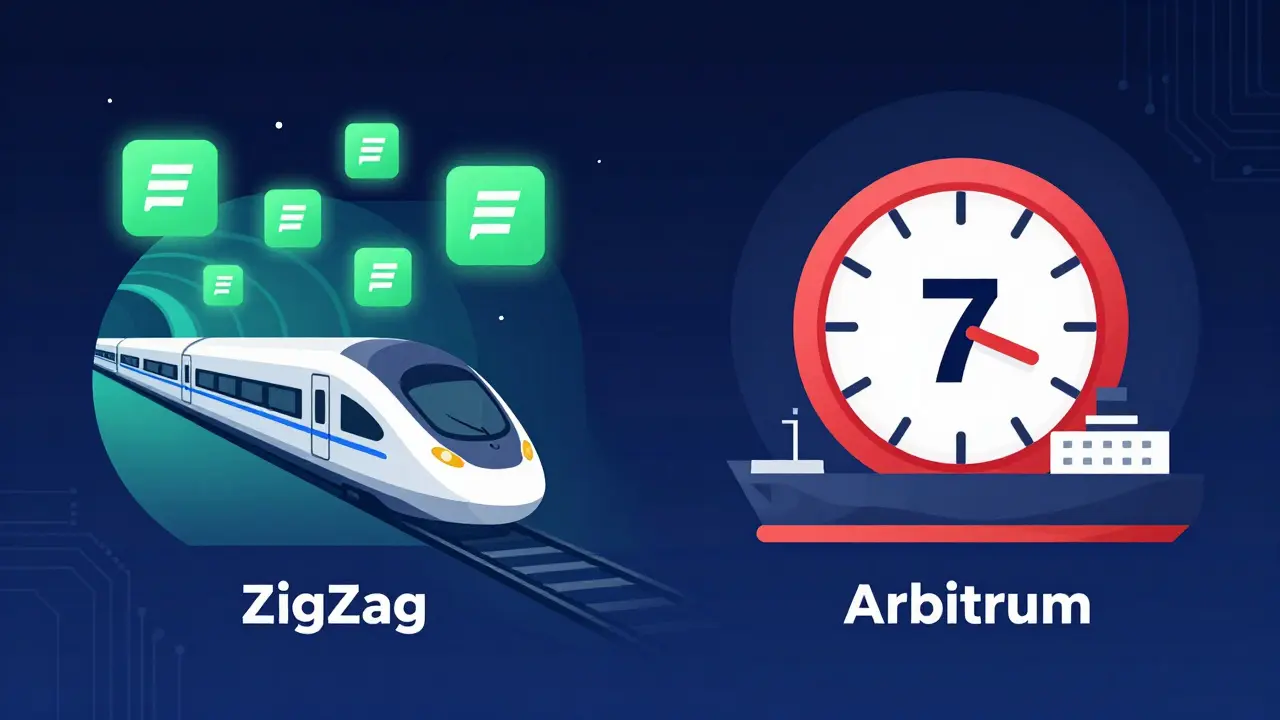
There is a common misconception in the crypto space right now. Many traders assume ZigZag operates on Arbitrum, a popular Layer 2 scaling solution for Ethereum. It’s an easy mistake to make because both are high-performance solutions aiming to fix Ethereum’s congestion. But here is the truth that changes how you should trade: ZigZag does not run on Arbitrum. Instead, it uses its own proprietary ZK-Rollup, a zero-knowledge proof technology that batches transactions off-chain and posts validity proofs to Ethereum infrastructure. This distinction isn’t just technical jargon; it affects your speed, privacy, and the tokens you hold.
If you clicked this looking for a guide on using ZigZag within the Arbitrum ecosystem, you might be disappointed. But if you want to understand why ZigZag exists as a standalone powerhouse and whether it beats Arbitrum-based exchanges like Uniswap or GMX, you’re in the right place. Let’s break down what makes ZigZag unique, how its $ZZ token works, and why the tech stack matters more than you think.
Quick Summary / Key Takeaways
- ZigZag is not on Arbitrum: It runs on its own ZK-Rollup layer, offering instant finality without the 7-day withdrawal window of Optimistic Rollups.
- Lower Fees: Average trading fees on ZigZag are around 0.3%, compared to 0.5-1.0% on many other DEXs.
- $ZZ Token Utility: The token offers governance rights and direct revenue sharing from platform fees, unlike pure governance tokens.
- Privacy & Speed: ZK-Rollups provide enhanced privacy and near-instant settlement, though they require more computational power.
- Ecosystem Trade-off: While ZigZag is faster, it lacks the massive DeFi interoperability of Arbitrum, which hosts over $3.2 billion in TVL.
The Core Misconception: ZigZag vs. Arbitrum Tech Stacks
To get the most out of your trades, you need to know what’s happening under the hood. The biggest difference between ZigZag and Arbitrum is their approach to scaling Ethereum.
Arbitrum uses Optimistic Rollups, a scaling method that assumes transactions are valid by default and only checks them if challenged. This means when you withdraw funds from Arbitrum to Ethereum mainnet, there is a mandatory 7-day challenge period. During this time, anyone can dispute the transaction if it was fraudulent. For casual holders, this is fine. For active traders who need liquidity fast, it’s a headache.
ZigZag, on the other hand, relies on Zero-Knowledge Proofs, cryptographic methods that allow one party to prove knowledge of a value without revealing the value itself. Every batch of transactions on ZigZag comes with a mathematical proof of validity posted directly to Ethereum. There are no challenge periods. When you trade or withdraw, the finality is near-instant.
This architectural choice has real-world consequences. According to data from late 2025, Arbitrum processes over 40,000 transactions per second (TPS) with high throughput, but those withdrawals still sit in limbo for days. ZigZag’s ZK-Rollup ensures that once a trade is confirmed, it is settled. However, generating these ZK-proofs requires significant computational power, which can sometimes lead to higher gas costs during extreme network congestion, though typically ZigZag remains cheaper for swaps.
Trading Experience: Fees, Speed, and Interface
When you actually sit down to trade, the differences become apparent. ZigZag positions itself as a professional-grade decentralized exchange (DEX). Unlike typical automated market makers (AMMs) like Uniswap, which rely on liquidity pools, ZigZag uses an order book model similar to centralized exchanges like Binance.
This means you can set limit orders, stop-losses, and see the depth of the market in real-time. For day traders, this is a game-changer. You aren’t subject to slippage in the same way you are on AMMs. Your order executes at the price you want, provided there is matching liquidity.
Let’s talk about cost. In a competitive market, fees matter. ZigZag charges an average fee of 0.3% per trade. Compare this to the industry standard of 0.5% to 1.0% on many other DEXs, and the savings add up quickly for high-volume traders. If you’re moving $10,000 in volume daily, that 0.2% difference saves you $20 a day, or roughly $600 a month.
However, the user experience comes with a caveat. Because ZigZag is built on specialized ZK technology, the developer documentation is less mature than Arbitrum’s. Arbitrum boasts a Developer Hub with over 147 API endpoints and extensive sample code. ZigZag’s resources are thinner. If you are a developer looking to build a bot or integrate with the exchange, you’ll find Arbitrum much easier to work with. For the average trader, the interface is intuitive, but customer support response times can lag, with some users reporting waits of up to 72 hours for complex issues.
The $ZZ Token: Governance Meets Revenue Sharing
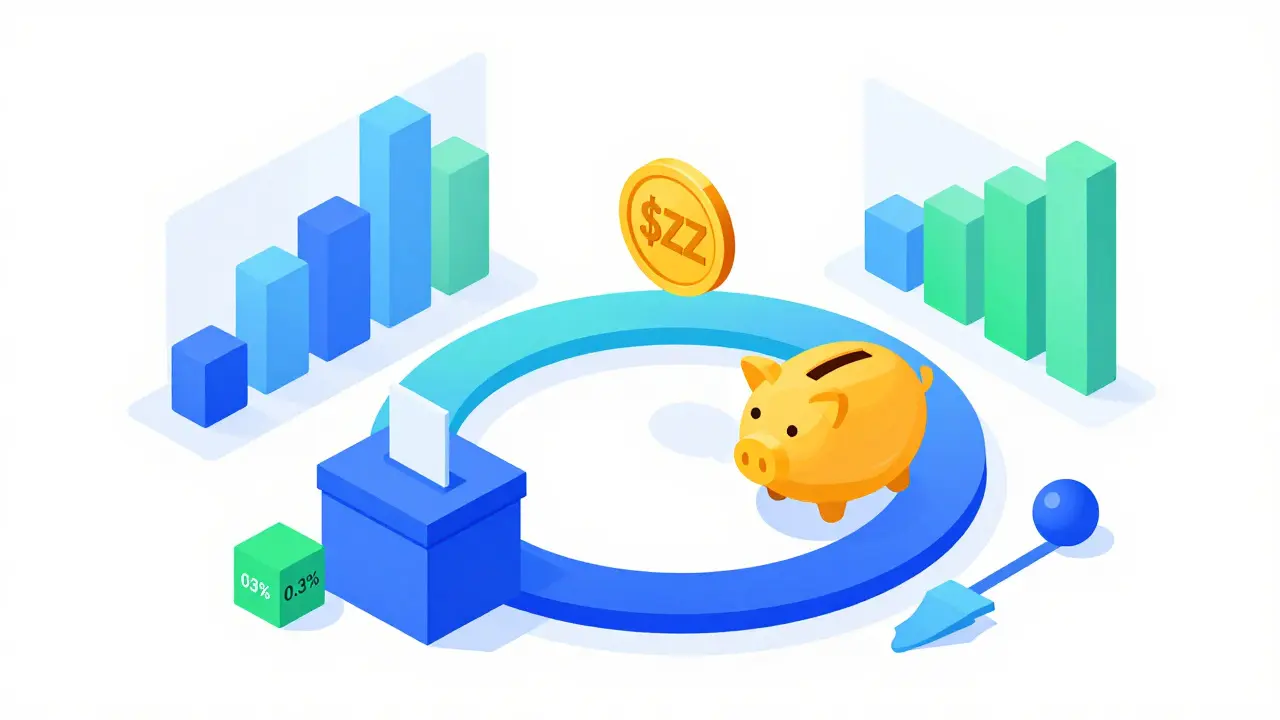
One of the most compelling aspects of ZigZag is its native token, $ZZ, the governance and utility token of the ZigZag exchange. Launched with a total supply of 100 million tokens, the distribution model was heavily skewed toward the community. About 60.7% of the supply went to ecosystem development, community contributors, and airdrops.
But what can you do with $ZZ? Unlike the ARB token on Arbitrum, which is primarily used for voting on protocol upgrades, $ZZ has a direct economic link to the platform’s performance. Holders are entitled to a portion of the trading fees generated on the platform. This creates a flywheel effect: as more people trade on ZigZag, more fees are generated, and more value accrues to $ZZ holders.
This model aligns the interests of the team and the users. If the exchange grows, the token benefits. If the exchange stagnates, the token suffers. It’s a riskier proposition than holding a stablecoin, but the upside potential is significantly higher for those who believe in the longevity of ZK-Rollup technology.
| Feature | ZigZag (ZK-Rollup) | Arbitrum Ecosystem (Optimistic Rollup) |
|---|---|---|
| Technology | ZK-Rollup (Validity Proofs) | Optimistic Rollup (Fraud Proofs) |
| Withdrawal Finality | Near-Instant | 7-Day Challenge Period |
| Average Trading Fee | ~0.3% | Varies (0.05% - 1.0%) |
| Token Utility ($ZZ vs ARB) | Governance + Revenue Share | Governance Only |
| Total Value Locked (TVL) | Not Disclosed (Smaller) | Over $3.2 Billion |
| Developer Support | Limited Documentation | Extensive (147+ APIs) |
Market Position and Ecosystem Integration
Here is where the trade-offs get serious. While ZigZag offers superior speed and fee structures for specific use cases, it lacks the massive ecosystem integration of Arbitrum. As of late 2025, Arbitrum hosts major DeFi protocols like Uniswap, Aave, GMX, and Radiant. Its Total Value Locked (TVL) exceeds $3.2 billion, representing 28% of all Ethereum Layer 2 solutions.
ZigZag operates as a standalone exchange. You don’t have seamless access to the broader DeFi landscape. If you want to lend your assets on Aave or provide liquidity on Uniswap, you have to bridge out of ZigZag and into Arbitrum or Ethereum mainnet. This friction is a significant disadvantage for users who want a "one-stop-shop" experience.
Furthermore, Arbitrum’s dominance is reinforced by initiatives like the $215 million Gaming Catalyst Program, which aims to attract gaming projects to the chain. Circle’s Cross-Chain Transfer Protocol (CCTP) v2.0 also enables seamless USDC transfers between Arbitrum, Ethereum, and other networks like Base and Avalanche. ZigZag does not currently benefit from this level of institutional backing or cross-chain interoperability.
For arbitrageurs, this disconnect can be an opportunity. Price discrepancies between ZigZag and Arbitrum-based exchanges can be lucrative, but exploiting them requires sophisticated bots due to the differing settlement times and bridging complexities. It’s not a strategy for the faint of heart.

User Sentiment and Community Engagement
How do users feel about ZigZag? The platform gained significant traction during its initial airdrop in December 2022, which qualified 92,000 addresses based on trading activity. This suggests a strong early adopter base. Users were drawn to the low fees and the promise of future token utility.
However, post-airdrop sentiment is mixed. While traders praise the speed and low costs, complaints often center around the lack of robust customer support and the steep learning curve for new users unfamiliar with ZK-rollups. In contrast, Arbitrum-based platforms like MM Finance receive higher ratings for ease of use, though they suffer from similar support delays.
Reddit discussions and community forums frequently highlight reduced gas fees as the primary benefit of Layer 2 solutions. On Arbitrum, transaction costs are 95% lower than Ethereum mainnet during peak congestion. ZigZag matches this efficiency but adds the layer of privacy and instant finality. For users prioritizing security and speed over ecosystem breadth, ZigZag remains a top contender.
Future Outlook: Consolidation or Independence?
Looking ahead to 2026 and beyond, the Layer 2 landscape is consolidating. Industry analysts predict that interoperability will become increasingly important. Solutions like Arbitrum, with established cross-chain bridges and a vast developer community, are well-positioned to thrive.
ZigZag faces a different path. Its roadmap includes plans for additional airdrops and continued refinement of its ZK-Rollup technology. However, unless it develops robust interoperability features to connect with the broader Ethereum DeFi ecosystem, it risks remaining a niche player. The fundamental technological divergence-ZK-Rollup vs. Optimistic Rollup-suggests these platforms will likely remain in separate categories rather than merging.
For traders, the decision comes down to your priorities. Do you need instant finality, privacy, and revenue-sharing tokens? Choose ZigZag. Do you need access to a vast ecosystem of DeFi protocols, lending platforms, and NFT markets? Stick with Arbitrum. Understanding this distinction ensures you’re not just trading blindly, but leveraging the right tool for your specific financial goals.
Is ZigZag Exchange built on Arbitrum?
No, ZigZag is not built on Arbitrum. It operates on its own proprietary ZK-Rollup infrastructure, which uses zero-knowledge proofs for transaction validation. Arbitrum uses Optimistic Rollup technology, which is fundamentally different in terms of security assumptions and withdrawal times.
What are the trading fees on ZigZag?
ZigZag charges an average trading fee of 0.3%. This is generally lower than the 0.5% to 1.0% fees found on many other decentralized exchanges, making it attractive for high-frequency traders.
How does the $ZZ token work?
The $ZZ token serves two main purposes: governance and revenue sharing. Holders can vote on platform decisions and are entitled to a portion of the trading fees generated on the ZigZag exchange, providing a direct economic incentive aligned with platform usage.
Can I withdraw funds from ZigZag instantly?
Yes, one of the key advantages of ZigZag’s ZK-Rollup technology is near-instant finality. Unlike Optimistic Rollups like Arbitrum, which require a 7-day challenge period for withdrawals, ZigZag allows users to withdraw funds without waiting for a dispute window.
Why would I choose Arbitrum over ZigZag?
You should choose Arbitrum if you need access to a broad DeFi ecosystem. Arbitrum hosts major protocols like Uniswap, Aave, and GMX, with over $3.2 billion in TVL. It offers better interoperability with Ethereum mainnet applications and has more comprehensive developer support, making it ideal for users who want to engage in lending, borrowing, and complex DeFi strategies.
Is ZigZag safe to use?
ZigZag utilizes ZK-Rollup technology, which provides strong cryptographic guarantees for transaction validity. However, as with any decentralized exchange, users should exercise caution, ensure they are using the official website, and consider the risks associated with smart contract vulnerabilities. Always do your own research before connecting your wallet.


Author
Ronan Caverly
I'm a blockchain analyst and market strategist bridging crypto and equities. I research protocols, decode tokenomics, and track exchange flows to spot risk and opportunity. I invest privately and advise fintech teams on go-to-market and compliance-aware growth. I also publish weekly insights to help retail and funds navigate digital asset cycles.