
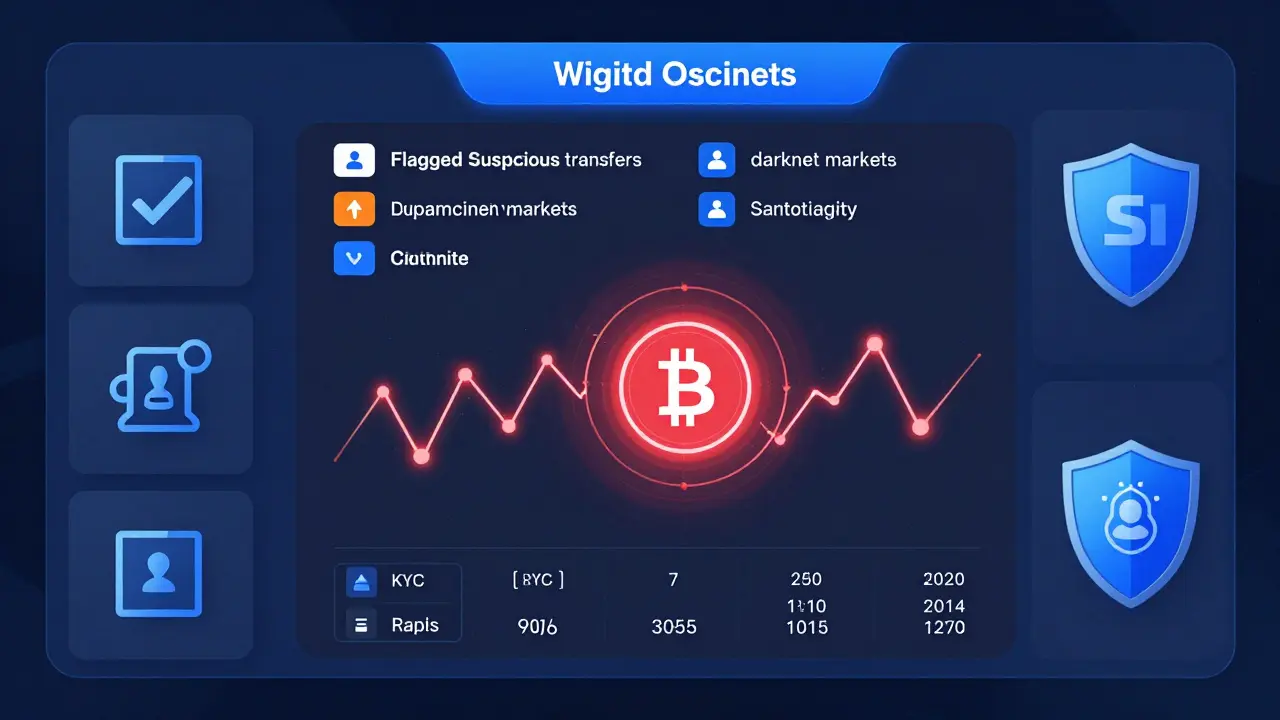
Running a crypto business in 2026 isn’t just about building a platform or launching a token. If you’re not serious about AML compliance, you’re not just risking fines-you’re risking your entire operation. The days of flying under the radar are over. Governments and financial regulators around the world have locked in strict rules, and they’re enforcing them hard. Failure isn’t just a slap on the wrist anymore. It’s prison time, massive fines, or being shut down for good.
Why AML Compliance Isn’t Optional Anymore
Anti-Money Laundering (AML) rules for crypto businesses weren’t always this strict. Back in 2019, the Financial Action Task Force (FATF) said Virtual Asset Service Providers (VASPs)-that’s exchanges, wallet providers, and crypto ATMs-needed to follow the same rules as banks. But most companies treated it like a suggestion. Today? It’s law. And it’s enforced.
The U.S. Financial Crimes Enforcement Network (FinCEN) now requires all crypto businesses handling over $3,000 in transactions to verify user identities. Any transaction over $2,000 that looks suspicious? You have to report it. Over $10,000? You file a Currency Transaction Report (CTR), just like a bank. And if you run a crypto ATM? You’re under extra scrutiny. FinCEN’s August 2025 notice called these kiosks a "high-risk vector" because they’re easy to abuse-no ID, no questions, just cash in, Bitcoin out.
Europe didn’t wait. The Markets in Crypto-Assets Regulation (MiCA), which took full effect in December 2024, forces every Crypto-Asset Service Provider (CASP) operating in the EU to get licensed. No license? No business. The European Union’s Anti-Money Laundering Authority (AMLA) is now actively monitoring these firms. In 2025 alone, AMLA reported over 400 enforcement actions against unlicensed operators.
What Your Compliance Program Must Include
You can’t just install a plugin and call it done. Real AML compliance is a system. Here’s what you need:
- Know Your Customer (KYC): Collect and verify government-issued IDs, proof of address, and biometric data (like facial recognition) for all users. The EU now requires this for transactions over €3,000. Japan demands it for anything over ¥500,000 ($3,200).
- Transaction Monitoring: Your platform must scan every transaction in real time against global sanction lists (OFAC, UN, EU). Tools like Chainalysis, Elliptic, and Silent Eight do this. They check if a Bitcoin UTXO passed through a known darknet market or ransomware wallet. If it did, the transaction gets blocked.
- Suspicious Activity Reporting (SAR): If something looks off-a user suddenly sending $500,000 to 50 different wallets, or a series of $2,900 transactions right under the reporting threshold-you file a SAR. FinCEN expects this. Ignoring it is a red flag.
- Record Keeping: You must store transaction records, user data, and internal reports for at least five years. In the U.S., FinCEN audits this. In the EU, AMLA does.
- Dedicated Compliance Officer: MiCA requires every CASP to have one. This person isn’t a part-timer. They need to understand blockchain forensics, global regulations, and how to train staff.
How Different Countries Handle It
Not every country plays by the same rules. That’s where things get messy.
In the U.S., the GENIUS Act (passed in June 2025) brought stablecoin issuers under the Bank Secrecy Act. Now, Tether, USDC, and all others must do KYC, AML, and CFT checks on every user. It’s not enough to just back your coins with dollars-you have to know who’s holding them.
Europe is the strictest. MiCA doesn’t just require licensing-it demands ongoing audits, cybersecurity standards, and public transparency reports. Companies like Kraken and Bitstamp spent over $10 million each to comply. Smaller firms? Many just gave up.
Singapore takes a risk-based approach. High-volume platforms get heavy checks. Small peer-to-peer platforms get lighter oversight. It’s flexible, but you still need to register with the Monetary Authority of Singapore (MAS).
Japan requires biometric verification for all transactions over ¥500,000. That means facial scans or fingerprint checks. No exceptions. The Financial Services Agency (FSA) doesn’t tolerate loopholes.
Here’s the catch: if you operate in more than one country, your compliance costs jump 37%. Why? Because you’re juggling five different rulebooks. Silent Eight’s Q4 2025 report found that multi-jurisdictional operators spend an average of $1.2 million more per year than those staying in one region.

The Tech Behind the Rules
Compliance isn’t just paperwork. It’s software. And it has to be fast.
Major exchanges screen over 10,000 transactions per second. If your system can’t handle that, you’re going to miss bad actors. Blockchain analytics tools don’t just look at wallet addresses. They trace the history of every coin. Did that Bitcoin come from a hacked exchange? From a darknet marketplace? From a wallet linked to a sanctioned Russian oligarch? If yes, the transaction is blocked before it completes.
Privacy coins like Monero are a nightmare. They’re designed to hide transaction details. CipherTrace’s Q3 2025 report found that screening Monero transactions creates 37% more false positives than Bitcoin. That means legitimate users get flagged. To fix this, top platforms combine blockchain analysis with traditional KYC data-cross-checking IP addresses, device fingerprints, and behavioral patterns.
AI is helping. Kraken cut false positives by 34% using Silent Eight’s machine learning tools. Binance filed 1.2 million suspicious activity reports in Q2 2025-up 22% from last year. That’s not because crime is exploding. It’s because their systems got smarter.
What Happens When You Don’t Comply
People think they can slip through the cracks. They can’t.
In 2021, a man named Mohammad ran a network of crypto ATMs in California. He didn’t verify anyone. He didn’t report anything. He just took cash and sent Bitcoin to criminals. FinCEN shut him down. He got 24 months in prison.
That’s not an outlier. In 2025, global enforcement actions against crypto firms jumped 47% to 1,842 cases. The Department of Justice’s August 2025 update said: "Regulatory compliance is critical. Failure to do so can result in severe penalties-even if fraud isn’t directly involved."
One company in Texas ignored AML rules for two years. They thought they were "just a startup." When regulators came in, they found over $12 million in laundered funds. The CEO was fined $8 million. The company was banned from operating in the U.S. forever.

How to Get Started
It’s not easy. But it’s doable.
- Register as an MSB: In the U.S., file with FinCEN within 180 days of starting operations. No exceptions.
- Choose your tools: Pick one blockchain analytics provider. Chainalysis, Elliptic, or Silent Eight are the most trusted. Don’t go cheap. You’ll pay more in fines than in software.
- Hire a compliance officer: This person needs to understand both crypto and regulation. Salaries for blockchain forensics experts are now $145,000-$185,000 per year.
- Train your team: Every employee who touches user data or transactions needs AML training. The average time to get fully compliant? 6-9 months.
- Test your system: Run mock audits. Try to bypass your own filters. If you can, your system isn’t ready.
Don’t wait for a regulator to knock on your door. Start now. The average crypto firm spends 22-35% of its budget on compliance. But that’s cheaper than losing your license-or your freedom.
What’s Next
The regulatory clock is ticking faster. By 2027, the FATF wants 85% of member countries to have aligned rules for VASPs. The EU is building a centralized registry for all licensed CASPs. The U.S. Treasury plans to include crypto firms in its Beneficial Ownership Secure Registry (BOSSRI) by 2026.
Analysts at Gartner predict that by 2027, 75% of crypto-native firms will spend over 30% of their revenue on compliance. Traditional banks entering crypto? They’ll pay 40% less because they already have the systems in place.
The future isn’t about avoiding regulation. It’s about embracing it. The companies that survive aren’t the ones with the fanciest apps. They’re the ones with the cleanest records, the tightest controls, and the most transparent operations.
AML compliance isn’t a cost center. It’s your license to operate. And in 2026, that license is harder to get than ever.
Do I need AML compliance if I run a small crypto exchange?
Yes. Size doesn’t matter. Whether you’re a startup with 500 users or a giant like Binance, if you handle crypto transactions, you’re a VASP under FATF rules. In the U.S., FinCEN requires registration if you’re operating as a Money Services Business. In the EU, MiCA requires a license. Ignoring this isn’t an option-it’s a legal risk.
What happens if I use a third-party KYC provider?
Using a provider like Trulioo or Onfido helps, but it doesn’t absolve you of responsibility. Regulators still hold YOU accountable. If the provider’s system misses a sanctioned address or fails to verify identity properly, you’re still on the hook. Your compliance officer must audit the provider’s performance, review false positive rates, and ensure their data is updated daily.
Are crypto ATMs a big problem for AML?
Extremely. FinCEN’s August 2025 notice specifically called crypto ATMs "high-risk" because they allow anonymous cash deposits with minimal oversight. In 2025, 63% of detected money laundering schemes involved at least one crypto kiosk. Operators must now register with FinCEN, verify users for transactions over $3,000, and report suspicious activity-just like a bank branch.
Can I skip AML if I only deal with Bitcoin?
No. Bitcoin isn’t exempt. In fact, it’s one of the most tracked assets. Every Bitcoin transaction leaves a public trail. Blockchain analytics firms like Chainalysis can trace coins back to exchanges, darknet markets, or ransomware wallets. If your platform handles Bitcoin and doesn’t screen transactions, you’re inviting regulators to shut you down.
How much does AML compliance cost?
It varies. Small operators spend $100,000-$300,000 annually on software, staff, and audits. Mid-sized firms spend $500,000-$1.5 million. Large exchanges pay over $5 million. The biggest cost isn’t software-it’s people. Hiring blockchain forensics experts and compliance officers with global regulatory experience drives up expenses. But it’s cheaper than a $10 million fine or a prison sentence.
What’s the biggest mistake crypto businesses make?
Thinking compliance is a one-time project. It’s not. Criminals change tactics every 42 days on average. Your systems must update weekly. New sanctions lists drop. New privacy tools emerge. Your compliance officer needs to be monitoring trends daily. The firms that fail aren’t the ones that skipped the rules-they’re the ones that set up a system and forgot to maintain it.


Author
Ronan Caverly
I'm a blockchain analyst and market strategist bridging crypto and equities. I research protocols, decode tokenomics, and track exchange flows to spot risk and opportunity. I invest privately and advise fintech teams on go-to-market and compliance-aware growth. I also publish weekly insights to help retail and funds navigate digital asset cycles.