

Imagine you are ready to buy Bitcoin. You type "ACX" into your browser because you heard it’s a solid platform for Australian traders. But wait-did you just land on the page for an Access Protocol token? Or maybe a forex trading site? This confusion is the first hurdle with ACX Crypto Exchange, which is an Australian-based cryptocurrency trading platform known for its low AUD withdrawal fees but limited public profile. In the crowded world of digital assets, names get recycled, and tokens share symbols. Before you send a single cent, you need to know exactly who you are dealing with.
This review cuts through the noise. We will look at the actual ACX exchange based in Australia, separating it from the various ACX tokens and unrelated financial platforms that clutter search results. If you are an Australian resident looking for a local spot-trading platform, this guide will tell you if ACX fits your needs or if you should stick to bigger names like Binance or CoinSpot.
Who Is ACX Really? The Identity Crisis
The biggest problem with ACX isn’t its technology; it’s its name. When you search for ACX today, you might find three completely different things:
- ACX Exchange: The Australian fiat-to-crypto spot trading platform we are reviewing here.
- Access Protocol (ACX Token): A meme-style or utility token on Solana that has seen wild price swings, including a 10,909% volume spike in early 2024 due to creator coin trends.
- Across Protocol (ACX Token): A cross-chain bridge protocol with its own governance token.
- ACX FX: A traditional Forex and CFD broker offering MetaTrader 5 access for stocks and commodities.
If you are looking to trade Bitcoin or Ethereum for Australian Dollars, you want the first one. However, the lack of clear branding means you must double-check the URL and the service description before creating an account. Unlike giants such as Coinbase or Kraken, ACX does not dominate global headlines. It operates quietly, primarily serving a niche market of Australian users who prefer local fiat support over global dominance.
Fees: Where ACX Shines and Stumbles
Let’s talk money. Trading fees can eat into your profits faster than a bear market. ACX positions itself as a cost-effective option for standard traders. Here is the breakdown:
| Fee Type | ACX Rate | Industry Average |
|---|---|---|
| Maker/Taker Trading Fee | 0.20% | ~0.25% |
| BTC Withdrawal Fee | 0.0006 BTC | 0.0006 BTC |
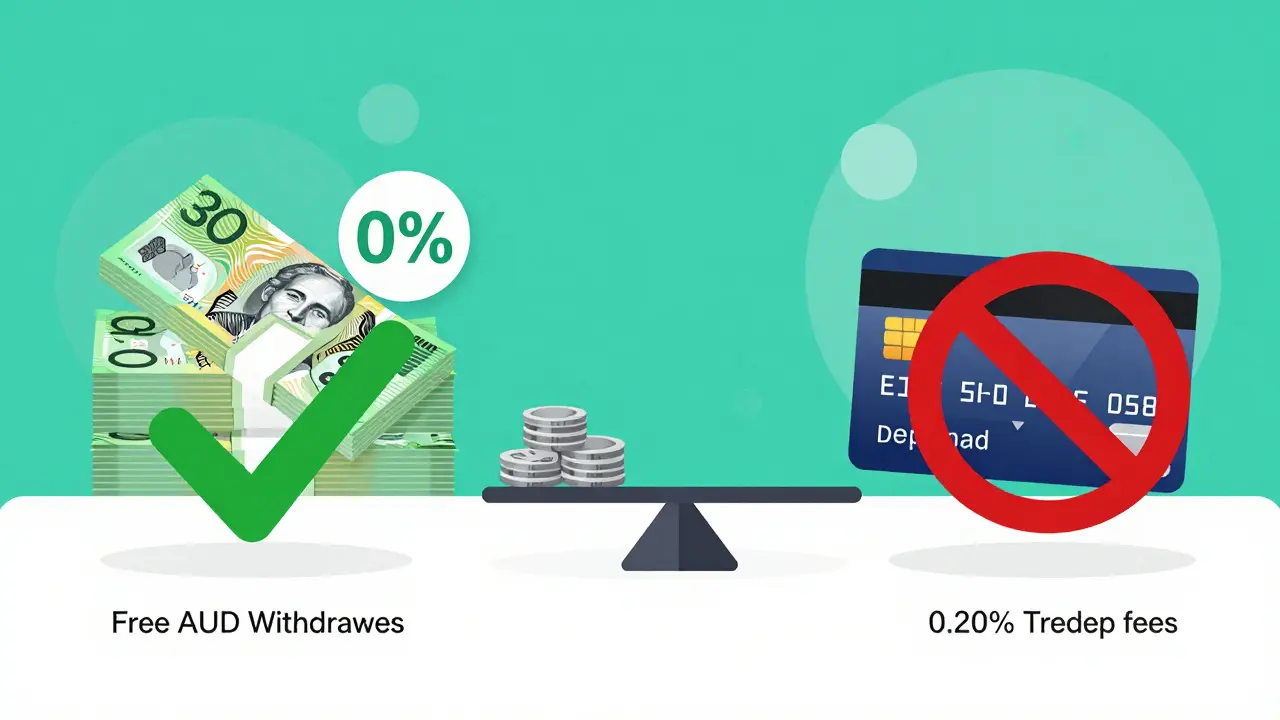
| AUD Fiat Withdrawal | $0 (Free) | $5 - $15 per transaction |
The 0.20% flat fee for both makers and takers is competitive. It is slightly better than the generic 0.25% charge found on many mid-tier exchanges. For casual traders moving small amounts, this saves a few dollars per trade. However, high-volume traders might find this less attractive compared to tiered structures offered by Binance or Bybit, where fees drop significantly as your trading volume increases.
The real winner here is the AUD withdrawal policy. Since June 2019, ACX has charged zero fees for withdrawing Australian Dollars. This is rare. Most exchanges pass on bank transfer costs to the user, often charging between $5 and $15 per withdrawal. If you frequently cash out to your local bank account, ACX offers tangible savings.
Deposits and Payment Methods: The Wire Transfer Hurdle
Here is where ACX falls short for modern users. You cannot deposit funds using a credit card or debit card. The only supported method for adding fiat currency is via wire transfer. While this ensures secure, traceable transactions, it lacks the instant gratification of card payments. Wire transfers can take 1-3 business days to clear, meaning your money sits in limbo while markets move.
For crypto deposits, the process is standard. You generate a wallet address on the platform and send funds from your external wallet. The network fees apply here, but these are blockchain costs, not exchange charges. If you prefer the convenience of buying crypto instantly with Apple Pay or Visa, ACX is not the right tool for you. Platforms like MoonPay or Ramp offer that speed, though often at higher markups.
Security Architecture: Cold Storage and Audits
Security is non-negotiable in crypto. ACX claims to prioritize asset protection by keeping over 95% of user funds in cold storage. Cold storage means the private keys are held offline, away from internet-connected servers that hackers target. This industry-standard practice significantly reduces the risk of large-scale theft.
The platform also enforces two-factor authentication (2FA) for all accounts. This adds a crucial layer of defense against unauthorized access. However, transparency remains a concern. While ACX states it undergoes regular IT security and financial audits, it does not publish the names of auditing firms or certification standards (such as ISO 27001). Major competitors like Coinbase publish quarterly proof-of-reserves reports, allowing users to verify that their assets are fully backed. ACX lacks this level of public verification, which requires a degree of trust from the user.
User Experience and Platform Limitations
ACX is not trying to be a Wall Street terminal. It is a straightforward spot trading platform. You will not find complex derivatives, futures contracts, or margin trading options here. The interface focuses on basic buy-and-sell functionality for major cryptocurrencies like Bitcoin, Ethereum, and Litecoin.
This simplicity can be a pro or a con. For beginners, it reduces the risk of accidentally opening a leveraged position that liquidates their account. For advanced traders, the lack of charting tools, order types, and altcoin variety is a dealbreaker. If you are interested in trading obscure new tokens or using stop-limit orders with precision, you will likely migrate to more robust platforms like Kraken or KuCoin.
Customer support information is sparse. There is no prominently displayed live chat or 24/7 phone line. Users typically rely on email support, which may result in slower response times during market volatility. In an emergency, such as a failed withdrawal, this delay can be stressful.
Regulatory Standing and Trust Signals
Operating in Australia means adhering to strict anti-money laundering (AML) laws. The Australian Transaction Reports and Analysis Centre (AUSTRAC) regulates digital currency exchange providers. While ACX mentions compliance with financial audits, explicit confirmation of its AUSTRAC registration status is not easily accessible in public documentation. This opacity makes it harder for cautious investors to verify its legal standing compared to fully transparent competitors.
The lack of widespread reviews and media coverage also raises questions. Is ACX a hidden gem, or is it simply too small to matter? The absence of red flags is good, but the absence of green flags (like published reserves or regulatory badges) leaves you guessing. Always remember: in crypto, silence is not always golden; sometimes it’s suspicious.
Verdict: Who Should Use ACX?
ACX is a niche player. It works best for Australian residents who:
- Trade modest volumes and want to save on AUD withdrawal fees.
- Prefer simple spot trading without the complexity of derivatives.
- Are comfortable waiting for wire transfers to clear.
- Do not mind a platform with lower brand recognition and limited customer support channels.
If you are a high-frequency trader, a fan of DeFi integrations, or someone who needs instant card purchases, look elsewhere. The naming confusion alone suggests that ACX has struggled with marketing and brand differentiation. For most users in 2026, established platforms with clearer regulatory footprints and richer feature sets offer a safer, more convenient experience.
Is ACX Crypto Exchange safe to use?
ACX employs standard security measures like cold storage and 2FA, which are essential for protecting assets. However, it lacks the transparent proof-of-reserves and detailed audit reports provided by larger exchanges. While there are no major reported hacks, the limited public information means you must exercise caution and never store more than you can afford to lose.
Can I buy crypto with a credit card on ACX?
No, ACX does not support credit or debit card deposits. The only method for adding fiat currency is via bank wire transfer. This process can take several business days, making it unsuitable for immediate trades.
What is the difference between ACX Exchange and ACX Token?
ACX Exchange is a trading platform for buying and selling cryptocurrencies. ACX Token refers to specific digital assets, such as those from Access Protocol or Across Protocol, which are traded on various exchanges. They are unrelated entities despite sharing the same acronym. Ensure you are visiting the correct website to avoid scams.
Does ACX charge fees for AUD withdrawals?
No, ACX eliminated all withdrawal fees for Australian Dollar (AUD) transactions in 2019. This makes it one of the few exchanges that allows free fiat cash-outs, saving users significant money compared to the typical $5-$15 fees charged by competitors.
Is ACX regulated in Australia?
While ACX operates in Australia and implies compliance with local laws, explicit details about its AUSTRAC registration or other regulatory licenses are not prominently displayed. Users should conduct their own due diligence to verify current regulatory status before depositing funds.
Author
Ronan Caverly
I'm a blockchain analyst and market strategist bridging crypto and equities. I research protocols, decode tokenomics, and track exchange flows to spot risk and opportunity. I invest privately and advise fintech teams on go-to-market and compliance-aware growth. I also publish weekly insights to help retail and funds navigate digital asset cycles.