
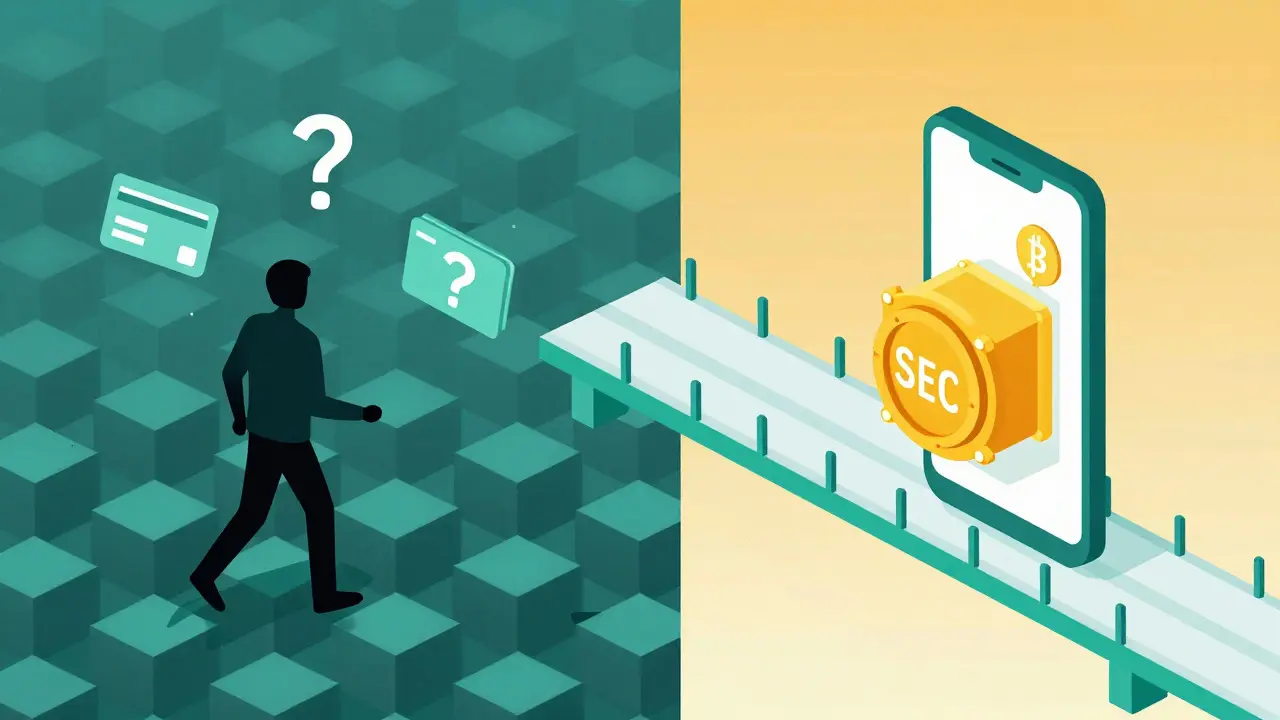
For years, trying to use cryptocurrency in Nigeria felt like walking through a minefield. One day your bank account worked; the next, it was frozen because of a suspicious transaction linked to a digital asset exchange. If you are wondering whether things have changed by mid-2026, the short answer is yes. The landscape has shifted dramatically from ambiguity and restriction to a structured, legally binding regulatory framework.
The era of operating in the shadows is over. With the implementation of the Investments and Securities Act (ISA) 2025 and the lifting of previous banking bans, Nigeria now sits at the forefront of African crypto regulation. But what does this actually mean for you as a user, investor, or business owner? It means clarity, but it also means strict compliance. Let’s break down exactly how the rules work today, who enforces them, and what you need to do to stay on the right side of the law.
The Turning Point: From Ban to Regulation
To understand where we are now, you have to look back at where we were just a few years ago. Between 2017 and 2023, the Central Bank of Nigeria (CBN) issued circulars that effectively banned commercial banks from facilitating transactions with cryptocurrency exchanges. This didn’t stop Nigerians from using crypto-in fact, it drove adoption underground via peer-to-peer (P2P) markets-but it created massive friction. Users faced frozen accounts, and businesses struggled to operate legally.
The tide turned in December 2023 when the CBN lifted the ban on crypto transactions. This was a crucial first step, allowing banks to offer services to licensed crypto businesses again. However, the real game-changer came in March 2025. President Bola Ahmed Tinubu signed the Investments and Securities Act (ISA) 2025 into law. This legislation officially recognized digital assets, including cryptocurrencies, as securities under Nigerian law. It replaced the outdated 2007 version of the act and handed the primary oversight authority to the Securities and Exchange Commission (SEC).
This shift wasn’t just symbolic. It provided the legal backbone needed for institutions to engage with crypto without fear of arbitrary enforcement. By mid-2026, the market had settled into a new normal where regulatory certainty drives growth rather than stifling it.
Who Is in Charge? Understanding the Regulatory Bodies
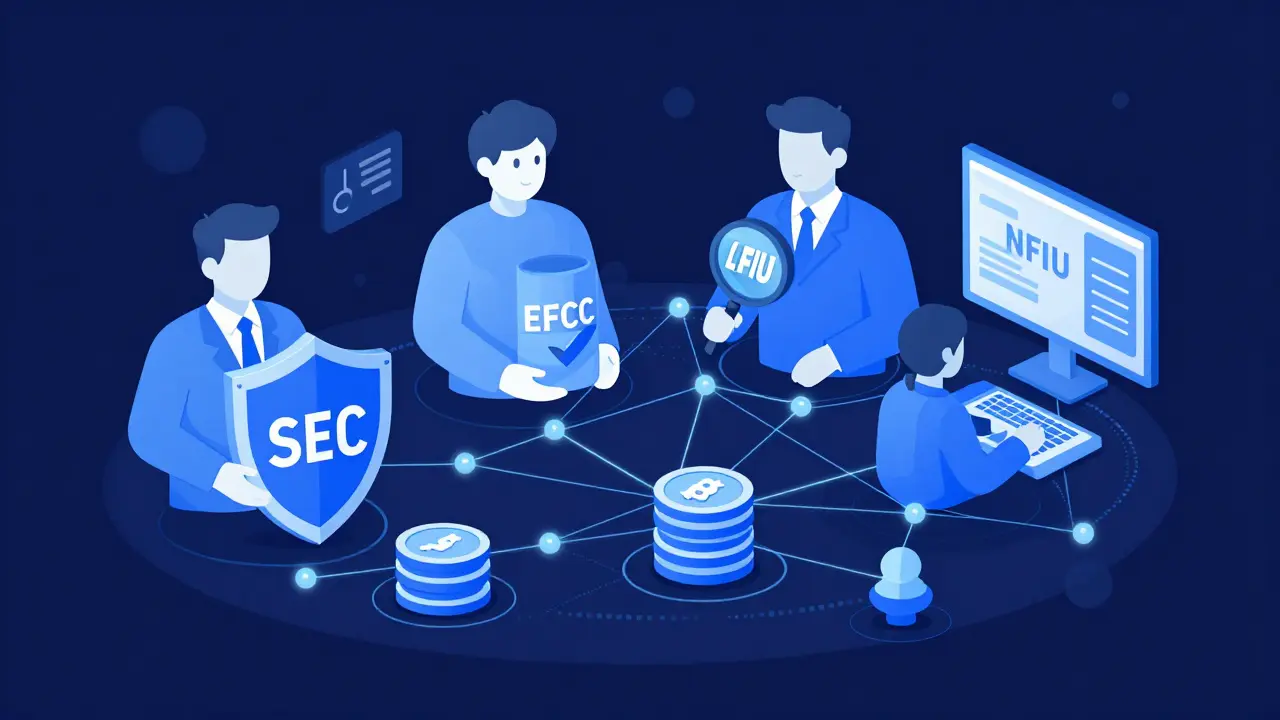
In many countries, one agency handles everything related to finance. In Nigeria, the approach is multi-agency, which provides comprehensive coverage but requires careful navigation. You need to know which regulator governs which part of your activity.
- Securities and Exchange Commission (SEC): The SEC is now the lead regulator for the crypto industry. Under the ISA 2025 and the Digital Assets Rules 2022, they oversee the issuance, trading, and custody of digital assets. If you are buying tokens on an exchange or participating in an Initial Coin Offering (ICO), the SEC is your main point of contact.
- Central Bank of Nigeria (CBN): The CBN focuses on monetary stability and payment systems. They regulate how banks interact with crypto businesses. Their Virtual Asset Service Provider (VASP) Guidelines dictate the terms under which financial institutions can service licensed crypto firms.
- Economic and Financial Crimes Commission (EFCC): While not a direct regulator of crypto operations, the EFCC plays a critical role in enforcement. They investigate fraud, money laundering, and Ponzi schemes involving digital assets.
- Nigerian Financial Intelligence Unit (NFIU): This body monitors transactions for suspicious activities, ensuring that Nigeria complies with international anti-money laundering (AML) standards.
This collaborative model ensures that every angle-from consumer protection to national security-is covered. However, it also means that compliance isn’t just about getting one license; it’s about adhering to a web of interconnected rules.
Licensing Requirements for Businesses
If you are looking to launch a crypto exchange, wallet provider, or advisory firm in Nigeria, you cannot simply register a company and start trading. The SEC has established rigorous licensing categories. As of late 2024 and into 2025, the process has become highly formalized.
All Virtual Asset Service Providers (VASPs) must register with the SEC. The requirements include:
- Paid-up Capital: Applicants must demonstrate sufficient financial backing to operate securely and cover potential liabilities.
- Fidelity Bonds: These protect customers against fraud or embezzlement by employees of the crypto firm.
- Local Presence: Companies must maintain local offices in Nigeria with Nigerian management personnel. Foreign entities cannot operate remotely without a physical footprint.
- Corporate Registration: Full registration with the Corporate Affairs Commission (CAC) is mandatory.
By late 2024, the SEC had awarded its first provisional licenses to major players like Busha and Quidax. Dozens of other companies applied or expected to register, signaling a surge in legitimate business interest. The vetting process is thorough, often causing delays, but this ensures that only credible operators enter the market.
| Regulator | Primary Focus | Key Responsibilities |
|---|---|---|
| SEC | Digital Assets & Securities | Licensing exchanges, overseeing ICOs, protecting investors |
| CBN | Banking & Payments | Guidelines for banks serving VASPs, monetary policy |
| EFCC | Criminal Enforcement | Investigating fraud, scams, and illegal fundraising |
| NFIU | Financial Intelligence | Monitoring AML/CFT compliance, reporting suspicious transactions |
Taxation and Penalties: The Cost of Non-Compliance
With legalization comes taxation. The Nigeria Tax Administration Act (NTAA) 2025, signed into law in June 2025 and effective in 2026, introduces specific tax obligations for crypto activities. This closes a significant loophole that previously allowed users and businesses to avoid declaring gains from digital assets.
The penalties for non-compliance are steep. VASPs that fail to adhere to regulations face initial fines of ₦10 million (approximately $6,693) in the first month of default. For each additional month of delay, an extra ₦1 million ($669) is added. Beyond financial penalties, the SEC has the authority to suspend or revoke licenses entirely. Recent enforcement actions against non-compliant platforms demonstrate that regulators are serious about maintaining integrity in the market.
For individual users, this means keeping accurate records of all transactions. Whether you are trading Bitcoin for Naira or holding Ethereum long-term, taxable events may occur. Consulting with a tax professional familiar with the NTAA 2025 is advisable to avoid unexpected liabilities.
Impact on Users and Market Growth
How has this regulatory shift affected everyday Nigerians? The response has been mixed but generally positive. On one hand, users appreciate the legal certainty. No longer do they live in fear of having their bank accounts frozen due to a routine crypto deposit. Banks are now permitted to facilitate transactions for licensed entities, making it easier to move funds in and out of crypto platforms.
On the other hand, some concerns remain. Peer-to-peer (P2P) traders worry about increased surveillance capabilities under the new framework. There are also worries about bureaucratic hurdles and compliance costs being passed down to consumers. Despite these concerns, adoption rates remain high. Nigeria received an estimated $92.1 billion in crypto value between July 2024 and June 2025, ranking it among the largest crypto markets globally. This figure is nearly double South Africa’s activity during the same period, highlighting Nigeria’s dominant position in Africa.
The regulated environment is also fostering innovation. Fintech startups are launching new products, knowing they have a clear path to compliance. This is attracting foreign investment and creating jobs in the tech sector. Moreover, there is hope that regulated crypto services will help extend financial inclusion to Nigeria’s unbanked population, offering them access to global financial networks.
Practical Steps for Staying Compliant
If you are navigating this new landscape, here is what you should do:
- Use Licensed Exchanges: Only trade on platforms that hold valid licenses from the SEC. Currently, Busha and Quidax are prominent examples of licensed providers. Using unlicensed platforms exposes you to risk and potential loss of funds without recourse.
- Maintain Records: Keep detailed logs of all your crypto transactions. This includes dates, amounts, counterparties, and purposes. These records will be essential for tax reporting under the NTAA 2025.
- Verify Bank Partnerships: Ensure that your bank is authorized to service crypto-related transactions. While most major banks now comply with CBN guidelines, it is worth confirming their specific policies.
- Stay Informed: Regulatory frameworks evolve. Follow updates from the SEC and CBN websites to ensure you are aware of any changes to licensing requirements or tax obligations.
Future Outlook
As we move further into 2026, Nigeria’s crypto regulation is likely to mature even more. We can expect more licensing approvals as the backlog of applications is processed. The government may refine certain rules based on initial implementation experiences, balancing innovation with consumer protection. Additionally, Nigeria is positioning itself as a regional fintech hub, potentially leading broader African initiatives on blockchain technology and digital assets.
The long-term viability of this framework looks strong. With a large, resilient user base and a government committed to regulatory clarity, Nigeria is well-positioned to thrive in the global digital economy. The key will be maintaining trust-ensuring that regulations protect users without stifling the very innovation that makes crypto valuable.
Is cryptocurrency legal in Nigeria in 2026?
Yes, cryptocurrency is fully legal and regulated in Nigeria as of 2026. The Investments and Securities Act (ISA) 2025 recognizes digital assets as securities, and the Central Bank of Nigeria allows banks to service licensed crypto businesses.
Which agency regulates crypto in Nigeria?
The Securities and Exchange Commission (SEC) is the primary regulator for cryptocurrency operations, including exchanges and token offerings. The Central Bank of Nigeria (CBN) regulates the banking interface with crypto firms.
Do I need to pay taxes on crypto in Nigeria?
Yes, under the Nigeria Tax Administration Act (NTAA) 2025, crypto transactions are subject to taxation. Users and businesses must declare gains and adhere to tax filing requirements starting in 2026.
Can I still use P2P trading platforms?
Peer-to-peer trading is still possible, but it operates under stricter scrutiny. Platforms facilitating P2P trades must comply with SEC licensing and AML/KYC regulations to avoid penalties.
What happens if I use an unlicensed crypto exchange?
Using an unlicensed exchange carries significant risks. Your funds may not be protected, and you could face difficulties withdrawing money. Additionally, regulators may freeze assets associated with non-compliant platforms.
Comments

Mekz Wheoki
Oh look, another government decides to tax the inevitable. I suppose we should all be thrilled that our money is now 'safe' because a bureaucrat in Abuja stamped a form. The irony of regulating something designed to bypass exactly these kinds of entities is lost on everyone involved.
June 12, 2026 AT 14:44

Andrea Burd
it's pathetic how they try to legitimize this digital casino. nobody actually understands what they are buying and now the state wants its cut. typical.
June 13, 2026 AT 18:47

Fede Faith
Actually, looking at the specifics, this is a huge step forward for institutional adoption. Having clear guidelines from the SEC means larger players can enter without fear of arbitrary bans. It stabilizes the market which ultimately helps retail investors too. You have to follow the licensed exchanges though, like Busha or Quidax, to stay safe.
June 13, 2026 AT 21:27

Annemarie Fitzgerald
the existential dread of being watched by the NFIU is palpable here. we traded freedom for security and got neither. just more forms to fill out while our assets fluctuate based on tweets. it is a tragedy of modern existence really.
June 14, 2026 AT 17:54

Josh Dodson
hey guys good news right? finally some clarity! no more frozen accounts hopefully. just make sure u keep ur records straight for the taxes tho. dont wanna get fined lol
June 14, 2026 AT 20:38

Grace Newman
This entire framework is merely a sophisticated mechanism for total financial surveillance under the guise of 'regulation.' The mention of the Nigeria Tax Administration Act 2025 is not about revenue; it is about establishing a complete ledger of every individual's economic activity. They want to know where you stand before they decide if you are compliant with their ideological mandates. Do not trust the banks, do not trust the SEC, and certainly do not trust that your data will remain private.
June 16, 2026 AT 03:43

Rob Aronson
The VASP guidelines are crucial here. If you're running a node or an exchange, the KYC/AML protocols aren't optional anymore. 📉 The interoperability between CBN banking rails and crypto liquidity pools is going to define the next bull run. Stay compliant or get left behind. 💼🔒
June 17, 2026 AT 10:00

Mauricio Contreras Loredo
Yeah, sure, because nothing says 'decentralized freedom' like asking the Central Bank for permission to hold Bitcoin. I'm sure the corruption levels will drop significantly once the EFCC gets involved. Oh wait, that's the joke.
June 19, 2026 AT 07:04

Manish Prajapat
It is interesting to observe the shift from prohibition to regulation. In India, we have seen similar patterns with UPI and digital payments. The key is whether the enforcement is consistent. If the rules apply equally to small traders and large institutions, then it is fair. But often, the small player suffers most during transition periods. We must hope Nigeria learns from global mistakes.
June 20, 2026 AT 15:53

Kenneth Riley
you think this is real regulation?? its a scam. they want to freeze your assets when the price drops so they can buy low. i told you this would happen years ago. nobody listens. now you see. chaos incoming.
June 21, 2026 AT 10:21

Danna Charris
One must appreciate the structural integrity of the new laws. It elevates the discourse from chaotic speculation to serious asset management. Only those with the patience and resources to navigate the compliance web will thrive. The rest can continue playing games in the shadows.
June 22, 2026 AT 15:42

Kumaran sowkarpet
as an indian user, i see similarities with our crypto regulations evolving. it is good that nigerians have clarity now. many people were confused before. hope this helps small traders too and not just big companies. :) let us hope for better tech infrastructure support as well.
June 24, 2026 AT 04:53

Mark Brunschwiler
I feel the weight of this change. It is heavy. The air feels different when the government touches your wallet. I don't know if I can sleep knowing my transactions are monitored. It makes me sad. So very sad. Why did we ever think we could hide?
June 25, 2026 AT 17:45

Sonya O'Brien
While the regulatory framework appears robust on paper, one must consider the practical implications for the average citizen who may not have the legal expertise to navigate the complexities of the Investments and Securities Act 2025. There is a significant gap between high-level policy implementation and grassroots accessibility, which could inadvertently exclude the very demographic that crypto initially empowered. Furthermore, the reliance on local presence requirements might stifle international innovation and collaboration, potentially isolating the Nigerian market rather than integrating it into the global fintech ecosystem. We need to ensure that consumer protection does not come at the cost of stifling the organic growth and community-driven development that has characterized the crypto space thus far.
June 26, 2026 AT 15:58

Filbert Reeves
they say its regulated but i bet the insiders already knew this was coming and bought up all the cheap tokens. its always rigged. the poor get taxed and the rich get richer. i remember when they said bitcoin was safe and then rug pulls happened everywhere. this is just another layer of control to keep us down. why do you people believe them? its obvious manipulation.
June 28, 2026 AT 12:44

Nick Rice
This is a massive win for the industry. Clear rules mean clear growth. If you are a business owner, get your license sorted immediately. The window for easy entry is closing, but the long-term potential is enormous. Let's build something great together.
June 29, 2026 AT 22:34

Skm Shubham
The inefficiency of having four different agencies overlap is a disaster waiting to happen. SEC, CBN, EFCC, NFIU. Who is actually responsible when things go wrong? This bureaucratic bloat will kill innovation faster than any ban ever could. Typical government incompetence.
July 1, 2026 AT 14:31

Suman Patil
Hey team! Great update on the regs. As we discussed in the last thread, the jargon around 'digital securities' is key here. It changes everything for token offerings. Let's collaborate on understanding the tax implications. I think there is a lot of opportunity here if we stay positive and informed. Keep the energy up!
July 2, 2026 AT 00:08

sreeja boora
India has been watching closely. Our own regulatory bodies are still debating similar frameworks. It is encouraging to see a major African nation take decisive action. However, we must ensure that such regulations respect national sovereignty and do not become tools for foreign financial dominance. The focus should remain on domestic stability and citizen welfare above all else.
July 2, 2026 AT 19:21

Benjamin Eisen
i was worried about the P2P stuff. glad to hear its still possible but stricter. anyone know if busha is fully live yet? i want to start trading again but dont want to mess up my taxes. thanks for the info!
July 3, 2026 AT 17:08

Akeem Whittaker
Let's break this down simply. If you trade, you pay tax. If you run a business, you get a license. No more hiding. This brings Nigeria in line with global standards. For those feeling overwhelmed, start by checking if your exchange is SEC-licensed. That is your first step to safety. Don't panic, just adapt.
July 4, 2026 AT 04:19

ravi mahla
haha nice article. so basically pay tax or go to jail. classic. but hey at least its legal now. lets party! 🎉 just kidding, i am scared of the fines. lol
July 6, 2026 AT 03:06

Abby Sivertsen
I understand the frustration some feel, but honestly, this brings a level of professionalism that was missing. It protects the little guy from scams. I've seen friends lose everything on unregulated platforms. Now there is recourse. It's not perfect, but it's progress. Let's support each other through the learning curve.
July 7, 2026 AT 17:03

John Doe
The emotional toll of the previous ban was immense. Families were separated from their savings. Businesses collapsed overnight. This new framework, while strict, offers a lifeline. It acknowledges the reality of the market. I feel a sense of relief, mixed with caution. We must walk this path carefully, ensuring that the spirit of innovation is not crushed by the letter of the law. The future is bright, but we must remain vigilant.
Author
Ronan Caverly
I'm a blockchain analyst and market strategist bridging crypto and equities. I research protocols, decode tokenomics, and track exchange flows to spot risk and opportunity. I invest privately and advise fintech teams on go-to-market and compliance-aware growth. I also publish weekly insights to help retail and funds navigate digital asset cycles.