
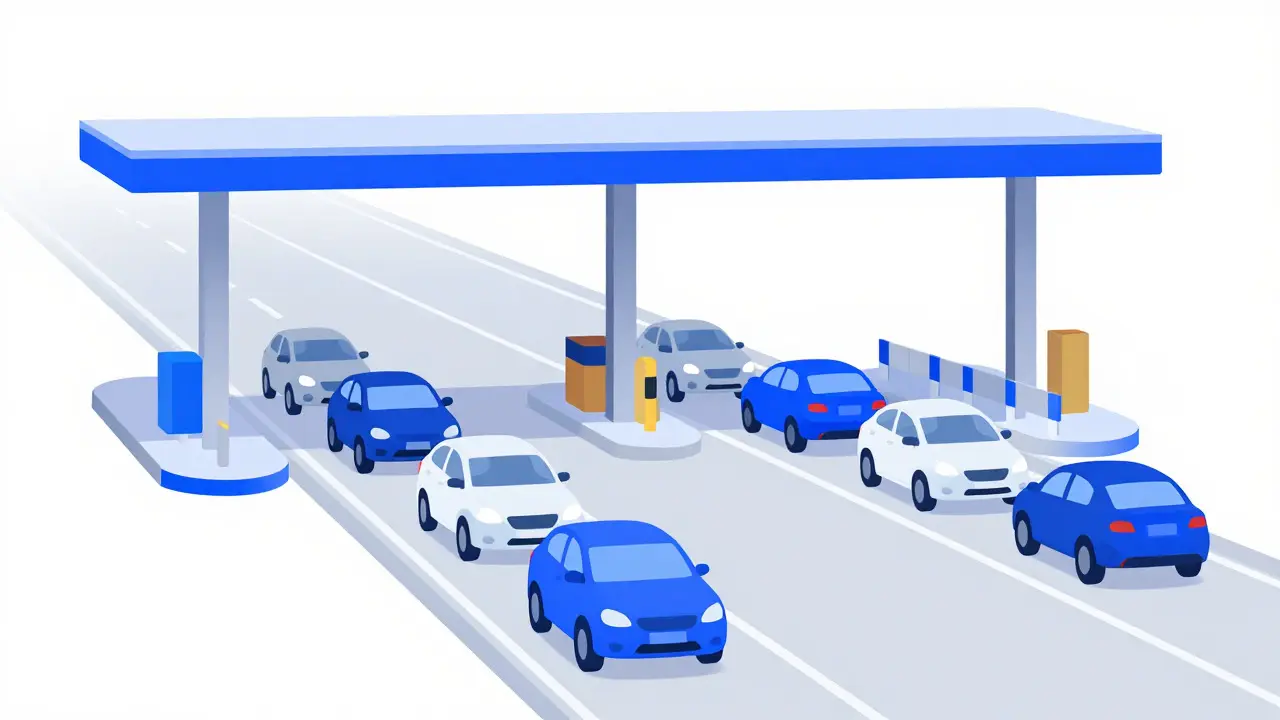
Imagine you are running a highway toll booth. You have one lane open, and cars (transactions) are lining up to get through. Now, imagine you widen that lane so two or three cars can pass side-by-side. Traffic moves faster, right? That is exactly what happens when you increase the block size in a blockchain network. It allows more data to be packed into each block, theoretically speeding up the entire system. But here is the catch: widening the lane requires bigger trucks, stronger roads, and more fuel for every vehicle on the road. In the world of blockchain, increasing block size isn't just a simple fix for slow speeds; it triggers a complex chain reaction affecting security, storage, and who gets to participate in the network.
The Core Mechanics: How Block Size Dictates Speed
To understand why block size matters, we first need to look at how blockchain processes transactions. A blockchain is essentially a digital ledger made of blocks. Each block contains a batch of transactions. Once a block is full, it is sealed and added to the chain. The speed at which this ledger grows depends on two main variables: how often new blocks are created (block time) and how much data fits inside each block (block size).
Bitcoin, launched by Satoshi Nakamoto in 2009, set the original standard with a strict limit of 1 megabyte (MB) per block and a new block roughly every 10 minutes. This design choice was conservative. It meant Bitcoin could only handle about 3 to 7 transactions per second (TPS). Compare that to Visa, which handles thousands of transactions per second globally. For everyday payments, Bitcoin’s original setup felt like a trickle compared to a firehose.
The math is straightforward. If you double the block size, you double the amount of data processed in that specific window. If you keep the block time constant but increase the capacity from 1MB to 32MB, as seen with Bitcoin Cash, you theoretically multiply your throughput by 32. On paper, this looks like a win for performance. Users see their transactions confirm faster, and fees drop because there is less competition for space in each block. However, performance in blockchain is not just about raw speed; it is about the health of the network supporting that speed.
The Decentralization Dilemma: Who Can Run a Node?
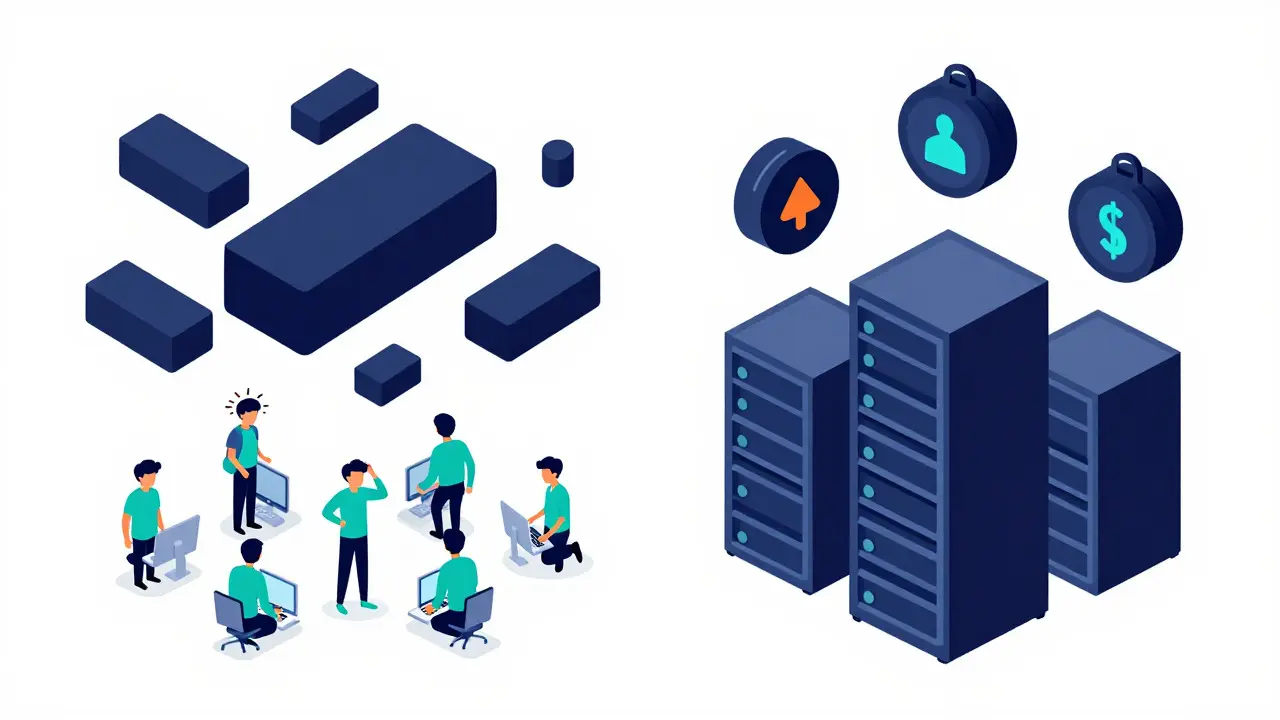
Here is where things get tricky. Blockchain networks rely on full nodes-computers run by individuals or organizations that store a complete copy of the blockchain and validate every transaction. Decentralization, the core promise of blockchain, depends on having many different people running these nodes worldwide. If only a few powerful entities can afford to run nodes, the network becomes centralized, vulnerable to censorship and control.
Increasing block size directly impacts the hardware requirements for running a full node. Larger blocks mean:
- More Storage: Every validator must store the entire history of the blockchain. If blocks are larger, the total size of the chain grows faster. What used to fit on a hard drive might soon require enterprise-grade server racks.
- Higher Bandwidth: Nodes need to download new blocks as soon as they are mined. Larger blocks require significantly more internet bandwidth to sync with the network in real-time. If your connection drops or lags, your node falls behind, and you lose the ability to validate transactions effectively.
- Greater Processing Power: Verifying the cryptographic signatures in a larger block takes more CPU power. This increases electricity costs and hardware wear-and-tear.
When these barriers rise, fewer people can afford to participate. Small hobbyists are pushed out, leaving room for large corporations or mining pools with unlimited resources. This shift undermines the democratic nature of the network. Experts warn that while larger blocks improve transaction throughput, they risk creating a "rich get richer" dynamic among validators, potentially compromising the network's long-term security and resilience.
Comparing Strategies: Bitcoin, Ethereum, and Beyond
Different blockchain projects have taken vastly different approaches to balancing block size and performance. Looking at these real-world examples helps clarify the trade-offs involved.
| Network | Block Size / Limit Mechanism | Approx. TPS | Primary Strategy |
|---|---|---|---|
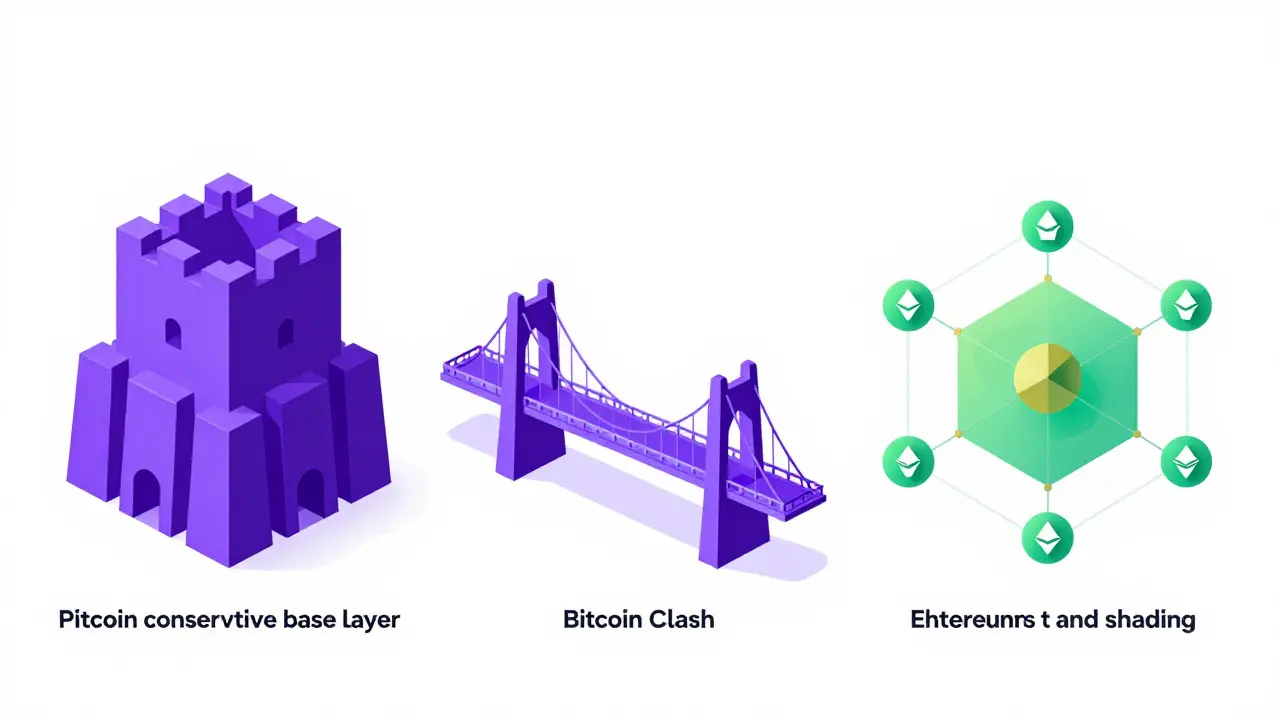
| Bitcoin | 1 MB (Base Layer) | 3-7 | Conservative base layer, relies on Layer-2 solutions |
| Bitcoin Cash | 32 MB (expandable) | ~100+ | Aggressive block size increase for higher throughput |
| Ethereum | Gas Limit (~15M gas) | 15-30 (Base Layer) | Dynamic limits via EIPs, focusing on smart contract efficiency |
| SKALE | Elastic sharding | 397.7+ (per chain) | Interoperable sub-chains for massive parallel processing |
Bitcoin has remained steadfast with its 1MB limit, arguing that stability and decentralization are more important than raw speed. Instead of enlarging blocks, it encourages the use of Layer-2 solutions like the Lightning Network, which process transactions off-chain and settle them on the main blockchain later.
In contrast, Bitcoin Cash emerged from a fork specifically to increase block size to 32MB. The goal was clear: make Bitcoin viable for peer-to-peer electronic cash by reducing fees and confirmation times. While it achieved higher throughput, it also faced criticism for increased centralization pressures among its miners.
Ethereum takes a different route. Instead of a fixed byte limit, it uses a "gas limit"-a measure of computational work allowed per block. Currently, the target is around 15 million gas units. This allows flexibility based on the complexity of transactions rather than just their size. Changes to this limit require Ethereum Improvement Proposals (EIPs), ensuring community consensus before scaling up.
Then there are newer architectures like SKALE. Recent testing by Dartmouth University showed SKALE achieving nearly 400 TPS with extremely fast finality times. By using elastic sharding-splitting the network into smaller, interoperable chains-it avoids the bottleneck of a single large block entirely. This demonstrates that future performance gains may come from architectural innovation rather than just inflating block sizes.
Security Implications: The Danger of Centralized Mining
Beyond node operation, block size affects mining and staking dynamics. In Proof-of-Work systems like Bitcoin, larger blocks take longer to propagate across the global network. This delay increases the likelihood of "orphaned blocks"-blocks that are mined but rejected because another miner found a valid block slightly earlier. When orphan rates rise, small miners earn less revenue relative to their effort, pushing them out of the market.
This consolidation benefits large mining pools with strategically located data centers and high-speed fiber connections. They can receive block updates faster than distributed individual miners, giving them an unfair advantage. Over time, this leads to hash rate centralization, where a few entities control the majority of the network's computing power. If five mining pools control 51% of the hash rate, they could theoretically manipulate the ledger, reversing transactions or double-spending coins.
In Proof-of-Stake networks, the issue shifts slightly but remains relevant. Validators with larger stakes often operate more sophisticated infrastructure. If larger blocks require expensive enterprise hardware to validate efficiently, only wealthy stakeholders can compete. This creates a barrier to entry that contradicts the permissionless ethos of blockchain technology.
Alternative Solutions: Looking Beyond Block Size
Given the risks of simply making blocks bigger, developers are exploring other paths to scale. These alternatives aim to boost performance without sacrificing decentralization:
- Sharding: Dividing the blockchain into smaller pieces (shards) that process transactions in parallel. This multiplies capacity without forcing every node to process every transaction.
- State Channels: Allowing users to conduct multiple transactions off-chain and only record the final result on the main blockchain. This reduces congestion significantly.
- Optimistic Rollups: Bundling many transactions into a single proof submitted to the main chain. This leverages the security of the base layer while achieving high throughput.
- Network Topology Optimization: Research suggests that changing how nodes connect (e.g., using hypercube or torus architectures) can improve propagation speeds, allowing larger blocks to spread more efficiently without causing delays.
These methods recognize that block size is just one lever in a complex machine. Pulling it too hard breaks other parts. A holistic approach combines moderate block sizes with advanced layer-2 protocols and efficient network structures.
Conclusion: Finding the Right Balance
So, does bigger always mean better? Not necessarily. Increasing block size offers immediate relief for congestion and lower fees, making blockchains more usable for daily transactions. However, it comes at the cost of higher hardware requirements, potential centralization, and security vulnerabilities related to block propagation delays.
The ideal solution likely lies in a hybrid model. Base layers should remain lean and secure, preserving decentralization. High-volume transactions can be handled by scalable layer-2 solutions or sharded architectures. As we move toward 2026 and beyond, successful blockchains will be those that balance throughput with accessibility, ensuring that anyone with an internet connection can still participate in validating the truth.
What is the current block size of Bitcoin?
Bitcoin's base layer block size limit is 1 megabyte (MB). This limit was established in 2009 and remains unchanged on the main Bitcoin network, though SegWit (Segregated Witness) allows for effective capacity increases up to approximately 2-4 MB by optimizing how signature data is stored.
Does increasing block size always improve blockchain performance?
It improves transaction throughput (speed) but can degrade network performance in other ways. Larger blocks take longer to propagate across the network, leading to higher orphan rates and increased centralization pressure on miners and node operators. Therefore, while user-facing speed improves, underlying network health may suffer.
Why did Bitcoin Cash split from Bitcoin?
Bitcoin Cash was created in 2017 following a disagreement over how to scale Bitcoin. Proponents of Bitcoin Cash believed that increasing the block size from 1MB to 8MB (later expanded to 32MB) was necessary to support peer-to-peer electronic cash transactions with low fees. Bitcoin Core maintainers preferred keeping the base layer small and relying on Layer-2 solutions.
How do Layer-2 solutions relate to block size?
Layer-2 solutions, such as the Lightning Network or Optimistic Rollups, process transactions off the main blockchain. They bundle many transactions together and submit a single summary to the base layer. This allows the network to achieve high throughput without needing to increase the base layer's block size, thus avoiding the associated centralization risks.
What is the impact of larger blocks on node operators?
Larger blocks require more storage space, higher internet bandwidth, and greater processing power. This increases the cost of running a full node, potentially pricing out individual enthusiasts and leading to a more centralized network where only well-funded entities can validate transactions.
Author
Ronan Caverly
I'm a blockchain analyst and market strategist bridging crypto and equities. I research protocols, decode tokenomics, and track exchange flows to spot risk and opportunity. I invest privately and advise fintech teams on go-to-market and compliance-aware growth. I also publish weekly insights to help retail and funds navigate digital asset cycles.