
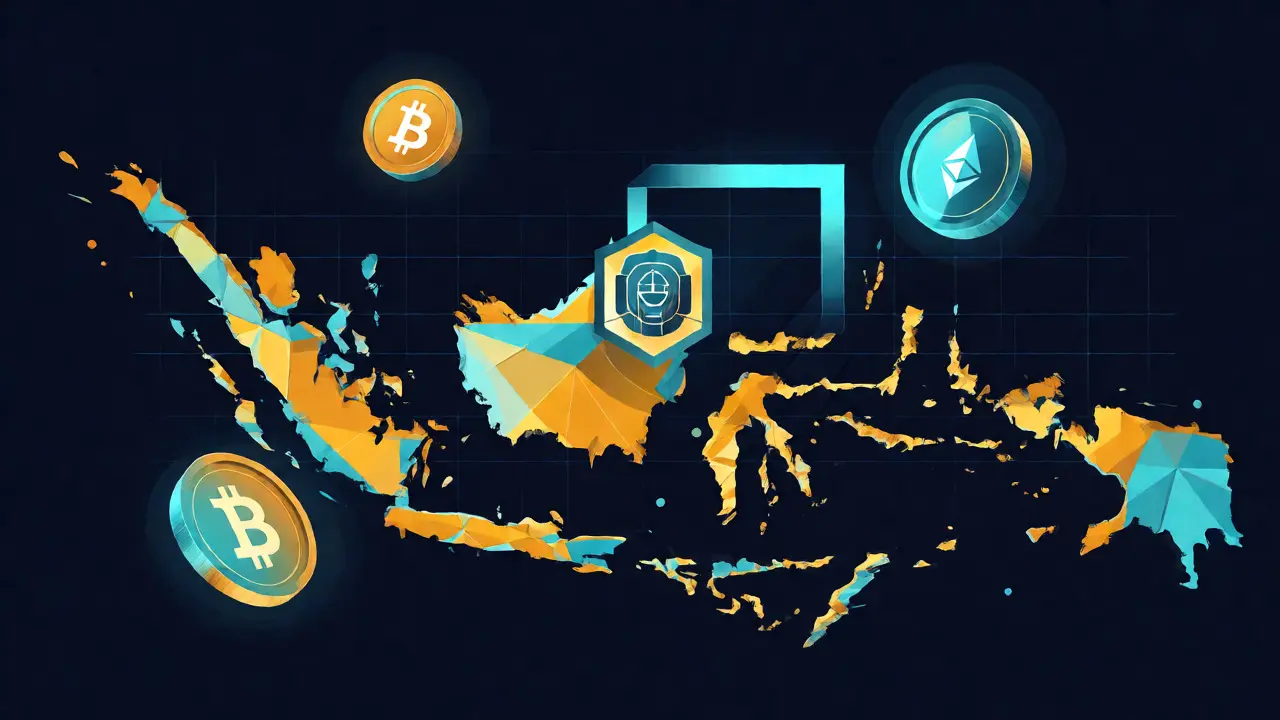
Did you know that using Bitcoin to buy a cup of coffee in Jakarta is technically illegal, but buying it as an investment is perfectly fine? It sounds contradictory, but this is the reality for Indonesian cryptocurrency traders. As of late 2025, the rules have shifted dramatically. If you are still thinking about crypto under the old BAPPEBTI guidelines, you might be missing out on better tax rates or facing unexpected penalties. The game has changed with the transfer of oversight to the Financial Services Authority (OJK) and new tax laws that favor local platforms.
This guide breaks down exactly how to trade legally in Indonesia right now. We will cover who regulates what, which exchanges are safe, how much tax you actually pay, and the specific steps to get verified without losing your mind. Whether you are a beginner in Bandung or a high-volume trader in Jakarta, understanding these nuances saves money and keeps you out of trouble.
The Big Shift: From Commodities to Financial Assets
For years, crypto in Indonesia was treated like gold or coal-a commodity regulated by BAPPEBTI (Commodity Futures Trading Regulatory Agency). That era ended on January 10, 2025. Under Government Regulation Number 49 of 2024, oversight moved to the OJK. Why does this matter to you? Because crypto is no longer just a physical good; it is now classified similarly to stocks and bonds. This reclassification aligns with Law Number 4 of 2023 (UU P2SK), aiming to integrate digital assets into the broader financial sector.
The practical impact? Stricter consumer protection. Exchanges must now meet higher capital requirements and follow banking-grade security standards. But there is a catch: while trading is encouraged, spending crypto is banned. Bank Indonesia’s regulations still enforce the Rupiah as the sole legal tender. So, you can buy Bitcoin to hold or sell for profit, but if you try to use it to pay for groceries, you are breaking the law.
Tax Changes You Can’t Ignore (PMK 50/2025)
If you traded crypto before August 1, 2025, forget everything you knew about taxes. The Ministry of Finance introduced Regulation No. 50 of 2025 (PMK 50/2025), which completely overhauled how we pay taxes on digital assets. The biggest change? Value Added Tax (VAT) on crypto transactions is gone. Instead, we now deal with final Income Tax (PPh Final).
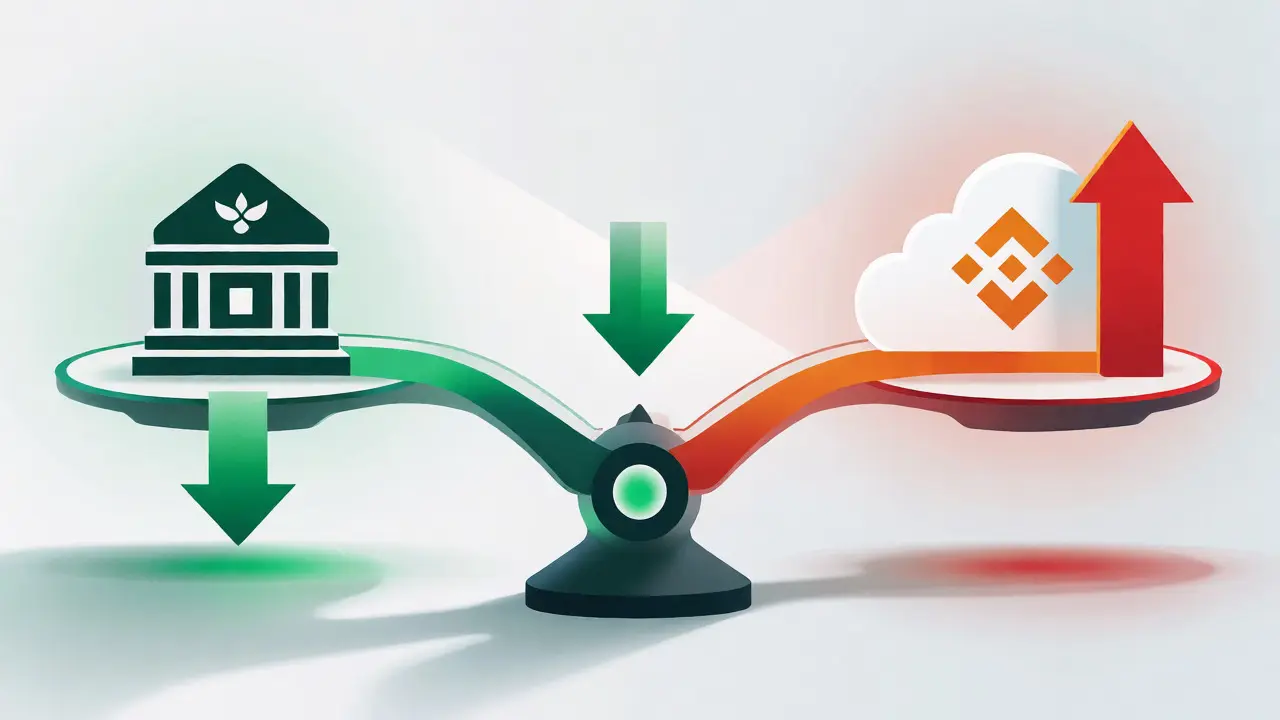
Here is the rule of thumb: where you trade determines your tax rate. If you use a licensed Indonesian exchange (a Payment Service Enabler or PMSE), you pay only 0.21% of the transaction value. If you use a foreign platform like Binance Global or Coinbase, or if you report the transaction yourself, the rate jumps to 1%. That difference seems small until you move large volumes. A trader moving IDR 1 billion would save roughly IDR 7.9 million just by sticking to local platforms.
| Transaction Channel | Tax Type | Rate | Who Collects? |
|---|---|---|---|
| Licensed Local Exchange (e.g., Indodax, Tokocrypto) | Final Income Tax (PPh Pasal 22) | 0.21% | Exchange (Auto-deducted) |
| Foreign Exchange / Self-Reported | Final Income Tax | 1.00% | User (Self-reported via SPT) |
| Staking Rewards (Current Status) | Income Tax | Progressive Rates* | User |
Experts from MUC Consulting note that this structure is designed to keep money within Indonesia’s borders. By making local trades cheaper, the government hopes to boost domestic liquidity. However, some users find the 1% penalty for foreign platforms harsh, especially since global exchanges often offer lower trading fees than local ones. You need to weigh the fee savings against the tax cost.
Choosing a Legal Exchange: The OJK List
Not every app on your phone is legal here. To stay compliant, you must trade on one of the 22 exchanges currently licensed by the OJK. Trading on unlicensed platforms puts your funds at risk and complicates your tax reporting. As of mid-2025, the market is dominated by three giants:
- Indodax: The oldest player with nearly 8.7 million users. Great for deep liquidity and local bank integrations.
- Tokocrypto: Acquired by Huobi, it offers a wide range of altcoins and competitive fees.
- Pintu: Known for its user-friendly interface, ideal for beginners who want simplicity over complex charts.
When picking a platform, check their status on the official OJK portal. Look for ISO/IEC 27001 certification, which ensures they handle data securely. Also, verify that they connect to the National Single Window (NSW) system. This integration allows real-time tax reporting, meaning you don’t have to manually calculate every single trade for your annual tax return if you stick to these approved venues.
The Verification Process: What to Expect
Gone are the days when you could sign up in five minutes. Since OJK took over, the Know Your Customer (KYC) process is stricter. Here is the typical flow you will face when opening an account:
- Identity Submission: Upload your KTP (National ID) and NPWP (Tax ID). Without an NPWP, you may face higher withholding taxes later.
- Financial Literacy Test: Yes, you have to take a quiz. Most platforms require you to answer 15 questions about crypto risks with at least 80% accuracy. This isn’t just bureaucracy; it’s meant to protect you from buying meme coins blindly.
- Bank Linking: Connect a bank account registered in your name. Cross-border remittances exceeding IDR 100 million now require special approval under Circular Letter No. 15/SEOJK.04/2025.
- Waiting Period: Onboarding used to take a day. Now, expect 3-7 business days for full verification due to enhanced background checks.
One user on Reddit noted that these extra steps delayed his first withdrawal by five days. While annoying, this friction adds a layer of safety against fraud and ensures the person trading is actually the owner of the account.

Pitfalls to Avoid: Foreign Platforms and DeFi
Many Indonesians love using international exchanges because they list tokens earlier than local ones. But remember the tax implication: using a foreign platform triggers the 1% tax rate, and you must self-report it. If you forget to declare these gains in your annual tax return (SPT), you risk fines. The Directorate General of Taxes (DGT) is getting better at cross-referencing data, so hoping they won’t notice is a risky strategy.
Then there is Decentralized Finance (DeFi). Currently, DeFi operates in a gray area. There are no specific rules yet for lending on protocols like Aave or swapping on Uniswap. While not explicitly banned, the lack of clarity means you bear all the regulatory risk. If you engage heavily in DeFi, keep meticulous records. In the event of an audit, proving the source of funds and the nature of transactions will be entirely up to you.
Future Outlook: Proof-of-Reserves and Stablecoins
The landscape continues to evolve. Starting January 1, 2026, all licensed exchanges must undergo mandatory proof-of-reserves audits. This means they will publicly prove they hold enough assets to cover customer balances, similar to traditional banks. This should reduce the fear of exchange collapses, a concern that lingered after global failures in previous years.
There is also buzz about stablecoins. OJK Chairman Mahendra Siregar mentioned discussions with Bank Indonesia about allowing select stablecoins for cross-border remittances. If this happens, sending money abroad could become faster and cheaper than using traditional wire transfers. Keep an eye on official announcements from the OJK and Bank Indonesia for these updates.
Trading crypto legally in Indonesia requires a bit more homework than before, but the benefits-clearer tax treatment, stronger consumer protection, and a growing institutional interest-make it worthwhile. Stick to licensed exchanges, understand your tax obligations based on where you trade, and always keep your documentation ready. The market is maturing, and those who adapt early will navigate it most effectively.
Can I use Bitcoin to pay for goods in Indonesia?
No. Bank Indonesia regulations strictly prohibit the use of cryptocurrency as a payment method. The Indonesian Rupiah remains the sole legal tender. You can only trade crypto as an investment asset.
What is the current tax rate for crypto trading in Indonesia?
Under PMK 50/2025, transactions through licensed local exchanges are subject to a 0.21% final income tax. Transactions through foreign platforms or self-reported trades are taxed at 1%.
Which agency regulates cryptocurrency in Indonesia now?
As of January 10, 2025, the Financial Services Authority (OJK) oversees cryptocurrency trading. Previously, this role was held by BAPPEBTI. Bank Indonesia still regulates the prohibition of crypto as a payment instrument.
Do I need an NPWP to trade crypto legally?
While you can register with some exchanges using just a KTP, having an NPWP (Tax Identification Number) is highly recommended. It ensures proper tax withholding and simplifies your annual tax reporting. Without it, you may face administrative hurdles or higher effective tax rates.
Is trading on foreign exchanges like Binance legal?
Yes, trading on foreign exchanges is legal, but it comes with higher tax implications. You must self-report these transactions and pay a 1% final income tax, compared to the 0.21% auto-collected by licensed local exchanges.
Author
Ronan Caverly
I'm a blockchain analyst and market strategist bridging crypto and equities. I research protocols, decode tokenomics, and track exchange flows to spot risk and opportunity. I invest privately and advise fintech teams on go-to-market and compliance-aware growth. I also publish weekly insights to help retail and funds navigate digital asset cycles.