
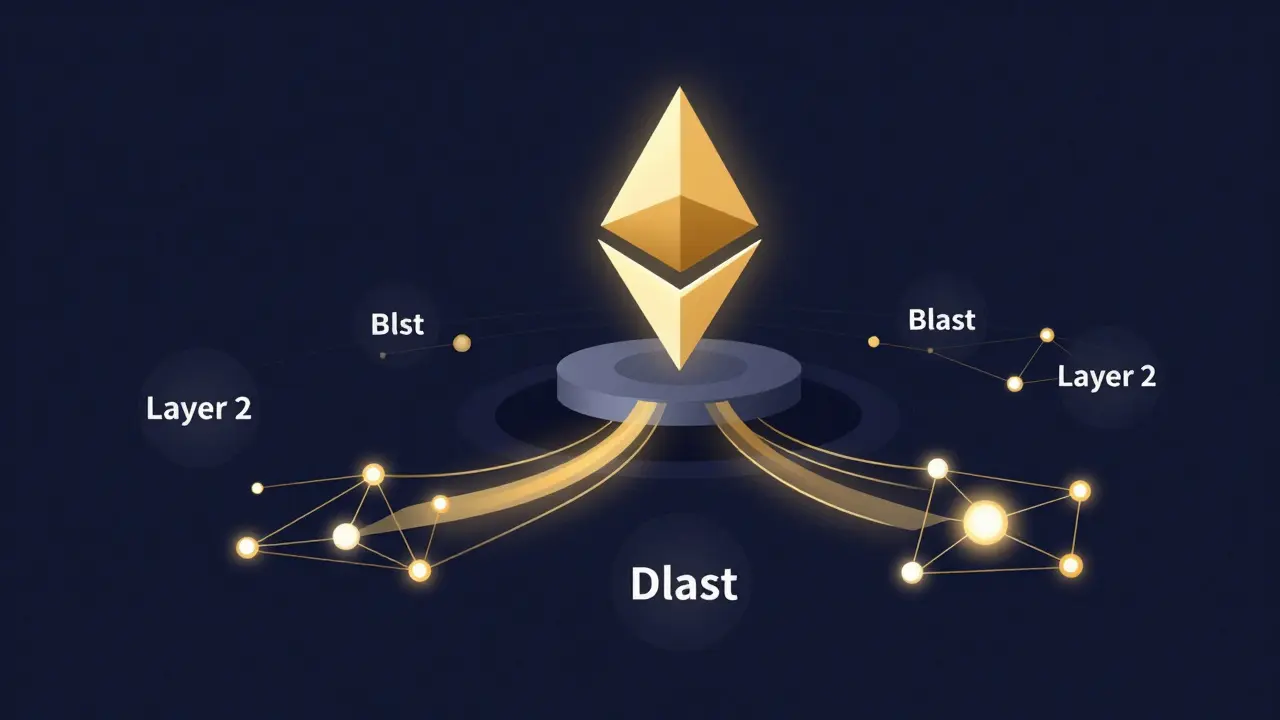
Most of us have been burned by centralized exchanges. You know the drill: frozen withdrawals, opaque fees, and that lingering fear that your funds aren't actually yours. That’s why Uniswap V3 is a leading automated market maker protocol that allows users to swap tokens and provide liquidity with concentrated capital efficiency remains a favorite among serious traders. But here is the twist: running Uniswap on Ethereum mainnet is expensive. Gas fees can eat your profits alive. So, when Blast is an Ethereum Layer 2 blockchain designed to maximize yields for ETH and stablecoin holders through native interest generation launched, it promised something different. It promised yield on just holding your assets. Now, with Uniswap V3 deployed on Blast since 2024, you might be asking if this combination is the holy grail of DeFi or just another fleeting trend.
I’ve spent the last few weeks testing the waters on Blast, swapping tokens, checking liquidity depths, and comparing it against other Layer 2 solutions like Arbitrum and Optimism. The results are mixed. There is real potential here, but there are also significant limitations you need to understand before you bridge your funds over. Let’s break down what Uniswap V3 on Blast actually looks like in 2026.
The Core Promise: Yield Without the Hassle
To understand why anyone would use Uniswap on Blast instead of Ethereum or even Base, you have to look at Blast’s unique value proposition. Unlike most Layer 2 networks that focus solely on speed and low costs, Blast focuses on yield. When you deposit ETH into Blast, the network automatically routes a portion of it to lending protocols and restaking mechanisms to generate yield. This yield is then distributed back to you as more ETH. Similarly, stablecoins deposited on Blast earn yield from money markets.
This creates an interesting dynamic for Uniswap users. If you are providing liquidity on Uniswap V3 (Blast), your underlying assets are potentially earning passive yield from the Blast network itself, on top of the trading fees you collect from swaps. It’s a double-dip scenario. However, this comes with a catch. The liquidity on Blast is still relatively thin compared to established chains. As of early 2026, the platform supports only a handful of trading pairs. Currently, there are just two primary coins supported with four trading pairs available. This means if you want to trade niche altcoins or newer meme tokens, you likely won’t find them here yet.
Liquidity and Trading Experience
Liquidity is king in decentralized finance. Without it, you suffer from high slippage and wide bid-ask spreads. On Uniswap V3 (Blast), the average bid-ask spread sits around 0.68%. For a mature DEX on Ethereum or Arbitrum, you’d expect spreads closer to 0.01% or 0.05% for major pairs like ETH/USDC. A 0.68% spread is steep. It indicates that while there is some liquidity, it is not deep enough to handle large trades without moving the price significantly.
In terms of volume, Uniswap V3 on Blast ranks in the 58th percentile for volume and the 15th percentile for combined orderbook depth among decentralized exchanges. To put that in perspective, the broader Uniswap ecosystem processes between $1 billion and $2 billion in daily volume across all chains. The Blast deployment is a tiny fraction of that. This makes it suitable for small-to-medium sized trades but risky for institutional-sized movements. If you try to swap $50,000 worth of ETH for USDC on Blast right now, you will likely get hammered by slippage.
The user interface is identical to the standard Uniswap experience. You connect your wallet-MetaMask works seamlessly-and you see the familiar swap screen. The transition feels smooth because the UI doesn’t change based on the chain. However, the backend reality is different. You are interacting with a nascent liquidity pool. I tested a few small swaps during my review. The transactions confirmed instantly, thanks to Blast’s Layer 2 speed, but the execution prices were noticeably worse than what I saw on Uniswap V3 on Arbitrum.
Fees and Costs: The Hidden Math
One of the biggest selling points of Layer 2 networks is cost reduction. On Ethereum mainnet, a single swap can cost $10 to $50 in gas fees depending on network congestion. On Blast, transaction fees are negligible, often costing less than a penny. This is a massive advantage for frequent traders who execute multiple small swaps per day.
However, you need to factor in the Uniswap fees themselves. Uniswap V3 typically charges a 0.30% fee for standard pairs, though this can vary depending on the volatility of the assets. On Blast, these fee structures remain consistent with the broader protocol. The lack of margin trading capabilities means you are limited to spot trading only. There are no leveraged positions, which simplifies things for beginners but limits advanced strategies.
Here is where the math gets tricky. While you save on gas, you pay a premium in spread. If you are providing liquidity, the 0.30% fee might be attractive, but you must weigh it against the risk of impermanent loss and the lower total volume. Fewer trades mean fewer fees collected. Conversely, if you are just swapping, the low gas fee is nice, but the wide spread might make it cheaper to swap on a centralized exchange like Coinbase or Binance, where spreads are tighter and liquidity is deeper.
Security and Custody: You Are the Bank
Let’s talk about security. One of the core tenets of Uniswap is non-custodial operation. This means you retain full control of your funds at all times. You never send your crypto to Uniswap; you interact directly with their smart contracts. This eliminates counterparty risk associated with centralized exchanges going bankrupt or getting hacked.
Blast, as a Layer 2 solution, relies on Ethereum’s base layer security for finality. This provides a strong security foundation. However, Blast introduces its own smart contract risks. The yield mechanism involves routing assets to various DeFi protocols. If one of those underlying protocols fails or gets exploited, it could impact the yield distribution or, in worst-case scenarios, the safety of your principal. Always do your own due diligence on the Blast network’s audits and insurance coverage.
Regulatory clarity remains a gray area. Uniswap V3 on Blast, like most DeFi protocols, operates without direct government regulation. This offers freedom but also lacks consumer protections. If you make a mistake, such as sending funds to the wrong address, there is no customer support team to call. The transaction is irreversible. This is a critical distinction from traditional finance. You are responsible for every click.
| Feature | Uniswap V3 (Blast) | Uniswap V3 (Arbitrum) | Uniswap V3 (Ethereum) |
|---|---|---|---|
| Avg. Bid-Ask Spread | ~0.68% | ~0.05% | ~0.02% |
| Gas Fees | <$0.01 | $0.01 - $0.05 | $5.00 - $50.00+ |
| Trading Pairs Available | 4 (Limited) | Thousands | Tens of Thousands |
| Native Yield Feature | Yes (ETH & Stablecoins) | No | No |
| Liquidity Depth | Low (Nascent) | High | Highest |
| Best For | Yield seekers, small swaps | Active trading, deep liquidity | Large institutional trades |
Who Should Use Uniswap V3 on Blast?
Not everyone should jump on this bandwagon. Based on my analysis, Uniswap V3 on Blast is best suited for specific types of users:
- Yield Farmers: If you are looking to maximize returns on idle ETH or stablecoins, the native yield feature of Blast combined with liquidity provision fees could offer a higher APY than static staking.
- Small-Scale Traders: If you are trading amounts under $1,000, the low gas fees make it cost-effective, provided you accept the wider spreads.
- DeFi Experimenters: Those interested in testing new Layer 2 ecosystems and understanding how yield-bearing chains operate will find Blast fascinating.
On the flip side, avoid Uniswap V3 on Blast if:
- You Need Deep Liquidity: Large traders will suffer from slippage.
- You Want Wide Token Selection: With only four trading pairs, your options are severely limited.
- You Are Risk-Averse: Newer chains carry higher smart contract and ecosystem risks.

Getting Started: A Practical Guide
If you decide to give it a shot, here is how to set up your account. First, ensure your wallet supports Ethereum Layer 2 networks. MetaMask is the most reliable choice. Add the Blast network to your wallet manually using the correct RPC details found on the official Blast documentation. Do not trust random links found on social media; phishing attacks are rampant in the DeFi space.
Next, bridge your assets. You can transfer ETH or USDC from Ethereum mainnet to Blast using the official Blast bridge. This process takes a few minutes and costs minimal gas on the L2 side. Once your funds are on Blast, navigate to the Uniswap interface. Connect your wallet. You will see the available pairs. Select your desired pair, input the amount, and review the quote. Pay close attention to the minimum received amount due to the wide spreads. Confirm the transaction in your wallet.
Remember, there is no KYC required for using Uniswap directly. However, if you buy crypto via third-party providers like MoonPay to fund your wallet, they may require identity verification. MoonPay charges between 2.55% and 3.65% for card purchases, so buying directly on-chain via bridges is often cheaper.
The Future Outlook
The future of Uniswap V3 on Blast hinges on two factors: adoption and liquidity growth. As more projects launch on Blast, liquidity pools will deepen, spreads will tighten, and the platform will become more viable for larger trades. The broader Uniswap ecosystem continues to evolve, with V4 already showing strong performance in 2025. If Blast captures a significant share of the DeFi market, its integration with Uniswap will benefit immensely.
However, competition is fierce. Other Layer 2 solutions like Base, Optimism, and Arbitrum are aggressively expanding their ecosystems. Blast’s unique yield proposition is its differentiator, but it needs to prove long-term sustainability. Regulatory pressures could also impact the landscape, potentially forcing changes to how yield is distributed or tracked.
For now, treat Uniswap V3 on Blast as a specialized tool rather than a primary exchange. Use it for specific yield strategies or small swaps where gas savings outweigh spread costs. Keep your eye on liquidity metrics and be prepared to move your funds if better opportunities arise elsewhere.
Is Uniswap V3 on Blast safe to use?
Uniswap V3 on Blast inherits the security model of Uniswap, which is non-custodial and widely audited. However, Blast as a Layer 2 network introduces additional smart contract risks, particularly regarding its native yield mechanism. While generally considered safe for experienced DeFi users, it carries higher risk than established chains like Ethereum or Arbitrum due to its relative novelty.
What are the fees for trading on Uniswap V3 (Blast)?
Transaction gas fees on Blast are extremely low, often less than $0.01. However, Uniswap charges a trading fee, typically 0.30% for standard pairs. Additionally, the bid-ask spread is currently around 0.68%, which acts as an implicit cost for traders due to lower liquidity depth compared to other chains.
Can I trade any cryptocurrency on Uniswap V3 (Blast)?
No. As of early 2026, Uniswap V3 on Blast supports only a limited number of trading pairs, specifically four pairs involving two primary coins. This is significantly less than the thousands of pairs available on Uniswap deployments on Ethereum, Arbitrum, or Polygon.
How does Blast generate yield for users?
Blast generates yield by automatically routing deposited ETH to lending protocols and restaking mechanisms, and stablecoins to money markets. The resulting interest is distributed back to users as additional ETH or stablecoins. This happens natively on the network level, meaning you earn yield simply by holding assets on Blast.
Do I need to complete KYC to use Uniswap on Blast?
No, Uniswap is a permissionless, non-custodial protocol that does not require Know Your Customer (KYC) verification. You can connect your wallet and trade anonymously. However, if you purchase crypto via third-party fiat on-ramps like MoonPay to fund your wallet, those providers may require KYC.
Why is the bid-ask spread so high on Blast compared to other chains?
The high bid-ask spread (~0.68%) is due to lower liquidity depth. Blast is a newer deployment with fewer trading pairs and less total value locked compared to mature DEXs on Ethereum or Arbitrum. Lower liquidity means larger trades have a greater impact on price, resulting in wider spreads.
Author
Ronan Caverly
I'm a blockchain analyst and market strategist bridging crypto and equities. I research protocols, decode tokenomics, and track exchange flows to spot risk and opportunity. I invest privately and advise fintech teams on go-to-market and compliance-aware growth. I also publish weekly insights to help retail and funds navigate digital asset cycles.