
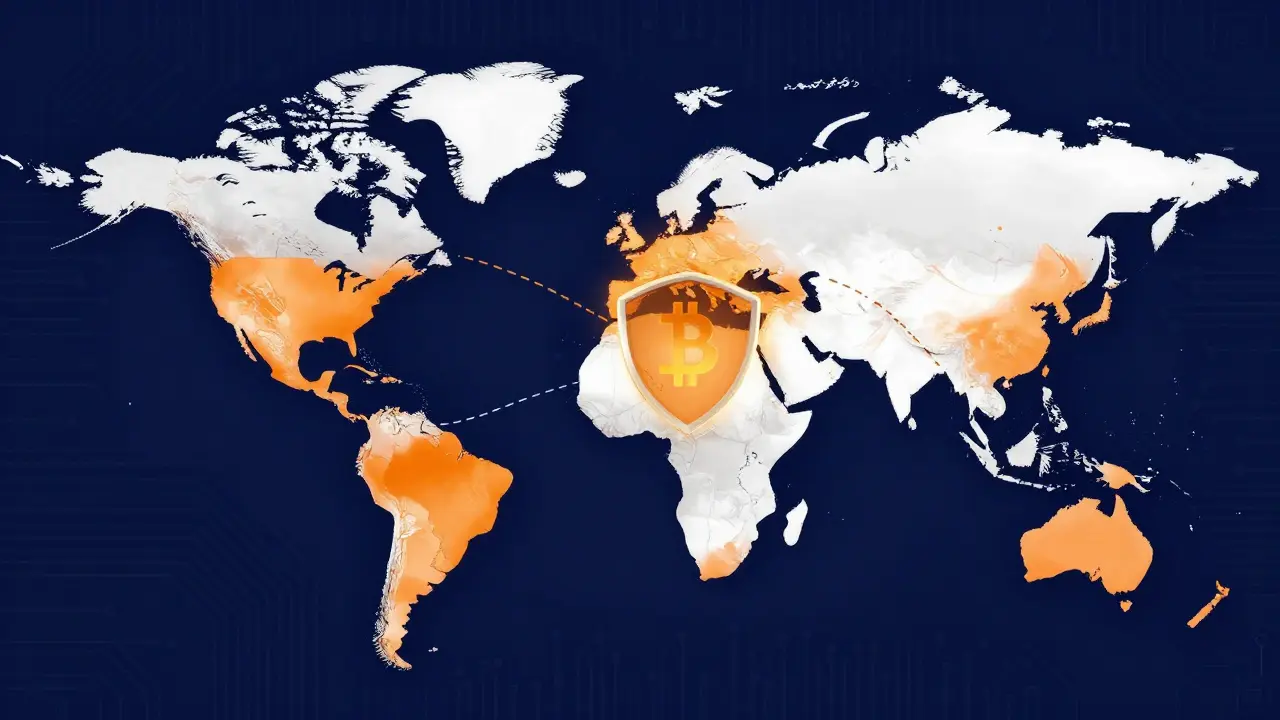
Trying to sign up for a crypto account only to find out your country or state is on a "no-fly" list is incredibly frustrating. Whether it's a complete ban on the platform or a specific coin being unavailable in your region, Kraken is a San Francisco-based cryptocurrency exchange that maintains a strict set of geographic restrictions to stay compliant with global laws. Launched in 2011, it has grown into one of the largest platforms in the world, but that growth comes with a complex web of rules that can leave some users locked out.
The "Hard No": Completely Blocked Countries
For some regions, it's not about which coin you can't trade-it's that you can't use the platform at all. Kraken enforces total service prohibitions in nations hit by international sanctions. If you're living in these areas, you'll find it's impossible to open an account or execute trades.
The primary banned jurisdictions include:
- Sanctioned Nations: Afghanistan, Belarus, Russia (including Crimea, Donetsk, and Luhansk), Iran, Iraq, North Korea, Syria, Libya, Sudan, South Sudan, and Cuba.
- High-Risk Regions: Democratic Republic of the Congo, Central African Republic, Congo-Brazzaville, Eritrea, Congo-Kinshasa, Guinea-Bissau, Lebanon, Mali, Namibia, Somalia, Tajikistan, and Yemen.
These blocks aren't arbitrary. They are designed to satisfy regulators like FinCEN the Financial Crimes Enforcement Network in the US and the FCA Financial Conduct Authority in the UK . Attempting to bypass these blocks using a VPN is a gamble that usually ends in account termination and frozen assets, as Kraken uses sophisticated geolocation and ID verification tools to spot spoofing.
The US Puzzle: State-by-State Restrictions
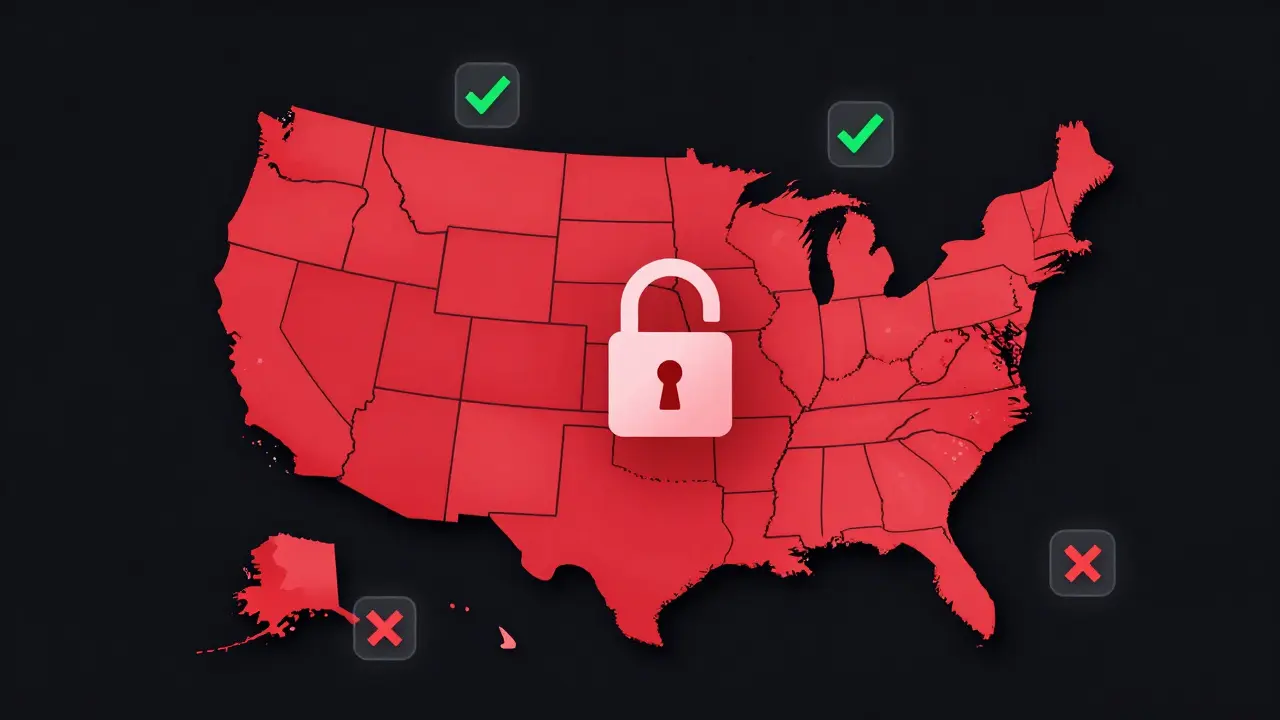
Just because you're in the United States doesn't mean you have full access. The US is a regulatory minefield, and Kraken handles it by applying different rules depending on where you live. This is often where users get most confused.
The most notable exclusions are for residents of New York and Washington State. For a long time, these states have been largely off-limits, though some users can apply for pre-verification while waiting for regulatory green lights. Beyond that, there are "micro-restrictions":
- Currency Limits: If you live in Texas or New Hampshire, you can't fund, trade, or hold Euro currency.
- Specific Coin Bans: XRP trading is prohibited across all US states. Additionally, tokens like EWT and GRT are unavailable for both US and Canadian residents.
- Staking Only: For ETH2.S, US users are limited to staking and cannot trade the asset directly.
- Margin Limits: While non-US traders can hold margin positions for up to 365 days, US residents are capped at just 28 days.
Europe and the MiCA Shift
Europe is currently going through a massive regulatory overhaul thanks to the MiCA Markets in Crypto-Assets regulation, a comprehensive framework for crypto-assets in the EU . Because of this, Kraken had to make some hard choices in early 2025 regarding stablecoins.
In over 30 countries-including Spain, Portugal, Sweden, and Austria-Kraken delisted several major stablecoins to avoid legal heat. This was a shock to many, as executives had previously hinted that Tether (USDT) was safe. The crackdown hit five major assets: Tether USDT , PayPal USD, TrueUSD, Tether EURt, and TerraClassic USD. Users were given a tight window in March 2025 to move their funds before spot trading was terminated entirely.
| Region | Restriction Level | Key Impact |
|---|---|---|
| Sanctioned Nations (e.g., Iran, North Korea) | Total Block | No account creation or trading permitted. |
| New York / Washington State | High Restriction | Limited or no access depending on verification. |
| European Economic Area (EEA) | Asset-Specific | Major stablecoins (like USDT) delisted due to MiCA. |
| Australia | Asset-Specific | Privacy coins (XMR, ZEC, DASH) are banned. |
| Japan | Compliance-Based | Strict documentation for JPY trading; FLOW token banned. |
Why the Restrictions Exist
You might wonder why a global company makes it so hard to trade. The answer is simple: survival. Kraken wants to maintain its status as a tier-1 exchange. To do that, they need licenses from bodies like AUSTRAC Australia's anti-money laundering and counter-terrorism financing agency in Australia and FINTRAC the financial intelligence unit of Canada in Canada.
By proactively blocking problematic jurisdictions, Kraken avoids the kind of catastrophic legal battles that have crippled other exchanges. They even went as far as getting Wyoming's first Special Purpose Depository Institution (SPDI) charter in 2020, effectively becoming the first crypto exchange with a US banking license. While this makes the platform feel restrictive to some, it provides a level of institutional security that "offshore" exchanges can't match.
How to Navigate Verification
If you aren't in a blocked zone but are still having trouble, it's likely a verification issue. Kraken uses a multi-layered system to ensure you aren't lying about your location. This includes IP geolocation and government-issued IDs. Standard accounts usually take 24-48 hours to verify, but if you're in a region with complex laws, it can take up to a week.
If you're moving to a new country, don't just change your VPN. You'll need to provide updated proof of residence. If the system detects a mismatch between your ID and your IP address, they may freeze your account until you can prove where you actually live.
Can I use a VPN to access Kraken from a blocked country?
No. Kraken employs sophisticated detection systems to identify VPNs and geographic spoofing. If caught, your account can be permanently terminated and your assets may be frozen.
Why can't I trade USDT in Europe?
This is due to the Markets in Crypto-Assets (MiCA) regulation. To comply with EU law, Kraken delisted several stablecoins, including USDT, in over 30 European countries throughout early 2025.
Are residents of New York and Washington completely banned?
Generally, yes, but there are nuances. Some residents can apply for pre-verification pending regulatory approval, though full access remains restricted compared to other US states.
Which privacy coins are blocked in Australia?
Australian residents are prohibited from funding, trading, or holding privacy-focused coins, specifically Monero (XMR), Zcash (ZEC), and DASH.
What happens if I move from a blocked jurisdiction to a permitted one?
You must undergo a new verification process. This involves submitting a government-issued ID and proof of residence from your new location to update your account's geographic status.
Next Steps for Users
If you find yourself in a restricted zone, you have a few options. For those in the US or EU, checking for specific asset alternatives-like regulated stablecoins that replace USDT-is the best way forward. If you are in a completely blocked country, you'll likely need to look for decentralized exchanges (DEXs) that don't require KYC (Know Your Customer) verification, though these come with their own set of security risks.
For those in New York or Washington, keep an eye on Kraken's official announcements. The exchange is actively pursuing regulatory approvals to expand its services back into these states, so the situation could change in the coming months.


Author
Ronan Caverly
I'm a blockchain analyst and market strategist bridging crypto and equities. I research protocols, decode tokenomics, and track exchange flows to spot risk and opportunity. I invest privately and advise fintech teams on go-to-market and compliance-aware growth. I also publish weekly insights to help retail and funds navigate digital asset cycles.