

Imagine powering a city of 70,000 people with just one unauthorized Bitcoin farm. That’s not a hypothetical scenario-it’s exactly what happened in East Kazakhstan Oblast in August 2025. Authorities dismantled an illegal mining operation consuming over 50 megawatt-hours of electricity, worth roughly $16 million. This single incident highlights why Kazakhstan is the Central Asian nation that transformed from the world's top Bitcoin mining hub into a strictly regulated zone following a severe energy crisis. If you’re tracking crypto trends or considering mining operations, understanding these shifts is critical. The days of cheap, unchecked power are over.
From Global Leader to Regulatory Hotspot
Back in 2019, Kazakhstan was the place to be for miners. Why? Cheap electricity and lax rules. By 2021, the country held the largest share of global Bitcoin hash rate. It seemed like a win-win: miners got low costs, and the local economy got investment. But rapid expansion broke the grid. Residential areas faced blackouts. Hospitals struggled. Strategic industries slowed down. The government realized that unregulated growth wasn’t sustainable.
This led to a complete overhaul. Today, mining is legal but tightly controlled. The Astana International Financial Centre (AIFC) is a special economic jurisdiction in Astana that serves as the primary regulatory platform for cryptocurrency activities in Kazakhstan. All trading must happen through AIFC platforms. Miners must sell 75% of their assets there, up from 50% in 2024. This isn’t just bureaucracy; it’s a mechanism to keep money visible and taxable.
The Energy Crisis and Illegal Mining Crackdowns
The core issue was always energy. When legal miners couldn’t get enough power, illegal ones filled the gap. They bypassed meters, bribed utility staff, and drained the grid. The August 2025 raid in East Kazakhstan exposed how deep this went. Corrupt employees diverted power meant for homes and social facilities. For two years, this underground network thrived.
Enforcement has become aggressive. By 2024, authorities had shut down 36 unregulated exchanges and seized 4,000 mining devices. The Financial Monitoring Agency (FMA) is the Kazakh government body responsible for supervising financial markets and combating money laundering works closely with the National Security Committee (KNB). They don’t just confiscate rigs; they seize luxury apartments and cars bought with illicit profits. This sends a clear message: hiding behind anonymity won’t work anymore.

New Rules for Licensed Miners
If you want to mine legally in Kazakhstan now, you need more than just hardware. You need licenses, transparency, and compliance. As of 2023, the government issued 84 licenses and registered 415,000 machines. But getting a license is only step one.
- Licensing: Operations must register with the National Association of Blockchain and Data Center Industry.
- Electricity Purchases: You can only buy power through the state-run Ministry of Energy platform. Transactions are capped at one megawatt-hour per purchase to prevent hoarding.
- Taxes: A 15% tax applies to mining operations. There’s also a specific electricity tax introduced in 2022.
- AML Compliance: Strict anti-money laundering checks are mandatory. Failure here leads to criminal prosecution, not just fines.
These rules aim to stabilize the grid. During peak consumption periods, the government can temporarily restrict power supply to mining farms. This ensures households and essential services come first. It’s a trade-off: reliability for stability.
| Feature | Pre-2022 (Boom Era) | Current Status (2025-2026) |
|---|---|---|
| Regulation Level | Minimal oversight | Strict licensing & AML checks |
| Electricity Access | Open market, low cost | State-controlled platform, capped purchases |
| Sales Requirement | None | 75% of assets sold via AIFC |
| Tax Rate | Negligible | 15% on operations + electricity tax |
| Illegal Operations | Common, tolerated | Aggressively prosecuted, assets seized |
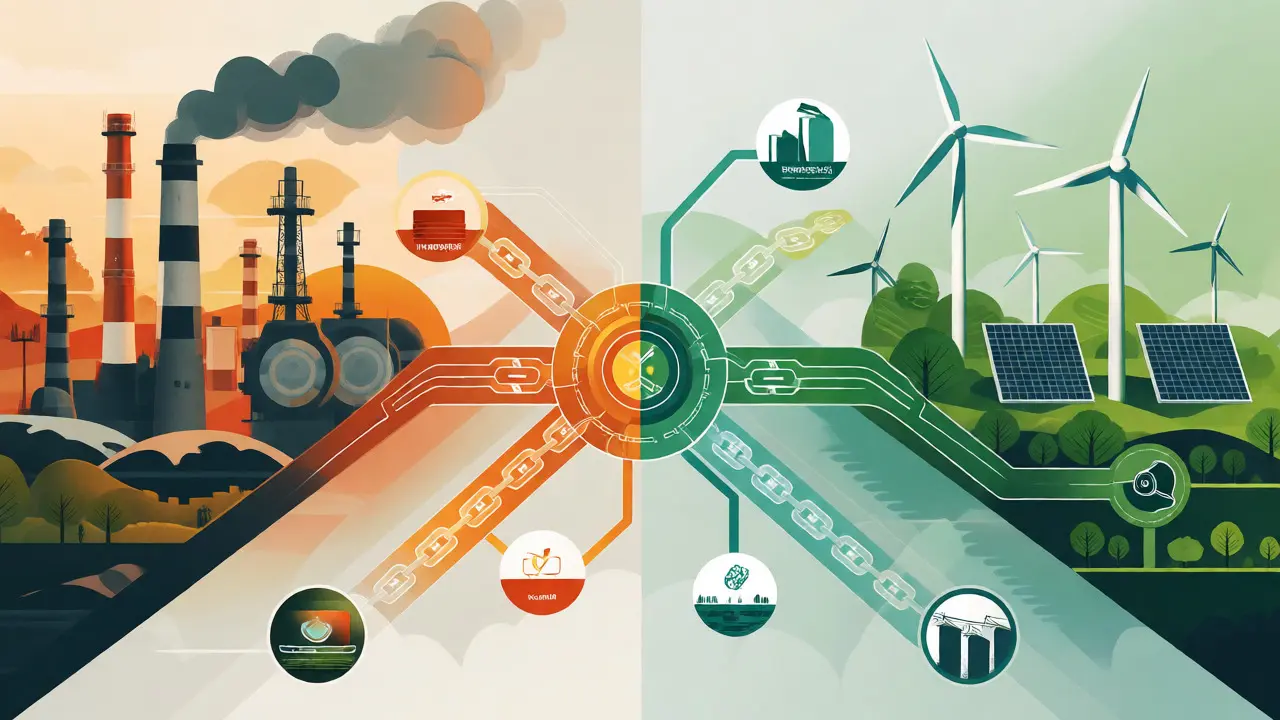
Proposed Solutions and Future Outlook
The government isn’t just punishing miners; they’re trying to integrate them. Tuleushin, a representative for the Energy Minister, proposed a "70/30" model. Foreign investors would fund thermal power plant upgrades. In return, 70% of new capacity goes to the national grid, while 30% is allocated to crypto miners. This could turn miners from parasites into partners who help modernize infrastructure.
Renewable energy is another focus. Solar and wind projects are being fast-tracked to support mining without worsening carbon footprints. Deputy Governor Berik Sholpankulov emphasized developing digital financial infrastructure based on presidential instructions. The goal is clear: encourage innovation within strict boundaries.
Legislators like Ekaterina Smyshlyaeva are pushing for even tighter controls. Proposals include mandating that miners store portions of their assets on registered exchanges. This increases sector size and makes oversight easier. While some fear this stifles growth, others see it as necessary maturation.
Why This Matters for Global Crypto Markets
Kazakhstan’s shift mirrors trends elsewhere. Russia launched a national registry for mining equipment. France explores using unused nuclear power for regulated mining. The common thread? Governments are reclaiming control over energy-intensive crypto activities.
For investors, this means higher operational costs but lower regulatory risk. The era of "wild west" mining in Central Asia is ending. Legitimate players benefit from clarity. Illicit operators face existential threats. If you’re evaluating mining destinations, Kazakhstan remains viable-but only for those willing to play by the new, complex rules.
Is crypto mining still legal in Kazakhstan?
Yes, but it is highly regulated. Miners must obtain licenses, pay taxes, and conduct trading through the Astana International Financial Centre (AIFC). Unlicensed mining is subject to heavy penalties and asset seizure.
What percentage of mined crypto must be sold on AIFC platforms?
As of 2025, licensed miners are required to sell 75% of their cryptocurrency assets on AIFC platforms. This requirement increased from 50% in 2024 to ensure greater market transparency and tax compliance.
How does the government control electricity for miners?
Miners can only purchase electricity through a state-run platform operated by the Ministry of Energy. Each transaction is limited to one megawatt-hour. Additionally, temporary restrictions may apply during peak consumption periods to protect the national grid.
What happens to illegal mining operations?
Authorities actively raid and dismantle illegal operations. Equipment is confiscated, and profits used for personal assets like real estate and vehicles are seized. Operators face criminal prosecution under anti-money laundering laws.
Are there plans to expand renewable energy for mining?
Yes, the government is initiating solar and wind projects to support crypto mining. This aims to meet energy demands without compromising environmental commitments and reducing reliance on strained thermal power plants.
Author
Ronan Caverly
I'm a blockchain analyst and market strategist bridging crypto and equities. I research protocols, decode tokenomics, and track exchange flows to spot risk and opportunity. I invest privately and advise fintech teams on go-to-market and compliance-aware growth. I also publish weekly insights to help retail and funds navigate digital asset cycles.