

Imagine your code being treated like a bank account. That is exactly what happened to Tornado Cash, the Ethereum-based privacy protocol that became the first open-source software ever sanctioned by the US government. In August 2022, the Office of Foreign Assets Control (OFAC) slapped sanctions on its smart contracts, arguing they helped launder billions in stolen crypto. This move sent shockwaves through the industry because it wasn't targeting a company with employees and offices-it was targeting immutable code running autonomously on a blockchain.
If you are a developer, an investor, or just someone who cares about digital privacy, this case matters. It sets the boundaries for how much freedom you have when using decentralized finance (DeFi). Did the government overreach? Can you be sued for writing code that others misuse? Let's break down the legal battle, the technical reality, and where things stand today.
What Exactly Was Sanctioned?
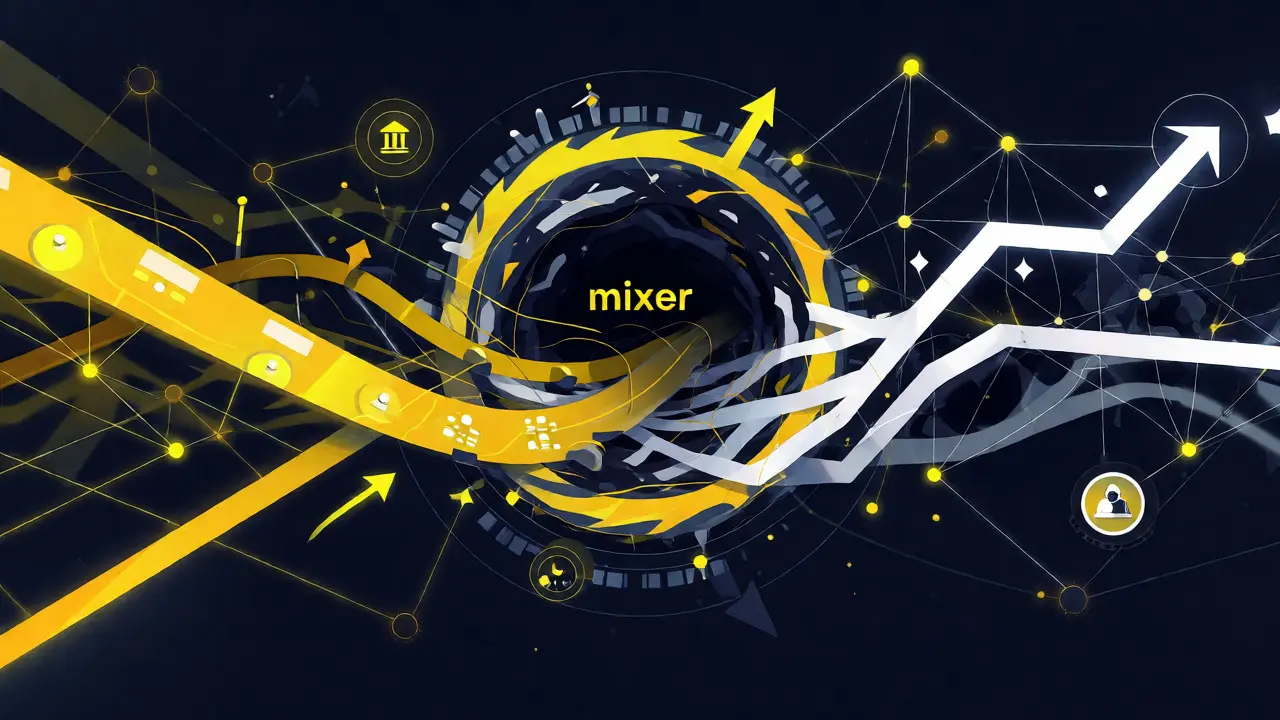
To understand the outrage, you need to grasp what Tornado Cash actually did. It wasn't a centralized exchange like Coinbase where a company holds your keys. It was a set of smart contracts deployed on the Ethereum blockchain. Users would deposit ETH into a pool, receive a proof, and later withdraw the same amount to a different address. By mixing funds from thousands of users, it broke the link between the sender and receiver, offering financial privacy.
The Treasury Department claimed this anonymity was abused. They stated that since its launch in 2019, the protocol facilitated the laundering of over $7 billion in digital assets. Specific high-profile incidents fueled the crackdown. For instance, North Korea’s Lazarus Group used Tornado Cash to wash more than $455 million stolen from various hacks. Other major exploits, like the Harmony Bridge Heist ($96 million) and the Nomad Heist ($7.8 million), also saw funds pass through these pools.
OFAC designated Tornado Cash under Executive Order 13694, which targets significant cyber-enabled activities. The designation meant US persons were banned from interacting with the protocol’s addresses. If you touched those smart contracts, you risked civil penalties or even criminal prosecution. This created a bizarre situation: the code kept running because no one could shut down Ethereum, but Americans were legally forbidden from using it.
The Legal Battle: Code vs. Person
The core legal question here is fascinating: Can you sanction a piece of software? Traditional sanctions target people, companies, or vessels-entities with human control. Smart contracts, once deployed, are autonomous. No CEO can pause them; no board can vote to stop transactions. Yet, OFAC argued that the developers and operators behind Tornado Cash retained enough control to be held liable.
This sparked immediate lawsuits. Investors and advocacy groups challenged the designation, arguing OFAC exceeded its authority under the Administrative Procedure Act. They claimed the agency couldn't sanction "immutable" technology. Meanwhile, the DOJ took a different approach by prosecuting the founders personally. Roman Storm, a co-founder, faced charges including conspiracy to operate an unlicensed money transmitting business and violating sanctions.
The trial concluded in August 2025 with a split verdict. The jury convicted Storm on the unlicensed money transmission charge but deadlocked on the heavier counts of money laundering and sanctions violations. This outcome highlights the gray area regulators struggle with. Developers argue they built a tool for privacy, not crime. Prosecutors argued they knowingly enabled illicit flows without implementing basic controls.
Impact on Privacy and DeFi
The sanctions didn't kill Tornado Cash, but they changed how it operates. Exchanges began blocking withdrawals from Tornado Cash addresses to avoid compliance headaches. Wallets added warnings if you interacted with sanctioned contracts. For regular users, this meant a chilling effect. Many avoided privacy tools entirely, fearing accidental association with sanctioned entities.
Privacy advocates warned that this precedent could criminalize legitimate use cases. What if you want to hide your salary from coworkers? Or protect your donation history? Under strict interpretation, using any mixer might flag your wallet. Law enforcement counters that unrestricted mixing makes tracking criminal proceeds nearly impossible, aiding everything from ransomware payments to state-sponsored theft.
| Date | Event | Significance |
|---|---|---|
| Aug 8, 2022 | OFAC Sanctions Designation | First time open-source software was sanctioned; banned US interactions. |
| Mar 2023 | Lawsuits Filed | Investors challenged OFAC's authority to sanction code. |
| Aug 6, 2025 | Roman Storm Verdict | Jury convicted on unlicensed transmission; deadlocked on money laundering. |
| Mar 21, 2025 | Sanctions Lifted (Reported) | TORN token price surged as regulatory pressure eased. |
Why Enforcement Is Hard
Here is the practical problem: You can ban Americans from sending money to a specific address, but you can't delete the address from the blockchain. The smart contracts remained live throughout the sanctions period. Determined bad actors simply found workarounds. Analysis showed that while US volume dropped, global usage continued, especially among non-US entities who weren't bound by OFAC rules.
This exposes a limitation in current regulatory frameworks. Sanctions rely on jurisdictional reach. If a user lives outside the US and uses a decentralized interface hosted on IPFS (InterPlanetary File System), enforcing the ban becomes technically difficult. Financial institutions had to implement rigorous screening tools to detect "tainted" coins, adding friction for everyone. A single interaction with a sanctioned address could theoretically freeze funds in a custodial wallet, forcing lengthy appeals processes.
Furthermore, the rise of alternative privacy solutions accelerated. Projects began incorporating compliance features directly into their protocols, allowing selective disclosure. These new mixers aim to satisfy regulators by letting auditors verify transaction origins without revealing full details to the public. It’s a cat-and-mouse game where technology adapts faster than legislation.

Current Status and Future Outlook
As of late 2025, the landscape has shifted. Reports indicate that some sanctions were lifted or modified, leading to a spike in the TORN token price. However, the legal uncertainty lingers. The incomplete conviction of Roman Storm means future prosecutions remain possible depending on appeals or new evidence. The broader message remains clear: regulators are watching DeFi closely.
For developers, the lesson is stark. Writing code is no longer just a technical exercise; it carries legal risk. Intent matters less than impact in the eyes of law enforcement. If your protocol facilitates anonymous transfers at scale, expect scrutiny. The industry is now pushing for clearer guidelines that distinguish between malicious abuse and legitimate privacy needs.
We are likely heading toward a hybrid model. Pure anonymity may face restrictions, while "privacy with permission" gains traction. Tools that allow users to prove compliance to auditors without exposing data to the world will probably become the standard. The Tornado Cash case didn't end the debate-it just started the next chapter.
Frequently Asked Questions
Can I still use Tornado Cash today?
Technically, yes, because the smart contracts are still live on Ethereum. However, US persons must check the latest OFAC guidance. While some sanctions were relaxed in 2025, interacting with certain addresses may still carry compliance risks. Always consult a legal expert before moving large sums through mixers if you are subject to US regulations.
Why was Tornado Cash sanctioned if it is decentralized?
The US Treasury argued that despite decentralization, the founders and associated entities maintained sufficient control over the front-end interfaces and governance mechanisms. They believed this level of involvement made the operators responsible for facilitating money laundering, particularly for North Korean hackers.
What happened to Roman Storm?
In August 2025, a jury convicted him of conspiracy to operate an unlicensed money transmitting business. They failed to reach a verdict on the more serious charges of money laundering and sanctions violations. This split decision reflects the difficulty in proving criminal intent for open-source developers.
Do all crypto mixers face the same risks?
Not necessarily. Regulators look at usage patterns. If a mixer primarily serves legitimate privacy seekers and implements voluntary compliance checks, it may face less scrutiny. Those heavily used by sanctioned entities or lacking any oversight mechanisms are higher-risk targets for future designations.
How do exchanges handle Tornado Cash transactions?
Major exchanges use blockchain analytics firms to screen deposits. If funds come from a known Tornado Cash address, the exchange may block the withdrawal, request additional documentation, or freeze the account until the source of funds is verified. This process can take weeks.
Author
Ronan Caverly
I'm a blockchain analyst and market strategist bridging crypto and equities. I research protocols, decode tokenomics, and track exchange flows to spot risk and opportunity. I invest privately and advise fintech teams on go-to-market and compliance-aware growth. I also publish weekly insights to help retail and funds navigate digital asset cycles.