
Trading crypto derivatives used to mean choosing between two bad options. You could use a centralized exchange like Binance or Bybit for speed and deep liquidity, but you’d have to hand over your keys and trust their solvency. Or you could use a decentralized exchange (DEX) like GMX or dYdX, keeping custody of your funds, but dealing with fragmented liquidity, high slippage, and the headache of bridging assets across different chains. Vertex Protocol is a hybrid decentralized trading platform that unifies spot, perpetual futures, and money markets into a single interface using cross-chain liquidity aggregation. Launched roughly a year ago, it has quickly become the second-largest perpetual DEX by average daily volume. It promises the speed of a centralized exchange with the security of DeFi.
I’ve spent weeks testing Vertex Protocol, executing trades on its Arbitrum deployment, and analyzing its unique Vertex Edge technology. Here is what you need to know about whether this platform actually delivers on its hype or if it’s just another shiny new object in the crowded DeFi space.
What Is Vertex Protocol?
Vertex Protocol is not just another perp DEX. It positions itself as an all-in-one financial hub. Most platforms specialize in one thing-either spot trading or derivatives. Vertex combines three core functions:
- Spot Trading: Buy and sell cryptocurrencies directly.
- Perpetual Futures: Trade leveraged positions without expiration dates.
- Money Markets: Earn yield on idle balances.
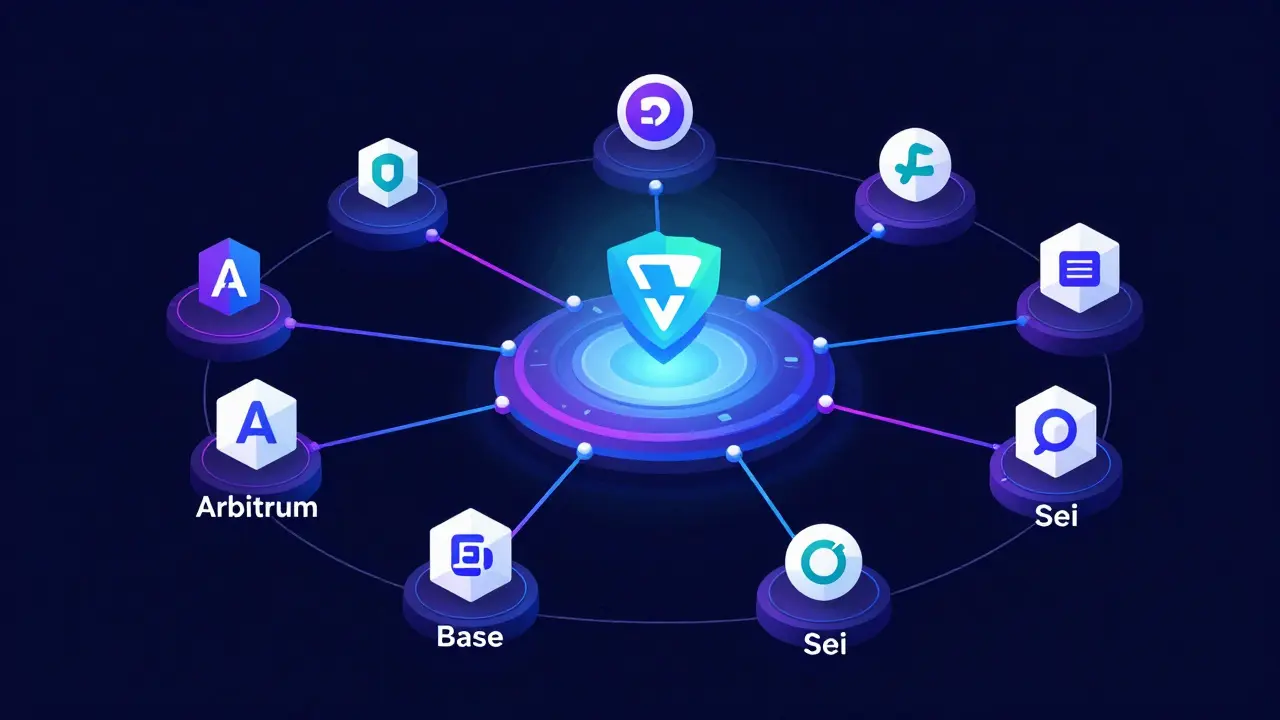
The magic happens under the hood with Vertex Edge, a technology that aggregates liquidity from multiple blockchains into a single unified orderbook. Instead of having separate pools for Ethereum, Arbitrum, or Base, Vertex pulls them together. This means when you place an order, you’re tapping into a much deeper pool of capital, reducing slippage significantly compared to traditional AMM-based DEXs.
How Vertex Edge Works: The Cross-Chain Advantage
Liquidity fragmentation is the biggest pain point in DeFi. If you want to trade Bitcoin on Arbitrum, you need liquidity there. If you want to trade it on Base, you need liquidity there. Usually, these pools are isolated, leading to thin books and worse prices.
Vertex Edge solves this by acting as a universal aggregator. It connects to networks like Arbitrum, Base, Sei, Blast, Mantle, and Sonic. When you trade, Vertex’s sequencer matches your order against liquidity across all these chains simultaneously.
Here is the practical benefit for you: you don’t need to bridge your assets manually. If you deposit USDC on Arbitrum, you can trade against liquidity sourced from other chains without moving your funds. The protocol handles the hedging and rebalancing behind the scenes. This creates a flywheel effect-more chains mean more liquidity, which attracts more traders, which brings even more liquidity.
Trading Experience: Speed, Leverage, and Orders
If you come from a centralized exchange background, the interface will feel familiar. Vertex uses an off-chain orderbook matching engine with on-chain settlement. This hybrid approach gives you latency as low as 5-15 milliseconds, which is incredibly fast for DeFi.
You get access to professional-grade tools:
- Order Types: Market, limit, and stop orders are supported. No more relying solely on market execution.
- Leverage: Up to 20x leverage on perpetual contracts.
- Margin Modes: Choose between Universal Cross Margin (pooling collateral for efficiency) or Isolated Margin (ring-fencing risk per position).
As of mid-2026, Vertex lists over 50 spot and perpetual pairs. This includes major cryptos like BTC, ETH, and SOL, plus select forex pairs. While it doesn’t have the thousands of pairs found on Binance, it covers the most liquid assets where serious volume exists.
Fees and Costs
Cost is king in trading. Vertex Protocol offers a highly competitive fee structure that rivals many centralized exchanges:
| Role | Fee Rate | Notes |
|---|---|---|
| Maker | 0% | No fees for adding liquidity |
| Taker | 0.02% | Competitive taker fee |
Since the primary deployment is on Arbitrum, gas fees are negligible for routine operations. Deposits and withdrawals happen directly on-chain without external bridges, saving you time and additional costs. Staking the native VRTX token can further reduce these fees through rebates.
The VRTX Token and Ecosystem
The VRTX token is central to the protocol’s economy. With a total supply of 1 billion tokens, it serves governance, utility, and incentive purposes.
Why should you care about VRTX? Holding and staking it unlocks several benefits:
- Fee Discounts: Reduce trading costs by staking VRTX.
- Governance: Vote on protocol upgrades and parameter changes.
- Rewards: Participate in yield farming and liquidity incentives.
The protocol runs a dynamic rewards model. Top traders in periodic competitions earn VRTX based on volume and strategy efficiency. There’s also a referral program that rewards users for bringing new traders to the platform. As of February 2026, the circulating supply was around 528 million tokens, with a fully diluted valuation reflecting strong market interest.
Security and Risk Management
In DeFi, security isn’t a feature; it’s a requirement. Vertex Protocol employs a robust risk engine that continuously monitors open positions. If your position approaches liquidation levels, the system executes automatically to protect the protocol’s solvency.
Because settlement happens on-chain, every trade is transparent and verifiable. Unlike centralized exchanges, Vertex doesn’t hold your funds in a custodial wallet. Your assets remain in your non-custodial wallet until you execute a trade, at which point they are locked in smart contracts. This eliminates counterparty risk associated with exchange insolvency.
However, remember that smart contract risk always exists. While Vertex has undergone audits and stress tests, interacting with any DeFi protocol carries inherent risks. Always start with small amounts to familiarize yourself with the interface and withdrawal processes.
Vertex Protocol vs. Competitors
How does Vertex stack up against established players like dYdX, GMX, and Hyperliquid?
| Feature | Vertex Protocol | Hyperliquid | dYdX |
|---|---|---|---|
| Architecture | Hybrid (Off-chain matching, On-chain settlement) | Dedicated L1 Blockchain | StarkEx / Cosmos Chain |
| Cross-Chain Liquidity | Yes (Vertex Edge) | No (Native L1 only) | Limited |
| Maker/Taker Fees | 0% / 0.02% | Variable (often lower) | 0.02% / 0.05% |
| Mobile App | Web Browser Only | Dedicated Wallet App | Web Interface |
| Integrated Money Market | Yes | No | Yes (via integrations) |
Hyperliquid boasts incredible speed due to its custom Layer-1 chain, but it operates in isolation. Vertex achieves similar speeds while pulling liquidity from multiple ecosystems. dYdX is a veteran in the space, but Vertex’s unified liquidity model and zero maker fees give it a distinct edge for active traders looking to minimize costs.
Pros and Cons
Before you deposit funds, weigh these factors carefully.
Pros:
- Unified Liquidity: Access deep orderbooks across chains without manual bridging.
- Low Fees: Zero maker fees are hard to beat.
- All-in-One: Spot, perps, and lending in one place.
- Fast Execution: 5-15ms latency rivals CEXs.
Cons:
- No Dedicated Mobile App: Trading on mobile relies on web browsers, which can be less intuitive than native apps.
- Newer Protocol: While growing fast, it has less long-term track record than dYdX or Uniswap.
- Complexity: The cross-chain mechanics are powerful but may confuse beginners.
Who Should Use Vertex Protocol?
Vertex Protocol is ideal for intermediate to advanced traders who understand leverage and want to keep custody of their assets. If you trade frequently, the zero maker fees and deep liquidity will save you significant money over time. It’s particularly useful if you already hold assets on Arbitrum, Base, or Sei and want to trade without paying bridge fees.
Beginners might find the interface overwhelming. If you are new to crypto, stick to simple spot trading on user-friendly platforms first. However, if you are ready to explore DeFi derivatives, Vertex offers one of the best risk-adjusted experiences available today.
Is Vertex Protocol safe to use?
Vertex Protocol uses non-custodial smart contracts, meaning you retain control of your funds until you trade. It employs a rigorous risk engine for liquidations and has undergone security audits. However, as with any DeFi platform, smart contract vulnerabilities are a theoretical risk. Always do your own research and never invest more than you can afford to lose.
What is Vertex Edge?
Vertex Edge is the core technology that aggregates liquidity from multiple blockchains (like Arbitrum, Base, and Sei) into a single unified orderbook. This allows traders to access deep liquidity without manually bridging assets between chains, reducing slippage and improving price efficiency.
Does Vertex Protocol charge fees?
Vertex charges 0% for maker orders and 0.02% for taker orders. These fees are highly competitive. Additionally, staking the VRTX token can provide further fee discounts and rebates.
Can I use Vertex Protocol on mobile?
Yes, but there is no dedicated mobile app. You must access Vertex Protocol through a mobile web browser. While functional, the experience may not be as smooth as using a native application like Hyperliquid’s wallet app.
What is the maximum leverage on Vertex?
Vertex Protocol offers up to 20x leverage on perpetual futures contracts. Traders can choose between Universal Cross Margin and Isolated Margin modes to manage their risk exposure.
Author
Ronan Caverly
I'm a blockchain analyst and market strategist bridging crypto and equities. I research protocols, decode tokenomics, and track exchange flows to spot risk and opportunity. I invest privately and advise fintech teams on go-to-market and compliance-aware growth. I also publish weekly insights to help retail and funds navigate digital asset cycles.