
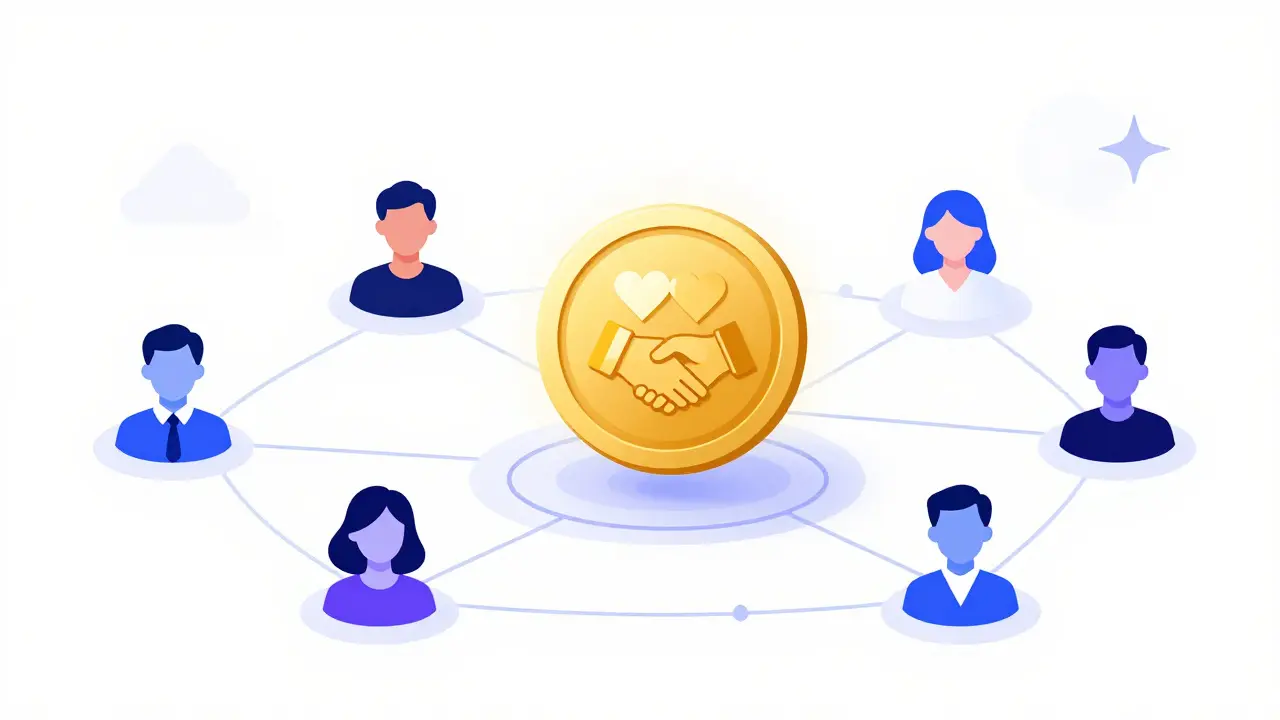
Ever heard of a cryptocurrency that promises to reward you for being kind? That’s the pitch behind DogeGF (DOGEGF), a token that claims to operate on a "reciprocity-based model." It sounds like a utopian experiment in digital kindness. But when you look past the marketing fluff and dig into the code, the market data, and the actual user experience, a very different picture emerges.
DogeGF isn't just another dog-themed meme coin trying to ride the coattails of Dogecoin or Shiba Inu. It tries to add a layer of social governance where the community rewards good deeds and punishes bad ones. The problem? The mechanics are vague, the liquidity is thin, and the economic fundamentals are shaky. If you're considering buying DOGEGF, you need to understand exactly what you're getting into before you connect your wallet.
The Core Concept: Kindness as Currency?
At its heart, DogeGF is an ERC-20 token built on the Ethereum blockchain.
The creators describe it as a "love letter to the original DOGE coin," but with a twist. Instead of relying solely on hype and community memes, DogeGF introduces a theoretical framework called "reciprocity." The idea is that transactions trigger community-based responses. If you do something kind, you get rewarded. If you act poorly, you face penalties.
However, if you’ve been looking for the technical documentation that explains *how* this works, you’ll hit a wall. The smart contract deployed on Ethereum (address 0xfb130d93e49dca13264344966a611dc79a456bc5) contains the basic transfer functions, but the specific algorithms for calculating "kindness" or enforcing "punishments" are not clearly defined in public sources. This lack of transparency is a major red flag for any serious investor.
| Attribute | Value / Detail |
|---|---|
| Blockchain | Ethereum (ERC-20) and Base Network |
| Total Supply | 69.42 Quadrillion (69,420,000,000,000,000) |
| Decimals | 18 |
| Contract Address | 0xfb130d93e49dca13264344966a611dc79a456bc5 |
| Security Audit | None (As of late 2025) |
| Primary Use Case | Speculative Trading / Social Experiment |
The Economics: Why the Numbers Don't Add Up
Let’s talk about supply. DogeGF has a total minted supply of roughly 69.42 quadrillion tokens. While the number looks astronomical, the real issue is how much of that supply is actually circulating and who holds it.
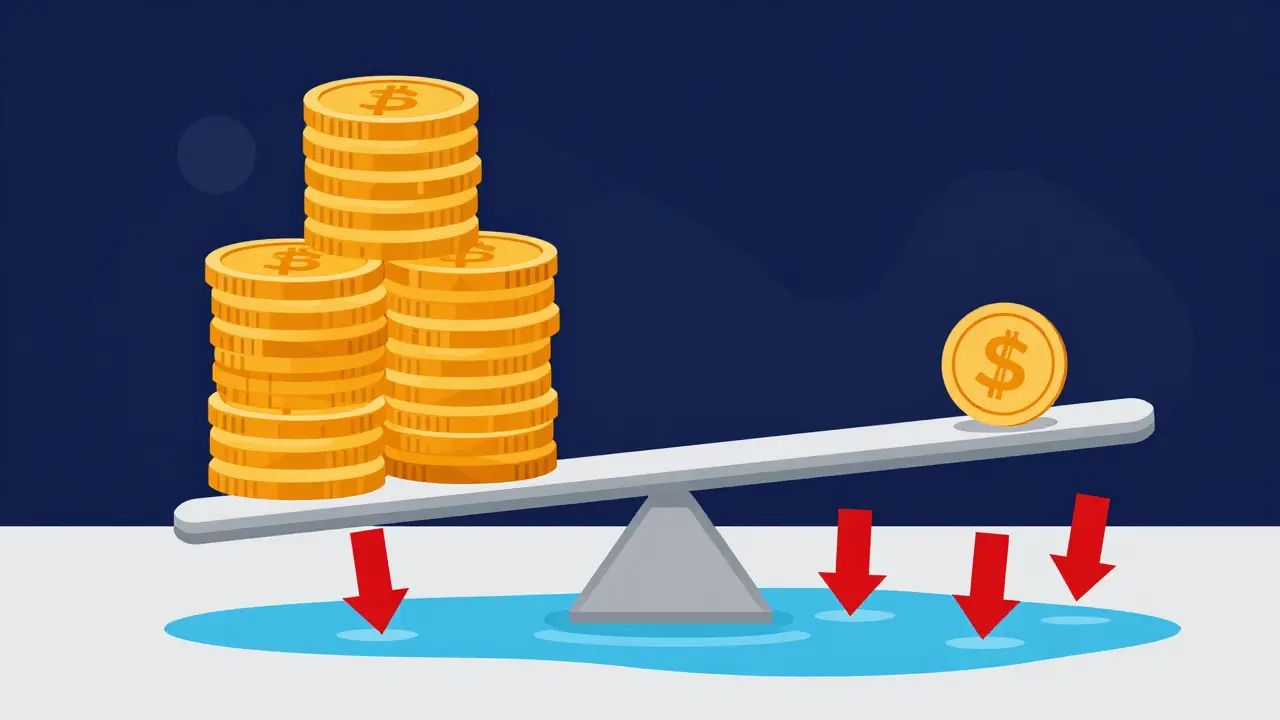
Data from Etherscan and Coinbase indicates that only about 38% to 40% of the total supply is in circulation. More concerning is the distribution. According to holder analysis, the top 10 wallets control nearly 59% of the entire supply. Compare this to Dogecoin, where the top 10 wallets hold only about 23%. This high concentration means a few individuals can manipulate the price significantly by dumping their holdings.
Then there’s the price. As of late 2025, DOGEGF trades at fractions of a cent-around $0.0000000000527 USD. You might think, "I can buy billions of tokens for a dollar!" And you’re right. For $1, you could purchase approximately 19 billion DOGEGF tokens. But here’s the catch: selling them is another story.
Liquidity is extremely low. The average daily trading volume often dips below $5,000. On some days, it’s less than $500. This means if you try to sell a large amount, you’ll likely crash the price yourself due to slippage. Many users report needing to set slippage tolerance to 12-15% just to execute a swap, which eats into any potential gains.
Technical Risks and Security Concerns
One of the most critical aspects of any crypto investment is security. Has the code been checked by independent experts? For DogeGF, the answer is no.
Etherscan confirms that no formal security audit has been submitted for the DogeGF smart contract. This is a massive risk. Without an audit, there’s no guarantee that the contract doesn’t contain hidden functions that allow developers to rug pull, freeze funds, or change transaction taxes arbitrarily.
Furthermore, the token operates on both Ethereum and the Base network. While multi-chain availability sounds convenient, it also complicates security. Each bridge or deployment point is a potential vulnerability. New users often struggle with this, facing failed transactions or losing funds to gas fees that exceed the value of the tokens they’re trying to move.
Speaking of gas fees: on the Ethereum mainnet, average gas prices can range from $2 to $5 per transaction. If you’re trying to send $3 worth of DOGEGF, you’re paying more in fees than the value of the asset itself. This makes the token practically useless for micro-transactions or everyday payments, despite its "reciprocity" branding.
Community Sentiment: Hype vs. Reality
Social media is loud, but is it accurate? Let’s look at what real users are saying.
On Reddit, threads discussing DogeGF are filled with skepticism. Users complain about high gas fees, unresponsive support, and the inability to see the promised "reciprocity" in action. One common complaint is that the token behaves like a classic pump-and-dump scheme rather than a sustainable community project.
Trustpilot reviews show a mixed bag. Some users praise the ease of integrating the token into MetaMask or Coinbase Wallet. However, the majority of negative reviews cite poor customer support and confusing documentation. The rating hovers around 3.2 out of 5, which is mediocre at best for a financial product.
Twitter sentiment is even more polarized. Influencers with large followings may tweet bullish predictions, claiming DOGEGF will hit new highs. But cross-referencing these accounts often reveals no verifiable trading history in the token. Meanwhile, independent sentiment analysis tools show over 60% negative sentiment among organic discussions.
There are isolated success stories, such as users claiming to receive tokens for helping strangers. But these anecdotes lack verification. There’s no transparent ledger proving that "kindness" directly resulted in token rewards. It remains an unproven hypothesis.
How to Buy and Store DOGEGF (If You Still Want To)
If you’ve read the risks and still decide to proceed, here’s how to technically acquire and store DogeGF. Note that this is for educational purposes and does not constitute financial advice.
- Set Up a Compatible Wallet: You’ll need a non-custodial wallet that supports ERC-20 tokens. MetaMask and Coinbase Wallet are the most popular choices. Download them from official sources only.
- Add the Token: Since DOGEGF isn’t listed on all major exchanges by default, you may need to manually add the contract address (
0xfb130d93e49dca13264344966a611dc79a456bc5) to your wallet. - Fund Your Wallet: Purchase ETH (for Ethereum network) or ETH (for Base network) on a centralized exchange like Coinbase or Binance, then withdraw it to your wallet address.
- Swap on a DEX: Use a decentralized exchange like Uniswap (for Ethereum) or Aerodrome (for Base). Connect your wallet, paste the DOGEGF contract address, and swap your ETH for DOGEGF.
- Adjust Slippage: Due to low liquidity, you will likely need to increase your slippage tolerance to 12-15% to ensure the transaction goes through. Be aware this increases the risk of unfavorable pricing.
Once purchased, keep your tokens in your private wallet. Do not leave them on exchanges unless absolutely necessary, given the lack of institutional backing for this asset.
Future Outlook: Is There Any Hope?
The development activity for DogeGF has slowed considerably. GitHub repositories show minimal commits in recent quarters compared to the initial launch phase. The roadmap mentions features like "Reciprocity Oracle Integration" and "Cross-Chain Kindness Bridge," but there is no technical documentation to back these up.
Industry analysts are pessimistic. Reports from firms like Delphi Digital suggest a high probability that low-liquidity meme coins without fundamental utility will fade away within 12-24 months. DogeGF currently holds a "Token Health Score" of 32 out of 100, categorized as critical.
Regulatory risks also loom large. With the SEC scrutinizing tokens that promise returns based on community actions, DogeGF’s "reciprocity" model could be classified as an unregistered security. This could lead to delistings or legal challenges that further depress the value.
In short, DogeGF is a high-risk speculative asset. It lacks the liquidity, security audits, and clear utility required for long-term sustainability. While the concept of rewarding kindness is noble, the execution so far has been flawed. Treat it as entertainment, not an investment.
Is DogeGF (DOGEGF) a safe investment?
No, DogeGF is considered a high-risk speculative asset. It lacks a formal security audit, has low liquidity, and suffers from concentrated ownership where top wallets hold nearly 60% of the supply. These factors make it vulnerable to price manipulation and sudden crashes.
How does the "reciprocity" model work in DogeGF?
The exact mechanism is not clearly documented. The token claims to reward kind actions and punish unkind ones, but there is no transparent algorithm or oracle system visible in the smart contract that verifies these actions. Most experts view this as a marketing narrative rather than a functional feature.
Where can I buy DOGEGF tokens?
DogeGF is primarily traded on decentralized exchanges (DEXs) like Uniswap on the Ethereum network or Aerodrome on the Base network. You will need to swap ETH for DOGEGF using a compatible wallet like MetaMask. It is not widely available on major centralized exchanges.
Why is the price of DOGEGF so low?
The price is low due to the massive total supply (69.42 quadrillion tokens) and extremely low demand. Additionally, low trading volume means there is little buyer interest to drive the price up. The low price point is often used as a marketing tactic to attract retail investors who believe they can buy "billions" of tokens for cheap.
Has DogeGF been audited for security?
No, as of late 2025, there is no record of a formal security audit for the DogeGF smart contract. This is a significant risk, as unaudited contracts may contain vulnerabilities or malicious code that could compromise user funds.
Author
Ronan Caverly
I'm a blockchain analyst and market strategist bridging crypto and equities. I research protocols, decode tokenomics, and track exchange flows to spot risk and opportunity. I invest privately and advise fintech teams on go-to-market and compliance-aware growth. I also publish weekly insights to help retail and funds navigate digital asset cycles.