
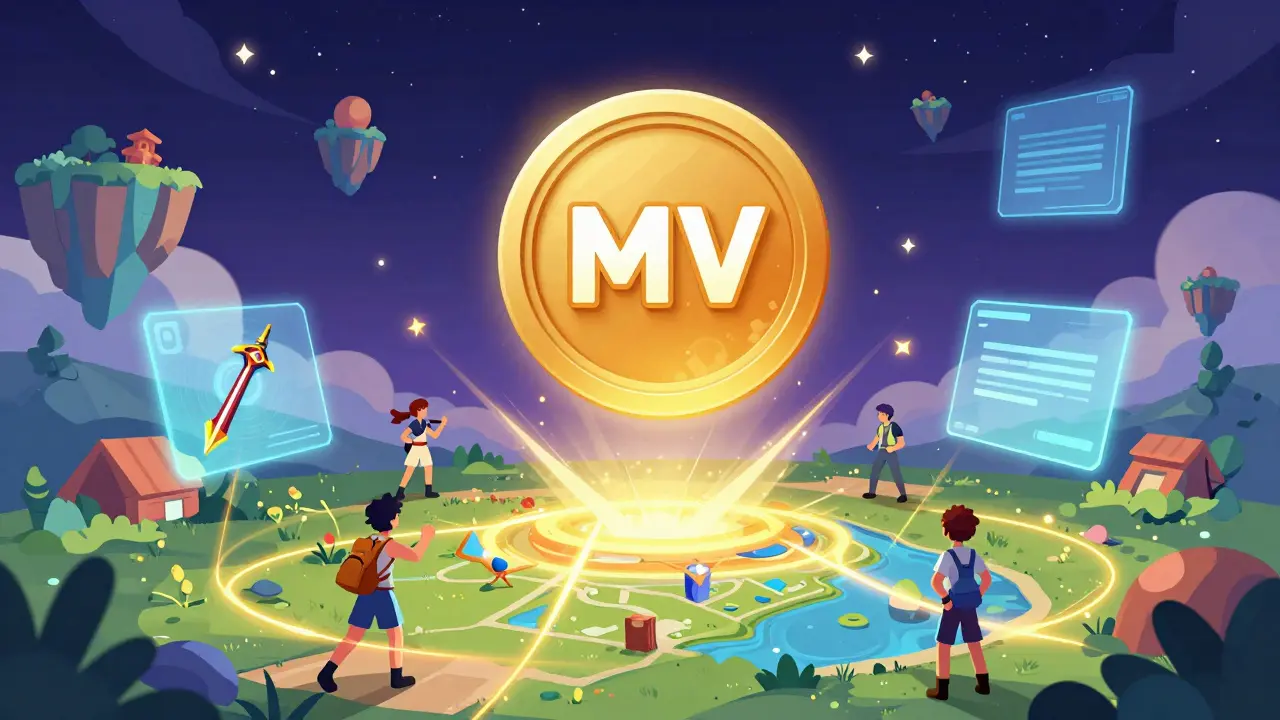
The GensoKishi Metaverse (MV) coin isn't just another crypto project trying to ride the metaverse hype. It’s a token built on top of a real, 14-year-old online game called Elemental Knights, which already had 8 million players before it went blockchain. That’s not common. Most metaverse coins start from scratch. GensoKishi didn’t. It took something that already worked - player-made skins, maps, weapons, and entire worlds - and turned them into ownable NFTs on the blockchain. The MV token is the engine behind that system, and here’s what it actually does.
It’s not a gameplay currency - it’s a governance and creation tool
First, clear up a big misunderstanding: you can’t buy better swords or faster armor with MV. That’s not its job. The in-game currency for all that is called ROND. MV is separate. Think of MV like a voting card and a key to the workshop. If you hold MV tokens, you get to vote on changes to the game’s rules, propose new features, or even help decide how money from the platform’s economy gets spent. You also get to build. Want to create a new island, design a monster, or sell a custom armor set? You need MV to do it. Without MV, you’re just a player. With MV, you’re a creator and a stakeholder.
The dual-token system: MV and ROND
GensoKishi uses two tokens on purpose. ROND is what you earn by playing - killing monsters, completing quests, trading items. Its value swings based on how many people are playing, how active the marketplace is, and how much stuff is being bought and sold. If the game gets popular, ROND goes up. If players leave, it drops. That’s normal for in-game currencies.
MV doesn’t work like that. It’s designed to stay stable. Why? Because it’s not meant for trading loot. It’s meant for long-term control. Players stake their MV tokens to earn ROND as a reward. This creates a loop: you hold MV to earn ROND, and you use ROND to play and create. The more people stake MV, the more ROND gets distributed, and the more the ecosystem grows. It’s a way to align player incentives with the game’s long-term health, not short-term speculation.
Where does MV come from? The token supply breakdown
The total supply of MV is fixed at 2 billion tokens. That means no more will ever be created. Here’s how they’re distributed:
- Metaverse Ecosystem Fund: 560 million - used to fund future development, events, and rewards
- Marketing: 240 million - to attract new players from the original Elemental Knights community
- Liquidity & Listings: 540 million - kept on exchanges so people can buy and sell MV
- Private Sale: 100 million - sold early to investors
- Development Team: 440 million - locked up over time, not available all at once
- Advisors & Cooperators: 120 million - given to early supporters and consultants
As of March 2026, around 375-444 million MV tokens are in circulation, depending on the source. That’s less than a quarter of the total supply. The rest is locked up or reserved for future use. This slow release helps prevent sudden dumps that crash the price.
Price history: From $1.67 to under $0.01
GensoKishi Metaverse hit an all-time high of $1.67 in 2022. That was during the peak of the crypto boom. Today, it trades between $0.00124 and $0.0075. That’s a 99.55% drop from its peak. It’s not unusual for GameFi projects to crash hard after hype fades. But here’s the twist: even with this drop, the game is still alive. Players are still creating content, trading NFTs, and building worlds. The MV token’s value isn’t tied to whether people think it’ll go back to $1. That’s not the goal. The goal is to keep the ecosystem running. The team isn’t gone. The game isn’t dead. The community is still active - just smaller.
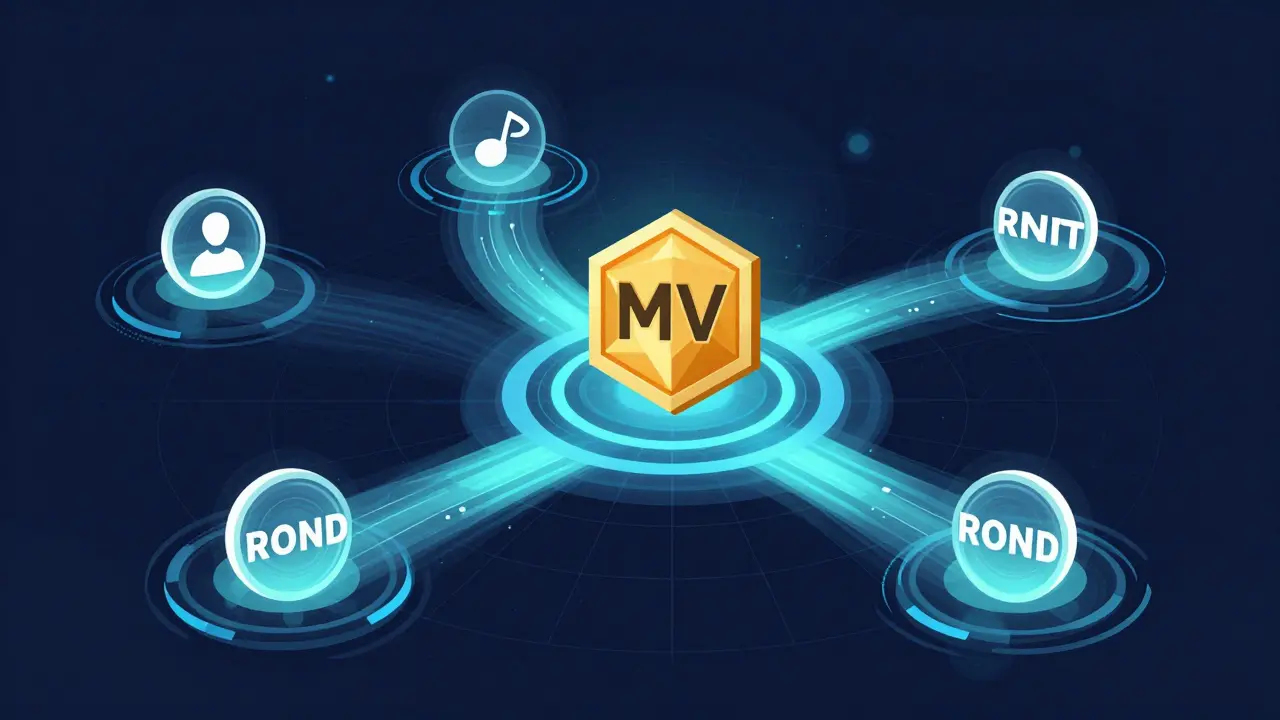
How it works technically
MV runs on Polygon, which is a sidechain of Ethereum. That means transactions are fast and cheap - no $50 gas fees like on Ethereum mainnet. It uses the ERC-20 standard, so it’s compatible with most wallets. The network is secured by Ethereum’s Proof-of-Stake system, meaning it’s as safe as Ethereum itself. You don’t need to run a node or stake ETH to use MV. You just need a wallet and some tokens.
What you can actually do with MV
Here’s the real value - what happens when you hold MV:
- Stake it to earn ROND tokens over time
- Vote on proposals like new game mechanics, fee structures, or marketplace rules
- Create NFTs - design a character, a weapon, a whole map, and list it for sale
- Build land - purchase or lease virtual plots in the metaverse and charge visitors entry fees
- Access exclusive drops - limited NFTs, early sales, and special events are only open to MV holders
- Enter auctions - bid on rare digital items that regular players can’t even see
None of this requires you to be rich. You don’t need to buy thousands of tokens. Even holding a few hundred gives you voting rights and access to basic creation tools. It’s designed for active players, not investors.
Why it’s different from other metaverse coins
Most metaverse projects are trying to build a world from nothing. GensoKishi didn’t. It inherited a game with 14 years of player history. That means:
- There are already millions of digital assets - skins, weapons, maps - created by real people
- There’s a proven community that knows how to play, create, and trade
- The game already works. It’s not a beta. It’s not a demo. It’s been running since 2012
That’s huge. Many blockchain games fail because they can’t attract players. GensoKishi didn’t have to. It just had to convince its existing 8 million players to bring their stuff over. That’s why the project still has traction, even with a low token price. The game is real. The players are real. The NFTs are real. MV is just the key that lets them own and control it.
Market position and competition
GensoKishi Metaverse doesn’t compete with big names like Decentraland or The Sandbox. Those are open worlds built for anyone. GensoKishi is a closed, anime-style RPG with deep lore and a specific fanbase. Its closest peers are niche GameFi tokens like TOMI or ISKRA Token - projects tied to existing games, not abstract metaverses. Its market cap sits at roughly $3-5 million, which is tiny compared to the $100+ billion crypto market. But in the GameFi space, that’s not unusual. Many successful projects start small and grow slowly.
Is it worth anything?
If you’re looking for a quick flip - probably not. The price has been falling for years. If you’re a player who enjoys Elemental Knights and wants to own your creations, or if you want to build content and earn from it - then MV gives you real power. It’s not a stock. It’s a tool. And tools don’t need to go up in price to be valuable. A hammer doesn’t get more useful if its price doubles. It’s still a hammer. MV is the same. It’s not about speculation. It’s about participation.
What’s next for GensoKishi Metaverse?
The team is focused on three things: expanding the NFT creation tools, improving the land system, and bringing more players from the original Elemental Knights game into the blockchain version. There are no flashy marketing campaigns. No celebrity endorsements. Just updates to the game itself. That’s a good sign. If the team was focused on pumping the price, they’d be doing promotions. Instead, they’re building features. That suggests they believe in the long-term value of the ecosystem - not just the token.


Author
Ronan Caverly
I'm a blockchain analyst and market strategist bridging crypto and equities. I research protocols, decode tokenomics, and track exchange flows to spot risk and opportunity. I invest privately and advise fintech teams on go-to-market and compliance-aware growth. I also publish weekly insights to help retail and funds navigate digital asset cycles.