
Imagine buying a share of Robinhood without opening a traditional brokerage account. You don't need to worry about market hours closing at 4:00 PM EST or dealing with complex international wire transfers. Instead, you hold a digital token that tracks the price of the stock in real-time, available 24/7. This is exactly what HOODon is.
If you have been hearing chatter about "tokenized stocks" or "RWA" (Real-World Assets) and are confused by the ticker HOODon, you are not alone. It looks like a standard cryptocurrency, but it is actually a bridge between Wall Street and the blockchain. It represents ownership exposure to Robinhood Markets, Inc. Class A common stock, issued through the Ondo Finance platform.
The Core Concept: What Exactly Is HOODon?
At its simplest, HOODon is a digital receipt for holding Robinhood stock. It is part of a broader trend called asset tokenization, where physical or traditional financial assets are represented as tokens on a blockchain.
Here is how the math works:
- 1 HOODon = 1 HOOD Share: The token is designed to mirror the economic value of one share of Robinhood's underlying stock.
- Dividend Reinvestment: If Robinhood pays dividends, the structure aims to reflect that value for token holders, often by automatically reinvesting them.
- Custody Model: Real shares are held off-chain by custodians (traditional banks or financial institutions), while you hold the on-chain token representing your claim to that value.
This setup allows investors to get the upside potential of Robinhood's stock performance without directly owning the equity in a regulated US brokerage account. It is primarily targeted at non-US retail and institutional users who face barriers to entering the US stock market directly.
How Does It Work? The Mechanics Behind the Token
You might be wondering how a piece of code on a blockchain can represent a share of a publicly traded company. The process involves several key players working together:
- Minting: When you buy HOODon, capital flows into the system. In return, the issuer mints new tokens for you.
- Underlying Asset Purchase: The capital raised is used to buy actual Robinhood (HOOD) shares on traditional exchanges like NASDAQ.
- On-Chain Representation: You receive the HOODon token in your wallet. Its value fluctuates based on the price of the real HOOD stock.
- Redemption: If you want out, you can redeem your tokens. The protocol burns (destroys) your tokens and returns the equivalent value from the underlying asset pool.
The trading window for minting and redeeming typically aligns with traditional market hours (Monday to Friday), but the tokens themselves can often be traded peer-to-peer or on supported platforms outside those hours, depending on the specific venue rules.
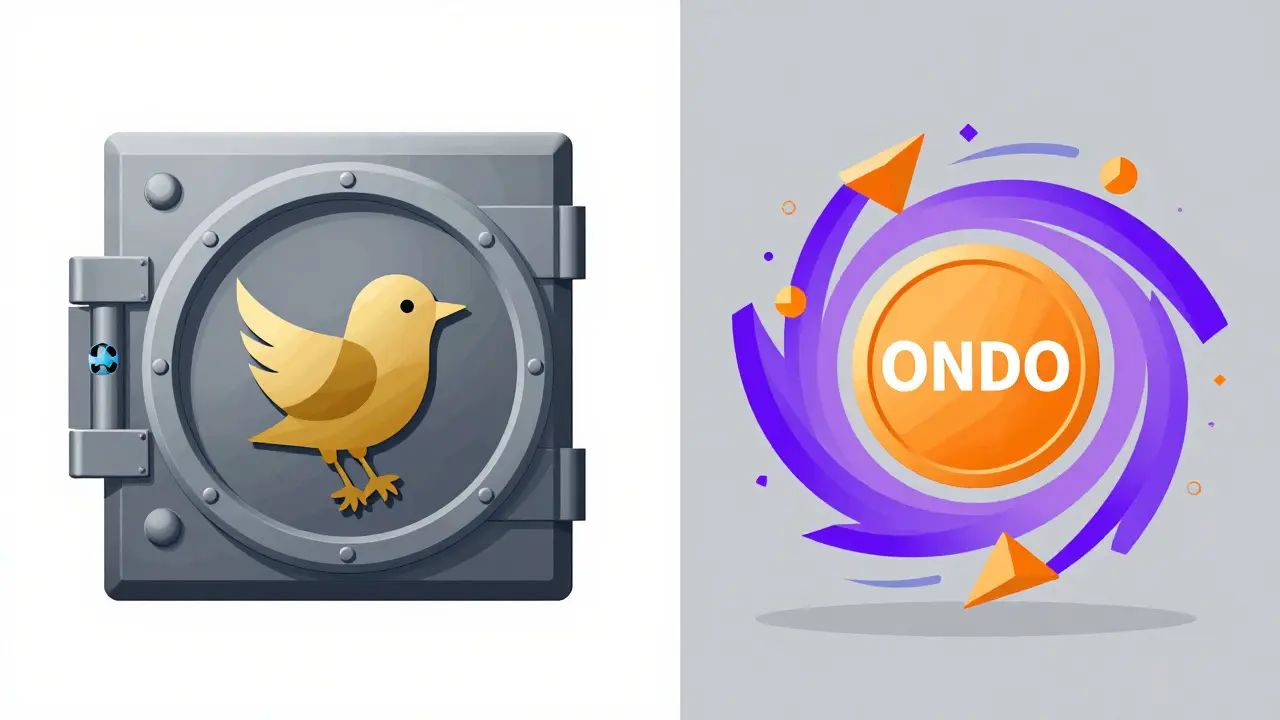
HOODon vs. ONDO: Don't Mix Them Up
This is the most critical distinction for beginners. There are two different tickers floating around, and confusing them could lead to significant financial errors.
| Feature | HOODon (Tokenized Stock) | ONDO (Native Token) |
|---|---|---|
| Asset Type | Real-World Asset (Equity-backed) | Utility/Governance Token |
| Value Source | Tied to Robinhood (HOOD) stock price | Determined by supply, demand, and protocol utility |
| Risk Profile | Market risk of Robinhood stock + Smart contract risk | High volatility typical of native crypto tokens |
| Purpose | Investment exposure to Robinhood equity | Governance within the Ondo Finance ecosystem |
ONDO is the native governance token of the Ondo Finance protocol. It does not track any stock. HOODon is the product that gives you exposure to Robinhood. Always check the ticker symbol carefully before buying.
Market Data and Price Volatility
Because HOODon is traded across various decentralized and centralized venues, you will see different prices depending on where you look. This is known as price fragmentation.
As of recent data snapshots in mid-2026:
- Price Range: Prices have fluctuated significantly. Historical highs reached around $152 in late 2025, while lows dipped below $63.
- Liquidity Variance: Trading volume varies by platform. Some aggregators show millions in daily volume, while others show much less. This means large trades could experience slippage (getting a worse price than expected).
- Supply Discrepancies: Different data providers report different total supplies (ranging from ~5,000 to ~48,000 tokens). This inconsistency highlights the early-stage nature of these markets and the importance of verifying data directly from the issuer.
The price generally follows Robinhood's stock (HOOD) but may deviate due to liquidity constraints, premium/discount dynamics, and trading hour differences.
Who Is This For? Use Cases and Accessibility
HOODon is not designed for everyone. It serves a specific niche in the global financial landscape.
Non-US Investors: Many countries have restrictions on their citizens buying US stocks directly. HOODon provides a workaround, allowing these users to gain exposure to major US equities using crypto wallets.
24/7 Traders: Traditional stock markets close. Crypto markets do not. While minting/redeeming against the underlying asset happens during market hours, the ability to transfer or trade the token itself offers more flexibility for global users.
DeFi Integration: Because HOODon exists on a blockchain, it has the theoretical potential to be used in other DeFi applications, such as collateral for loans, though this functionality depends on specific protocol support which is still evolving.

Risks You Need to Know Before Buying
Tokenized stocks sound convenient, but they come with unique risks that do not exist in traditional investing.
- Counterparty Risk: You are relying on Ondo Finance and its custodians to hold the actual Robinhood shares securely. If the custodian fails or acts maliciously, your token could become worthless.
- Regulatory Uncertainty: The legal status of tokenized securities varies wildly by jurisdiction. In some regions, holding these tokens could violate local securities laws. Always check your local regulations.
- Liquidity Risk: Unlike the main Robinhood stock, which has billions in daily volume, HOODon has limited liquidity. Selling a large amount quickly could crash the price.
- Smart Contract Risk: The code governing the token could have bugs or vulnerabilities that hackers exploit.
- Basis Risk: The price of HOODon might not perfectly match the price of HOOD stock due to fees, premiums, or discounts in the secondary market.
How to Get Started
If you decide HOODon fits your investment strategy, here is the general path to accessing it:
- Verify Eligibility: Check if Ondo Finance supports your country of residence. Most tokenized stock products restrict US persons due to SEC regulations.
- Set Up a Wallet: You will need a compatible crypto wallet (like MetaMask) that supports the network where HOODon is issued (typically an EVM-compatible chain).
- Fund Your Account: Deposit stablecoins (like USDC) or other accepted cryptocurrencies into your wallet.
- Access the Platform: Navigate to the Ondo Global Markets interface or a supported exchange that lists HOODon.
- Execute the Trade: Swap your funds for HOODon tokens. Remember to double-check the contract address to avoid scams.
Note: Platforms like Crypto.com may track the price of HOODon but do not necessarily allow direct trading of it yet. Always confirm the listing status on the specific app you intend to use.
Is HOODon the same as Robinhood stock?
No. HOODon is a tokenized representation of Robinhood stock. You do not own the actual shares directly; you own a digital token that mirrors the economic performance of the shares. The actual shares are held by a custodian on behalf of the token holders.
Can US residents buy HOODon?
Generally, no. Ondo Finance and similar platforms typically restrict access to tokenized US stocks for non-US persons to comply with US securities regulations. US residents should stick to traditional brokerage accounts for buying Robinhood stock.
What happens if I want to sell my HOODon?
You can usually sell HOODon on supported exchanges or back to the Ondo protocol for redemption. However, liquidity may be lower than traditional markets, meaning you might get a slightly worse price. Redemption processes may also take time to settle.
Does HOODon pay dividends?
The structure is designed to provide economic exposure similar to holding the stock, including dividend benefits. Typically, dividends are either distributed to token holders or automatically reinvested to increase the value of the token, depending on the specific terms set by Ondo.
Is HOODon safe?
Like all crypto investments, it carries risk. While the underlying asset (Robinhood stock) is relatively stable compared to meme coins, you face smart contract risks, custody risks, and regulatory risks. Never invest more than you can afford to lose.
Author
Ronan Caverly
I'm a blockchain analyst and market strategist bridging crypto and equities. I research protocols, decode tokenomics, and track exchange flows to spot risk and opportunity. I invest privately and advise fintech teams on go-to-market and compliance-aware growth. I also publish weekly insights to help retail and funds navigate digital asset cycles.