

Imagine trying to solve a puzzle where the rules change every time someone gets closer to the solution. That is exactly how Mining Difficulty works in blockchain networks like Bitcoin. It is not a static number set by a central authority. Instead, it is a self-regulating algorithm that adjusts the complexity of the mathematical problems miners must solve to validate transactions and secure the network. If more people join the race, the puzzle gets harder. If they leave, it gets easier. This mechanism ensures that blocks are added at a steady pace, regardless of how much computing power is thrown at the problem.
The Core Mechanism: How Difficulty Adjusts
To understand mining difficulty, you first need to grasp the concept of the "target." In proof-of-work systems, miners compete to find a cryptographic hash-a unique digital fingerprint-that falls below a specific target value. The lower the target, the harder it is to find a valid hash. Mining difficulty is simply a scaled representation of this target. A higher difficulty number means the target is smaller, requiring more computational guesses to hit the right mark.
In Bitcoin’s protocol, this adjustment happens automatically every 2,016 blocks. Since Bitcoin aims for one block every 10 minutes, this cycle takes roughly two weeks. The network looks at how long it actually took to mine the previous 2,016 blocks and compares it to the expected time (20,160 minutes).
- If blocks were mined faster than 10 minutes on average, the difficulty increases.
- If blocks were mined slower, the difficulty decreases.
This system includes safety rails to prevent wild swings. The difficulty can only increase or decrease by a maximum factor of four (4x) in a single adjustment period. This prevents the network from becoming unstable if a massive wave of new miners joins or leaves all at once.
Why Does Difficulty Keep Rising?
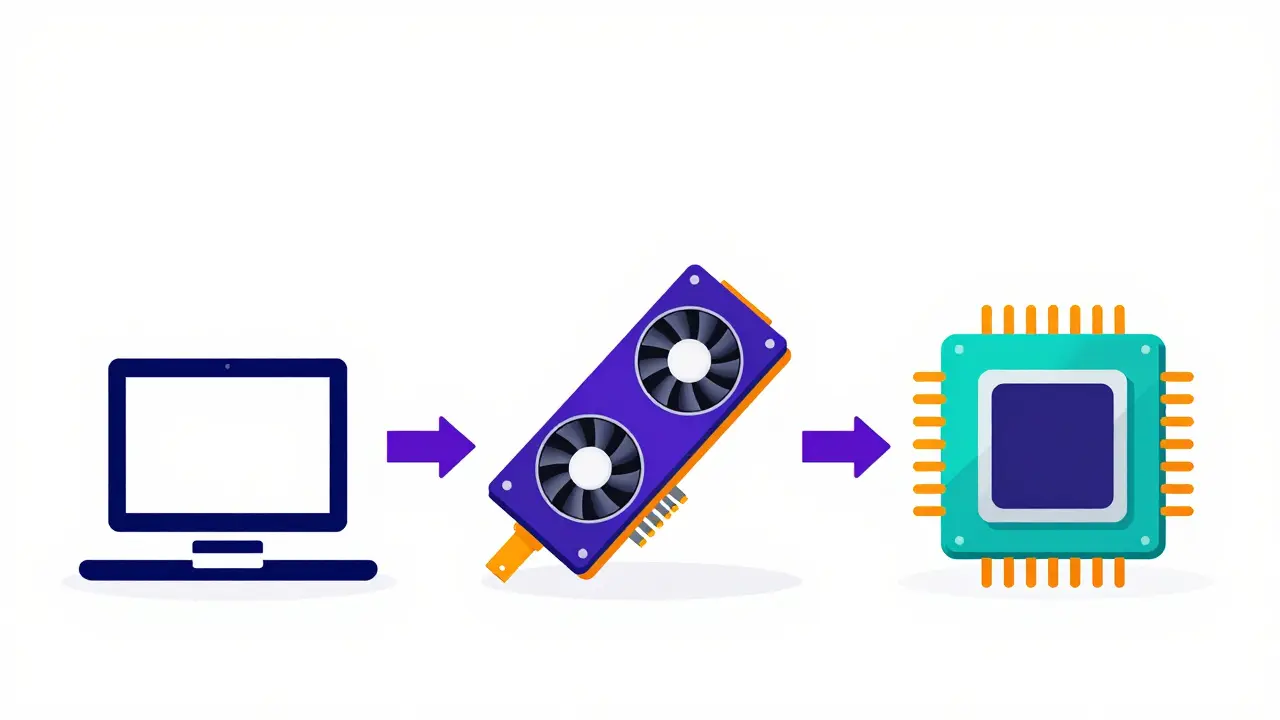
When Bitcoin launched in January 2009, the mining difficulty was 1. You could mine blocks with a standard laptop CPU. Today, the difficulty hovers around 80 trillion. What changed? Two main factors: hardware evolution and economic incentives.
Early mining was a hobbyist activity. As the value of Bitcoin rose, professional operations entered the scene. They replaced CPUs with GPUs, then FPGAs, and finally ASICs (Application-Specific Integrated Circuits). These specialized chips are designed for one task only: calculating hashes. An ASIC miner is millions of times faster than a consumer CPU.
As these powerful machines flooded the market, the total Network Hash Rate-the combined computing power of all miners-skyrocketed. To keep the block time at 10 minutes, the network had to make the puzzles exponentially harder. This rise in difficulty is actually a sign of health; it shows that more resources are securing the ledger, making it nearly impossible to attack.
| Era | Hardware Type | Approx. Hash Rate | Impact on Difficulty |
|---|---|---|---|
| 2009-2010 | CPU (Central Processing Unit) | Megahashes per second (MH/s) | Difficulty remained low (1-10) |
| 2011-2013 | GPU (Graphics Processing Unit) | Gigahashes per second (GH/s) | Difficulty began exponential growth |
| 2013-Present | ASIC (Specialized Chip) | Terahashes/Petahashes per second (TH/s/PH/s) | Difficulty reached trillions |
The Relationship Between Hash Rate and Security
Many beginners confuse mining difficulty with network security. They are related, but distinct. The hash rate represents the raw power attacking the puzzle. The difficulty represents the size of the lock. High difficulty usually implies a high hash rate, which translates to high security.
For a hacker to rewrite Bitcoin’s history or double-spend coins, they would need to control more than 50% of the network’s total hash rate. Because the difficulty adjusts to match the available power, the cost of such an attack scales with the network’s adoption. With Bitcoin’s current difficulty and hash rate, a 51% attack would require billions of dollars in hardware and electricity, making it economically irrational. Therefore, rising difficulty is a proxy for increased immutability.
Factors Influencing Difficulty Spikes and Drops
While the trend is generally upward, difficulty does dip occasionally. Why? Because mining is a business. Miners operate on thin margins. Several external factors force them online or offline:
- Bitcoin Price Volatility: When the price of Bitcoin crashes, revenue drops. If the cost of electricity exceeds the value of newly mined coins, marginal miners shut down their rigs. This reduces the hash rate, causing the next difficulty adjustment to lower the barrier to entry.
- Regulatory Changes: Government bans or strict regulations in major mining hubs (like China in 2021) can cause sudden mass exoduses of hashrate, leading to temporary difficulty drops.
- New Hardware Releases: When a new generation of ASICs launches, early adopters gain a significant advantage. Their efficiency boosts the overall hash rate, triggering a sharp difficulty increase as the network adapts.
How Different Blockchains Handle Difficulty
Not all blockchains use Bitcoin’s slow, two-week adjustment window. Some networks prioritize speed over stability.
Ethereum Classic, which remains on proof-of-work, uses a different algorithm that adjusts more frequently to handle its shorter block times. Dogecoin employs a variation called DarkGravityWave, which adjusts difficulty every block using a moving average. This makes Dogecoin’s block times much more consistent minute-by-minute compared to Bitcoin’s occasional lags.
It is also worth noting that Ethereum transitioned to Proof-of-Stake in September 2022. This move eliminated mining difficulty entirely for the second-largest cryptocurrency. Validators now stake ETH to secure the network rather than burning energy to solve puzzles. This shift highlights the ongoing debate about the environmental impact of high-difficulty proof-of-work systems.

Implications for Miners and Users
For individual miners, rising difficulty means you need better hardware and cheaper electricity to stay profitable. Solo mining Bitcoin is virtually impossible today unless you have industrial-scale operations. Most participants join Mining Pools, which combine their hash power to solve blocks more consistently and share rewards proportionally.
For everyday users, mining difficulty indirectly affects transaction fees. When difficulty is high and the network is busy, block space becomes scarce. Users bid up fees to get their transactions included quickly. However, because the difficulty adjustment keeps block production steady, the network never completely grinds to a halt-it just becomes more expensive during peak demand periods.
Future Trends and Sustainability
As mining difficulty continues to climb, so does energy consumption. This has sparked intense scrutiny from regulators and environmental groups. The industry response has been twofold: improving hardware efficiency and sourcing renewable energy. Many large mining farms now locate near hydroelectric dams or wind farms to utilize excess green energy.
Research into alternative consensus mechanisms continues. While Bitcoin is unlikely to change its core difficulty algorithm due to its conservative upgrade process, newer chains experiment with hybrid models that aim to maintain security without the extreme energy costs associated with trillion-level difficulties.
Does mining difficulty affect the speed of transactions?
Indirectly, yes. Higher difficulty usually correlates with a higher hash rate, which secures the network but doesn't change the block time (e.g., 10 minutes for Bitcoin). However, if the network is congested, users may pay higher fees to prioritize their transactions within those fixed-time blocks.
Can mining difficulty ever go down permanently?
Yes, temporarily. If the price of the cryptocurrency drops significantly or if many miners shut down due to high electricity costs, the hash rate falls. The network will then lower the difficulty to ensure blocks continue to be found at the target interval. However, historically, difficulty trends upward as technology improves.
Why does Bitcoin adjust difficulty every 2 weeks?
Bitcoin adjusts every 2,016 blocks, which averages out to roughly two weeks given the 10-minute block target. This frequency balances stability with responsiveness. Adjusting too often could lead to volatility in block times, while adjusting too rarely could allow block times to drift significantly from the target.
Is high mining difficulty good or bad for the network?
High difficulty is generally considered good for security. It indicates that a vast amount of computational power is protecting the ledger, making attacks prohibitively expensive. For individual miners, however, high difficulty can be challenging as it requires more efficient hardware to remain profitable.
Did Ethereum still have mining difficulty after 2022?
No. Ethereum transitioned from Proof-of-Work to Proof-of-Stake in September 2022 (The Merge). This removed the need for mining and difficulty adjustments. Ethereum Classic, a fork of the original Ethereum codebase, continued using Proof-of-Work and thus retains mining difficulty.
Author
Ronan Caverly
I'm a blockchain analyst and market strategist bridging crypto and equities. I research protocols, decode tokenomics, and track exchange flows to spot risk and opportunity. I invest privately and advise fintech teams on go-to-market and compliance-aware growth. I also publish weekly insights to help retail and funds navigate digital asset cycles.