

Imagine you find a new coin that looks promising. You check the major exchanges like Coinbase or Binance, but it’s not listed there. Then you stumble upon ZBG, described as a Hong Kong-based cryptocurrency exchange launched in July 2018 as a subsidiary of ZB.COM. The site claims massive trading volumes and offers hundreds of obscure tokens. It sounds like the perfect backdoor to early gains. But before you connect your wallet, you need to ask the hard question: is this platform actually safe, or is it a trap?
In the world of crypto, trust isn’t given; it’s earned through transparency, regulation, and verified data. When we look closely at ZBG in 2026, the picture that emerges is murky at best. While it started with some promise, recent red flags suggest that keeping your money on this platform might be riskier than you think.
The Origin Story: A "Baby Brother" to ZB.com
To understand ZBG, you have to look at its parent company, ZB.com. ZBG was launched in 2018 specifically to act as a testing ground for new tokens. Think of it as a sandbox. Projects that couldn't meet the strict listing requirements of the main ZB.com exchange were sent here. If a token gained enough real liquidity and trading volume on ZBG, it could be promoted to the main site. Conversely, if a token failed on ZB.com, it was "degraded" down to ZBG.
This model made sense in theory. It allowed smaller projects to get exposure without cluttering the main exchange. However, this structure also created a breeding ground for low-quality assets. Because the barriers to entry were lower, ZBG became home to many experimental and sometimes dubious tokens. For traders, this meant higher potential rewards but significantly higher risk. The platform positioned itself as a place for "innovative" coins, which often translates to "unproven" or "highly volatile" in plain English.
The Volume Problem: Why CoinMarketCap Stopped Tracking It
Here is where things get suspicious. In its early days, around 2019, ZBG reported staggering trading volumes. At one point, it claimed over $450 million in daily trades, ranking it among the top 10 exchanges globally. By late 2021, those numbers allegedly surged to nearly $9 billion. These figures sounded impressive, especially when compared to industry giants.
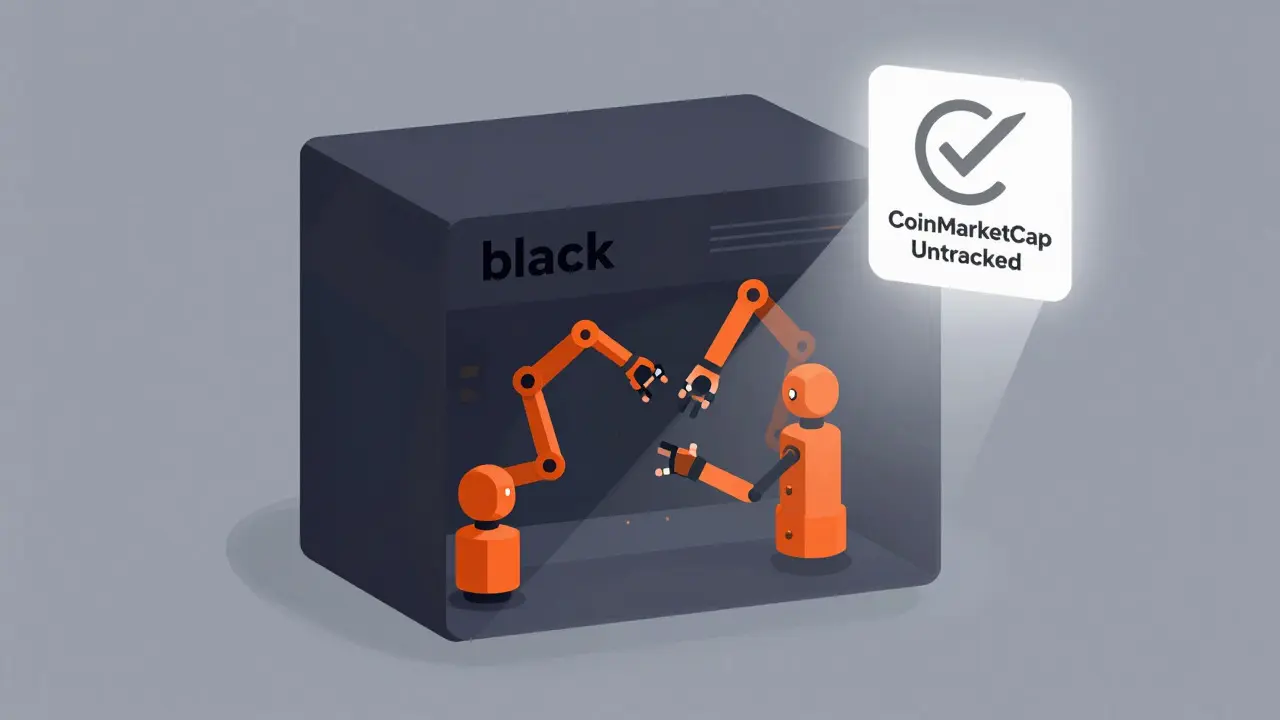
But there is a catch. Today, if you check CoinMarketCap, the leading price aggregation service, ZBG is listed as an "Untracked Listing." This status means CoinMarketCap no longer verifies or tracks the exchange's trading volume data. Why? Because the data wasn't reliable.
When an exchange has "untracked" volume, it usually points to wash trading. This is a practice where bots trade against themselves to create the illusion of high activity. Real investors don't want to buy from bots. They want real liquidity. According to a June 2025 analysis by Chainalysis, exchanges with untracked volume status accounted for only 0.3% of global crypto trading volume. That is a tiny fraction. It suggests that while ZBG *claims* to be busy, very few real people are actually trading there.
| Feature | ZBG Exchange | Coinbase / Binance |
|---|---|---|
| Volume Verification | Untracked (Self-reported) | Verified by aggregators |
| Regulatory Status | Unclear / No HK License | Licensed (SEC, SFC, etc.) |
| Proof of Reserves | None public | Quarterly Audits (e.g., Marcum LLP) |
| User Reviews | Low volume, mostly negative | Millions of reviews |
| Scam Domain Risk | High (Multiple impersonators) | Low (Strong brand protection) |
Regulatory Gray Areas and Hidden Fees
Security isn't just about hackers; it's about rules. Hong Kong tightened its crypto regulations significantly starting in March 2023. The Securities and Futures Commission (SFC) introduced a licensing framework for virtual asset trading platforms. Major players like OSL got licensed quickly. But does ZBG have a license?
There is no clear evidence that ZBG holds the necessary SFC license to operate legally in Hong Kong. The Hong Kong Monetary Authority warned in October 2024 that investors using unlicensed platforms do so at their own risk. Without a license, you have little recourse if something goes wrong. If the exchange freezes your funds or disappears, there is no regulator to call.
Then there are the fees. Reputable exchanges publish clear fee schedules. Coinbase, for example, clearly lists fees ranging from 0.05% to 0.60% based on transaction size. ZBG, however, has been criticized for opacity. Traders Union noted in May 2025 that users often discover "hidden fees" after signing up. These can include unexpected withdrawal charges or spread costs that eat into your profits. If you can't see the cost upfront, you're already losing money.
The Scam Domain Nightmare
One of the biggest risks with lesser-known exchanges is phishing. Scammers love to copy popular names. A report from Cryptolegal in October 2025 identified numerous fraudulent domains using "zbg" in their names, such as zbgtrades.com, zbgapp.net, and zbgmax.com.
If you search for "ZBG login" on Google, you might accidentally click a fake site. Once you enter your seed phrase or password there, your funds are gone instantly. Established exchanges spend millions on domain security. ZBG seems to struggle with this basic protection, leaving users vulnerable to simple social engineering attacks.
User Experience: Withdrawals and Support
How do real users feel about ZBG? The feedback is sparse and largely negative. On platforms like Cryptogeek, the rating hovers around 3.7 out of 5, but based on only three reviews. Compare that to competitors with thousands of reviews. Low engagement is a bad sign.
More concerning are the stories of frozen withdrawals. One user reported on CryptoSlate’s forum in March 2025 trying to withdraw 2.5 BTC. The transaction stayed in "processing" for 17 days. Eventually, they received a generic email citing "system maintenance" with no resolution. This is a classic tactic used by failing exchanges to delay payouts while they figure out how to cover their losses. Customer support appears to be unresponsive, leaving users in limbo.
Is ZBG Worth the Risk in 2026?
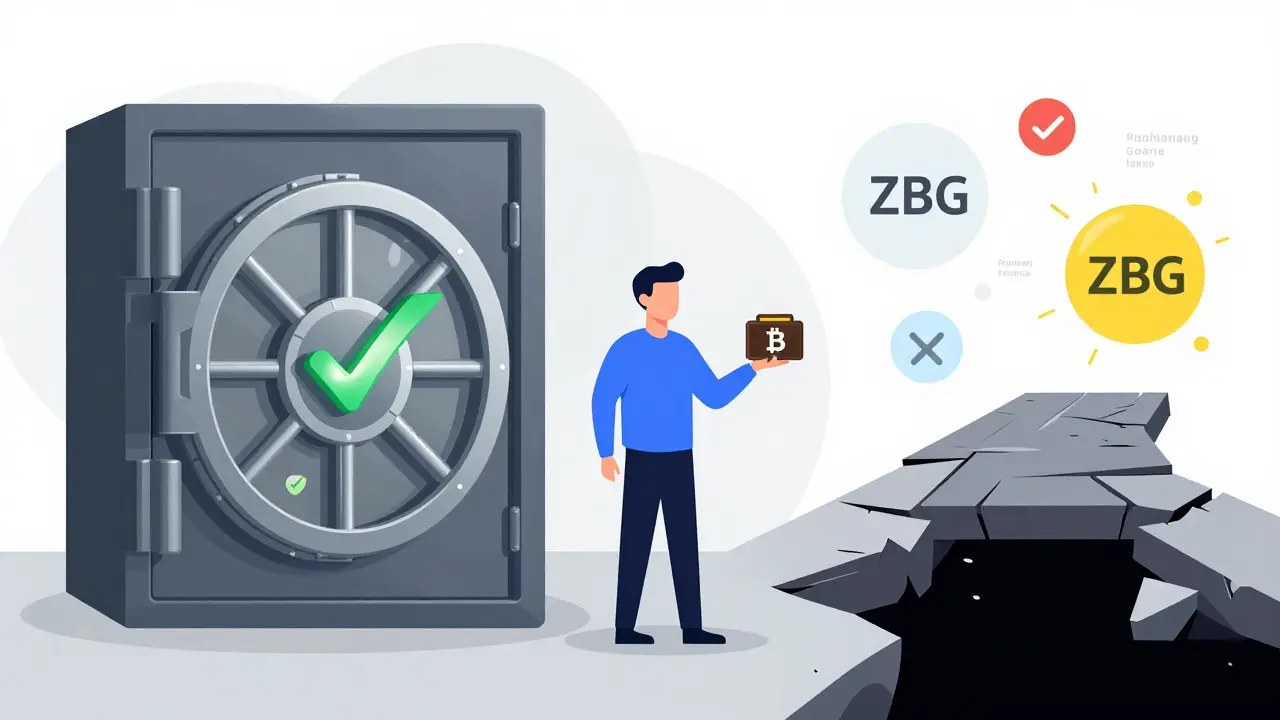
Let’s be direct. Unless you are an expert trader who understands how to spot wash trading and is willing to lose your entire investment chasing a moonshot token, ZBG is likely not worth the hassle. The combination of unverified volume, lack of regulatory oversight, hidden fees, and poor user support creates a high-risk environment.
Industry analysts like Delphi Digital rated ZBG as "high risk" in their Q3 2025 assessment. They recommended avoiding exchanges with untracked volume status. Instead, they suggest sticking to transparent alternatives that offer similar trading pairs with greater security assurances. Even if you find a unique token on ZBG, consider whether the risk of losing your principal amount is justified by the potential gain.
For most people, the peace of mind provided by regulated exchanges like Coinbase, Kraken, or Binance is invaluable. They publish proof-of-reserves reports, undergo third-party audits, and have legal teams to handle disputes. ZBG lacks these safeguards. In 2026, the crypto market is maturing. There is less reason to gamble on opaque platforms when better options exist.
Safer Alternatives for New Tokens
If your goal is to find new and innovative tokens, you don't necessarily need to go to ZBG. Many reputable exchanges now have dedicated sections for new listings:
- Binance Launchpad: Offers vetted new projects with strong community backing.
- KuCoin Spotlight: Known for listing a wide variety of altcoins earlier than larger competitors.
- Gate.io: Has a broad selection of emerging tokens but maintains better transparency than ZBG.
These platforms still carry risk because new tokens are volatile, but the platforms themselves are more trustworthy. You know where your money is, and you know who to call if things go wrong.
Is ZBG exchange a scam?
While ZBG is not officially labeled a "scam" by all authorities, it exhibits many characteristics of high-risk platforms. These include untracked trading volumes, lack of regulatory licenses in Hong Kong, hidden fees, and numerous phishing domains impersonating the brand. Industry experts classify it as "high risk," suggesting users proceed with extreme caution or avoid it entirely.
Why did CoinMarketCap stop tracking ZBG?
CoinMarketCap stopped tracking ZBG because the exchange's volume data was deemed unreliable. This typically indicates wash trading, where the exchange artificially inflates its trading numbers using bots. Without verified, organic trading activity, aggregators cannot provide accurate price or volume data, leading to an "Untracked Listing" status.
Does ZBG have a license in Hong Kong?
As of 2026, there is no public evidence that ZBG holds a license from the Hong Kong Securities and Futures Commission (SFC). Since Hong Kong implemented stricter crypto regulations in 2023, operating without a license places users at significant legal and financial risk, as they have limited recourse in case of disputes or insolvency.
Are there hidden fees on ZBG?
Yes, multiple user reports and reviews from 2025 highlight issues with hidden fees on ZBG. Unlike transparent exchanges that publish clear fee schedules, ZBG users have reported unexpected charges during withdrawals and trading. This lack of transparency can significantly reduce profitability and erode trust.
What is the relationship between ZBG and ZB.com?
ZBG is a subsidiary of ZB.com, launched in 2018. It functions as a secondary platform for listing newer or lower-liquidity tokens. Tokens that succeed on ZBG may be promoted to the main ZB.com exchange, while those that fail on ZB.com may be moved down to ZBG. This tiered system allows for experimentation but often concentrates higher-risk assets on the ZBG platform.


Author
Ronan Caverly
I'm a blockchain analyst and market strategist bridging crypto and equities. I research protocols, decode tokenomics, and track exchange flows to spot risk and opportunity. I invest privately and advise fintech teams on go-to-market and compliance-aware growth. I also publish weekly insights to help retail and funds navigate digital asset cycles.