
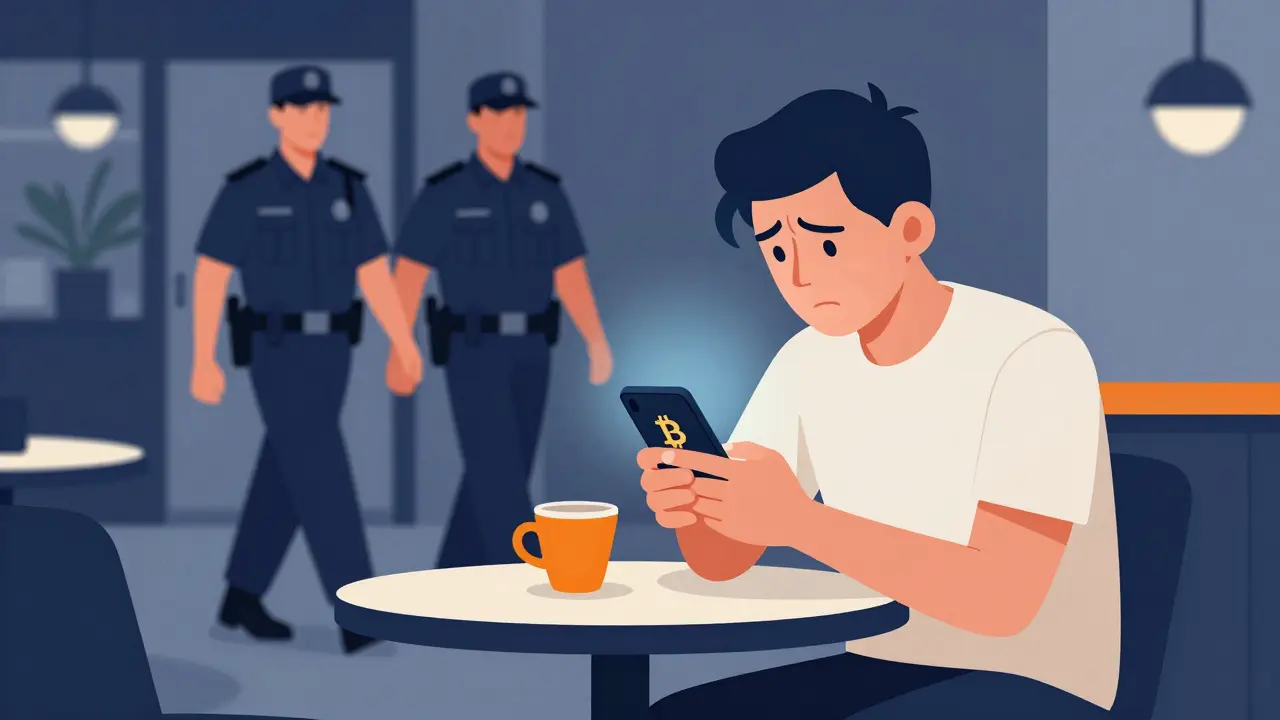
Imagine you are sitting in a café in Algeria, quietly buying Bitcoin on your phone. You aren't running a dark web market or laundering money for terrorists. You just want to save some value against inflation. Suddenly, police walk in. What happens next? The answer depends entirely on where you sit.
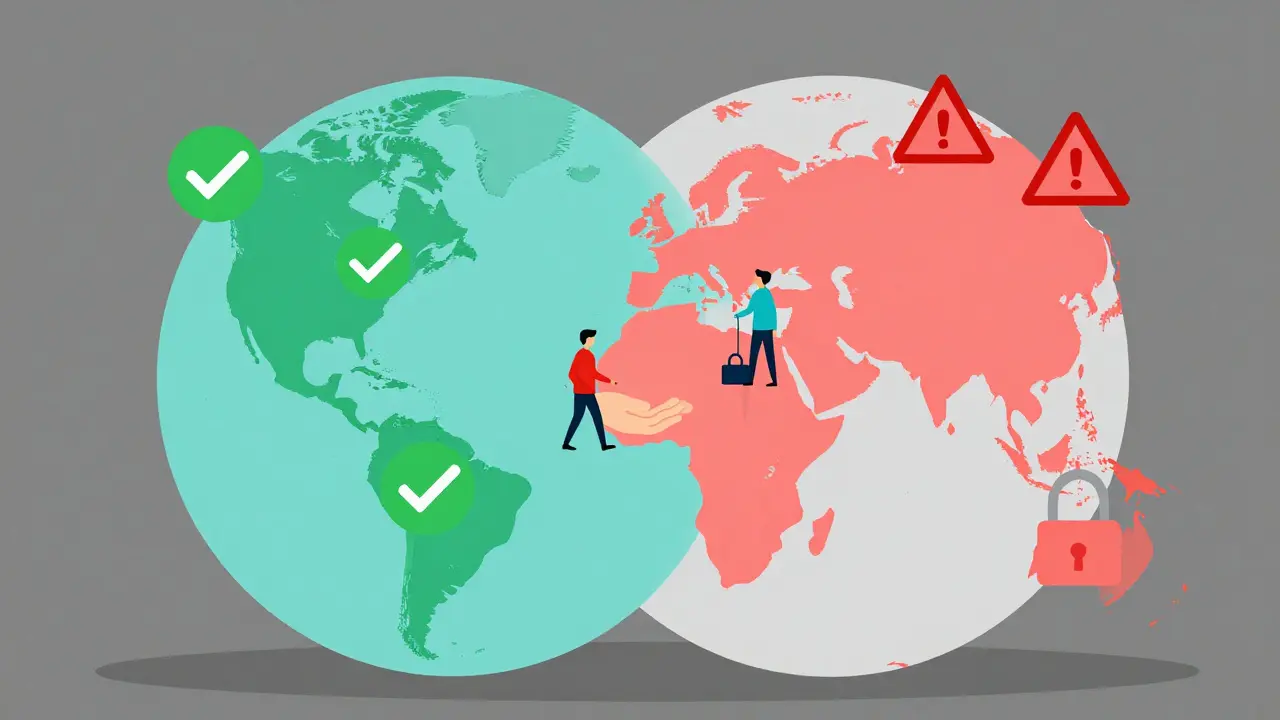
The global landscape for cryptocurrency legality is not black and white. It is a messy gray zone of strict prohibitions, vague laws, and selective enforcement. As of mid-2026, the Atlantic Council’s tracker shows that while 45 nations fully embrace digital assets, about 10 countries maintain general bans. But here is the catch: having a ban on paper does not mean you will go to jail for holding coins. In fact, data suggests these bans are largely ineffective at stopping usage, even if they create real legal anxiety.
The Myth of Uniform Criminalization
Many people assume that if a country "bans" crypto, using it is a felony. This is rarely true. Most jurisdictions do not have specific criminal codes that say, "Holding Bitcoin equals five years in prison." Instead, they use existing financial laws to prosecute violations. This creates a dangerous ambiguity.
In Morocco, for example, the Office des Changes declared in 2017 that transactions via virtual currencies infringe on exchange regulations. The penalty? Fines under existing banking laws. There is no mention of prison time for simple users. Similarly, Egypt prohibits individuals and banks from dealing in crypto, but enforcement mechanisms remain unspecified. The risk isn't automatic imprisonment; it's the potential for asset seizure or fines based on how broadly officials interpret "exchange regulation violations."
However, the situation changes drastically if your activity touches other crimes. If you are moving money to evade sanctions, fund terrorism, or launder proceeds from drug trafficking, the penalties become severe. This distinction between "usage" and "illicit finance" is the most critical factor in understanding global crypto crime laws.
China: The Infrastructure Crackdown
China represents the strictest regulatory environment globally. Since 2021, Beijing has banned exchanges, trading, and mining. But who gets punished? The government primarily targets business operations-mining farms, exchange servers, and payment processors. For the average citizen holding Bitcoin in a cold wallet, there is little evidence of direct criminal prosecution.
Yet, the underground market thrives. Chainalysis estimated that $28.7 billion in peer-to-peer (P2P) transactions originated from China in 2024 alone. How? Because banning software is impossible. People use decentralized protocols and OTC (over-the-counter) traders. The Chinese approach demonstrates a key reality: when you ban an asset, you don't eliminate demand; you push it into unregulated, higher-risk channels.
| Country | Ban Type | Primary Target | Potential Penalty for Users |
|---|---|---|---|
| China | General Ban | Businesses/Mining | Low (Asset Seizure Risk) |
| Morocco | Exchange Control | Financial Institutions | Fines (Banking Laws) |
| Algeria | General Prohibition | All Parties | Vague (Existing Laws) |
| Egypt | General Prohibition | Banks/Individuals | Unspecified Enforcement |
The Real Danger: Sanctions Evasion & Illicit Finance
If you are worried about going to jail for crypto, stop worrying about the coin itself and start worrying about *who* you are sending it to. The U.S. Department of the Treasury’s Office of Foreign Assets Control (OFAC) has made it clear: violating sanctions is a federal crime with heavy prison sentences.
In 2024 and 2025, OFAC issued dozens of designations targeting entities supporting illicit economies, including those linked to Russia, Hamas, and Hezbollah. These aren't just warnings. They result in arrests. For instance, individuals like Elena Chirkinyan were designated for their roles in money laundering through crypto channels following UK National Crime Agency operations. If you accidentally send stablecoins to a wallet sanctioned by OFAC, you could face charges of aiding sanctions evasion, regardless of whether your local country bans crypto.
This is why the crypto ban penalties discussion is often misleading. The jail time doesn't come from holding Bitcoin; it comes from breaking international sanctions laws using Bitcoin. The TRM Labs 2025 Crypto Crime Report highlights that enforcement is increasingly targeted. Regulators are not arresting every person in Algeria who buys USDT. They are hunting the networks that move millions in stolen funds or terrorist financing.
The Rise of P2P and Decentralized Workarounds
Why do people still use crypto in banned countries? Because the need for financial freedom outweighs the perceived risk. In Morocco and Egypt, users frequently turn to P2P platforms. Reddit threads from early 2025 show users reporting successful trades on platforms like LocalBitcoins for over a year without incident.
But this convenience carries hidden risks. When you trade P2P in a restricted jurisdiction, you are bypassing all consumer protections. If the counterparty scams you, the police won't help because the transaction itself is technically illegal. Furthermore, payment processors often block these transfers, leading to frozen bank accounts. While criminal prosecution is rare, administrative harassment-such as account closures or audits-is common.
Decentralized Finance (DeFi) adds another layer. Since DeFi protocols run on code without a central company, governments cannot easily shut them down. However, accessing DeFi requires technical knowledge. Mistakes here lead to lost funds, not necessarily jail cells, unless those funds are traced back to illicit sources.
Global Shift: From Bans to Regulation
The tide is turning. The era of blunt-force bans is fading. Even countries that previously prohibited crypto are moving toward regulation. South Korea passed the Virtual Asset Users Protection Act in 2023, focusing on transparency and record-keeping rather than criminalizing users. The European Union implemented MiCA (Markets in Crypto-Assets) in 2024, creating a comprehensive framework that protects consumers without banning usage.
Even the United States, long criticized for its fragmented approach, signed the GENIUS Act in July 2025. This law regulates stablecoins as payment instruments and enhances tools to combat illicit activity, signaling a preference for oversight over prohibition. Dr. Sarah Bloom Raskin, former Deputy Secretary of the U.S. Treasury, noted that criminalization creates significant enforcement challenges when adoption remains high. She was right. Data shows no correlation between strict bans and lower usage rates.
By 2026, the trend is clear: regulators prefer to tax, license, and monitor crypto rather than ban it. Countries maintaining outright bans are becoming outliers, struggling to enforce rules that technology makes obsolete.

Practical Advice for Users in Restricted Zones
If you live in a country with crypto restrictions, here is how to navigate the legal minefield:
- Avoid Sanctioned Entities: Never interact with wallets or addresses listed by OFAC or other major sanctioning bodies. Use chain analysis tools to verify counterparties.
- Understand Local Law: Read the actual text of the ban. Does it prohibit "holding" or just "commercial use"? In many cases, personal investment is tolerated even if business operations are banned.
- Use Privacy Wisely: While privacy coins offer anonymity, they also attract regulatory scrutiny. Stick to transparent ledgers like Bitcoin or Ethereum unless you have a specific, legal need for privacy.
- Beware of P2P Scams: In banned regions, scammers know you can't go to the police. Verify reputations thoroughly before trading.
- Keep Records: Document your source of funds. If authorities ever question your holdings, proving they came from legitimate income (not crime) is your best defense.
Conclusion: The Gap Between Law and Reality
The fear of criminal penalties for crypto usage is often disproportionate to the actual risk. While the legal framework in countries like Algeria, Morocco, and China is restrictive, enforcement focuses on large-scale illicit finance, not individual savers. The real danger lies not in the act of buying Bitcoin, but in crossing lines related to sanctions, money laundering, or fraud.
As global regulation matures, we are seeing a shift from punishment to protection. The future belongs to compliant frameworks, not blanket bans. Until then, stay informed, stay clean, and understand that in the world of crypto, your behavior matters more than your location.
Can you go to jail for holding Bitcoin in a banned country?
Generally, no. Most countries with crypto bans target commercial activities, exchanges, or money laundering. Simple possession or personal investment rarely leads to criminal prosecution. However, you may face fines or asset seizures depending on local banking laws.
What are the penalties for violating OFAC crypto sanctions?
Violating U.S. sanctions via cryptocurrency is a serious federal crime. Penalties can include substantial fines and lengthy prison sentences. OFAC actively tracks blockchain transactions to identify individuals facilitating sanctions evasion for regimes like Russia or Iran.
Is it safe to use P2P exchanges in countries with crypto bans?
It carries significant risk. While criminal arrest is uncommon, you have no legal recourse if scammed. Additionally, banks may freeze your account if they detect suspicious P2P-related transactions. Always verify the legal status of such activities in your specific jurisdiction.
How does China enforce its crypto ban?
China primarily enforces its ban by shutting down mining operations, blocking access to foreign exchanges, and prosecuting businesses involved in crypto services. Individual holders are rarely targeted criminally, though underground P2P markets remain active and risky.
Are there any countries where crypto usage is completely legal?
Yes. As of 2026, approximately 45 countries fully legalize cryptocurrency. Notable examples include the United States, Japan, Canada, and most EU member states under the MiCA framework. These nations regulate crypto as property or financial assets.
Author
Ronan Caverly
I'm a blockchain analyst and market strategist bridging crypto and equities. I research protocols, decode tokenomics, and track exchange flows to spot risk and opportunity. I invest privately and advise fintech teams on go-to-market and compliance-aware growth. I also publish weekly insights to help retail and funds navigate digital asset cycles.