
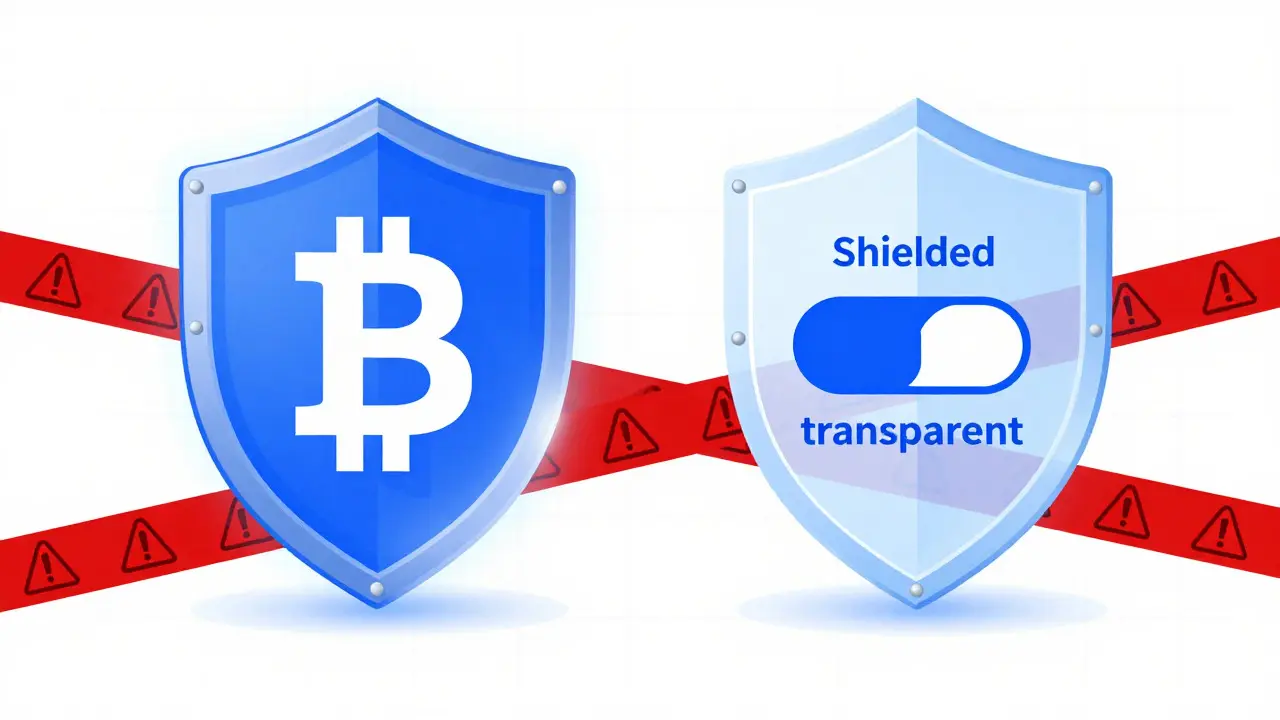
Imagine sending money without anyone knowing who sent it or where it went. For years, that was the promise of privacy coins like Monero is a cryptocurrency designed to provide untraceable transactions through mandatory privacy features such as ring signatures and stealth addresses. But by mid-2026, that promise has hit a wall made of red tape. Governments worldwide are cracking down on anonymous digital assets, forcing exchanges to choose between compliance and carrying these tokens.
The landscape has shifted dramatically since 2024. What used to be a niche corner of the crypto market is now at the center of a global regulatory battle. With over 97 countries implementing stricter frameworks, the question isn't just whether you can use privacy coins, but whether they can survive the current wave of de-risking by financial institutions. If you hold XMR or ZEC, or plan to, understanding these restrictions is no longer optional-it's essential for preserving your assets.
The Technical Divide: Mandatory vs. Optional Privacy
To understand why regulators treat different coins differently, you first need to look under the hood. The core difference lies in how privacy is implemented by default.
Monero (XMR) is a privacy-focused cryptocurrency that enforces anonymity on every transaction using ring signatures, stealth addresses, and RingCT technology. There is no off switch. When you send Monero, the protocol obscures the sender, receiver, and amount automatically. This makes it incredibly difficult for law enforcement to trace funds, which is exactly why criminals love it and regulators hate it. You cannot accidentally send a "public" Monero transaction because the network doesn't allow it.
In contrast, Zcash (ZEC) is a cryptocurrency offering optional privacy through zk-SNARKs technology, allowing users to choose between shielded private transactions and transparent public ones. Zcash uses zero-knowledge proofs to hide transaction details, but only if you opt into "shielded" pools. Many users still use the "transparent" mode, which looks just like Bitcoin on the blockchain. This flexibility was supposed to be a selling point for compliance, but it has created a mixed bag for regulators. They argue that even the option for total anonymity poses a risk, while advocates claim the transparent mode allows for oversight.
This technical distinction matters because it dictates how strict the rules become. Monero’s all-or-nothing approach triggers immediate bans in many jurisdictions, while Zcash sometimes gets a pass-or at least a delay-because it *can* be monitored if users cooperate.
Global Regulatory Crackdown: The Numbers Behind the Ban
The pressure isn't coming from one place; it's a coordinated global effort. By 2025, privacy coins accounted for roughly 11.4% of all cryptocurrency transactions globally, moving over $250 billion. That volume caught the attention of the Financial Action Task Force (FATF) is an intergovernmental organization that sets standards for combating money laundering and terrorist financing.
FATF’s updated "Travel Rule" requires exchanges to share sender and receiver information for transfers above certain thresholds. For privacy coins, this is technically impossible without breaking their core design. As a result, 57% of privacy coin transactions faced enhanced reporting hurdles. The reaction from major exchanges was swift. Binance, Kraken, and other top-tier platforms began delisting privacy coins to avoid hefty fines. This led to a 19% surge in peer-to-peer (P2P) trading, as users moved away from regulated exchanges to decentralized platforms.
| Feature | Monero (XMR) | Zcash (ZEC) |
|---|---|---|
| Privacy Mechanism | Mandatory (Ring Signatures, Stealth Addresses) | Optional (zk-SNARKs, Shielded Pools) |
| Regulatory Status (EU MiCA) | High Risk / Likely Delisted | Conditional Acceptance (if transparent) |
| Exchange Listings (2026) | Significantly Reduced (Major Exchanges) | Moderate Reduction (Tier 1 Exchanges) |
| User Adoption Trend | Stable among privacy purists | Declining (8% address drop due to KYC fears) |
| Primary Use Case | Untraceable Value Transfer | Selective Privacy / Enterprise Compliance |
The European Union and MiCA: A Turning Point
If there is one regulation that changed everything, it’s the EU’s Markets in Crypto-Assets (MiCA) framework. Implemented fully in 2025, MiCA demands transparency that fundamentally conflicts with how privacy coins work. Under MiCA, issuers and service providers must disclose detailed information about the asset and its underlying technology.
For Monero, this meant a near-total exclusion from EU-based exchanges. The regulation reduced privacy coin offerings by 22% across the bloc. For Zcash, the situation is more nuanced. Because Zcash allows for transparent transactions, some European custodians argue they can comply if they force users into the transparent pool. However, this defeats the purpose for most Zcash holders, leading to an 8% decline in active addresses as users fled to less regulated regions or switched to other assets.
The message from Brussels is clear: if you can’t prove who owns the money, you can’t trade it on our licensed platforms. This has pushed much of the liquidity for privacy coins to offshore exchanges or decentralized protocols, increasing the risk for everyday users who lack technical expertise.
Why Regulators Are So Scared: Real-World Risks
It’s not just bureaucratic paranoia. Regulators have valid concerns about illicit finance. Privacy coins have been documented on darknet markets for illegal drug transactions. U.S.-based vendors on platforms like Abacus Market have used Monero to sell fentanyl-laced products, making it nearly impossible for authorities to track the money flow.
When money laundering, tax evasion, and terrorism financing are on the line, governments prioritize control over innovation. The designation of privacy coins as Anonymity-Enhanced Cryptocurrencies (AECs) subjects them to additional reporting protocols. In some cases, holding these coins is treated similarly to holding cash in large amounts-you’re expected to explain where it came from and where it’s going.
This scrutiny has also affected institutional trust. While retail investors might love the idea of untraceable money, banks and hedge funds prefer clarity. As a result, we see a split market: privacy coins thrive in economically unstable regions where citizens distrust their governments, while traditional financial centers push them out.

Navigating the New Normal: Strategies for Users
So, what do you do if you believe in the value of financial privacy? The days of simply buying XMR on Coinbase and forgetting about it are over. Here’s how the landscape looks for users in 2026:
- Use Decentralized Exchanges (DEXs): Since centralized exchanges are delisting privacy coins, DEXs have become the primary entry point. Platforms that swap XMR for other cryptos without requiring KYC (Know Your Customer) data are seeing record usage.
- Peer-to-Peer (P2P) Trading: Direct trades between individuals, often facilitated by escrow services on non-custodial platforms, have grown by 19%. This bypasses exchange restrictions entirely but requires higher vigilance against scams.
- Jurisdiction Arbitrage: Some countries, like Singapore and Switzerland, offer regulated sandboxes for privacy tech. Holding accounts in these jurisdictions may provide better access to compliant privacy coin services, though this is mostly relevant for high-net-worth individuals.
- Hardware Wallets and Cold Storage: With exchange risks rising, keeping your coins offline is more important than ever. Never leave significant amounts of privacy coins on a platform that could freeze your account overnight.
For Zcash users, consider whether you actually need full anonymity. If you’re using it for business transactions that require audit trails, stick to the transparent pool. If you want true privacy, be prepared for limited liquidity and higher fees when swapping in and out.
The Future: Can Privacy and Compliance Coexist?
Technologists are working on solutions to bridge this gap. Zero-knowledge proofs are being refined to allow for "selective disclosure." Imagine a system where you can prove to a regulator that your transaction is clean (e.g., below a certain threshold or from a known source) without revealing your identity or the recipient’s identity. Zcash developers are actively exploring these hybrid models.
However, these solutions are computationally expensive and complex. Until they become user-friendly, the tension will remain. Industry analysts predict further delistings throughout 2026 as traditional financial institutions seek regulatory clarity. Success for privacy coins will hinge on balancing anonymity with enough transparency to satisfy the FATF and local laws.
The bottom line? Privacy coins aren’t dead, but they are underground. If you want to use them, you need to be willing to navigate a fragmented, less convenient, and potentially risky ecosystem. The era of easy, anonymous crypto is over; the era of deliberate, informed privacy has begun.
Is Monero banned in the United States?
Monero is not explicitly banned by federal law in the U.S., but major exchanges like Coinbase and Kraken have delisted it to comply with anti-money laundering (AML) guidelines. You can still buy and sell it via peer-to-peer networks or decentralized exchanges, but fiat on-ramps are significantly harder to find.
Why did Zcash get delisted from some exchanges?
Exchanges delisted Zcash primarily due to pressure from regulators who classify it as an Anonymity-Enhanced Cryptocurrency (AEC). Even though Zcash offers transparent modes, the potential for shielded transactions creates compliance risks that many centralized platforms are unwilling to take under new FATF Travel Rule interpretations.
What is the FATF Travel Rule and how does it affect privacy coins?
The FATF Travel Rule requires virtual asset service providers to share originator and beneficiary information for transactions above a certain threshold. Since privacy coins like Monero obscure this data by design, complying with the rule is technically difficult, leading many exchanges to remove these assets entirely rather than face penalties.
Can I still use Zcash for private transactions in Europe?
Yes, but with limitations. Under the EU’s MiCA regulation, privacy coin offerings have dropped by 22%. While Zcash’s transparent mode may be accepted by some custodians, using the shielded (private) mode may trigger additional scrutiny or require you to use non-EU based decentralized platforms.
Are privacy coins safe from government seizure?
If held in cold storage (hardware wallets), privacy coins are highly resistant to seizure because transactions are untraceable. However, if you convert them to fiat currency through a regulated exchange, you must undergo KYC checks, which links your identity to your crypto holdings. The risk lies in the on-ramp and off-ramp points, not the coins themselves.
Which countries are friendly towards privacy coins?
Jurisdictions like Singapore and Switzerland have established regulatory sandboxes that allow for controlled development and trading of privacy-enhancing technologies. These regions offer a more balanced approach compared to the strict bans seen in parts of Europe and Asia, making them hubs for privacy coin innovation.
Author
Ronan Caverly
I'm a blockchain analyst and market strategist bridging crypto and equities. I research protocols, decode tokenomics, and track exchange flows to spot risk and opportunity. I invest privately and advise fintech teams on go-to-market and compliance-aware growth. I also publish weekly insights to help retail and funds navigate digital asset cycles.