
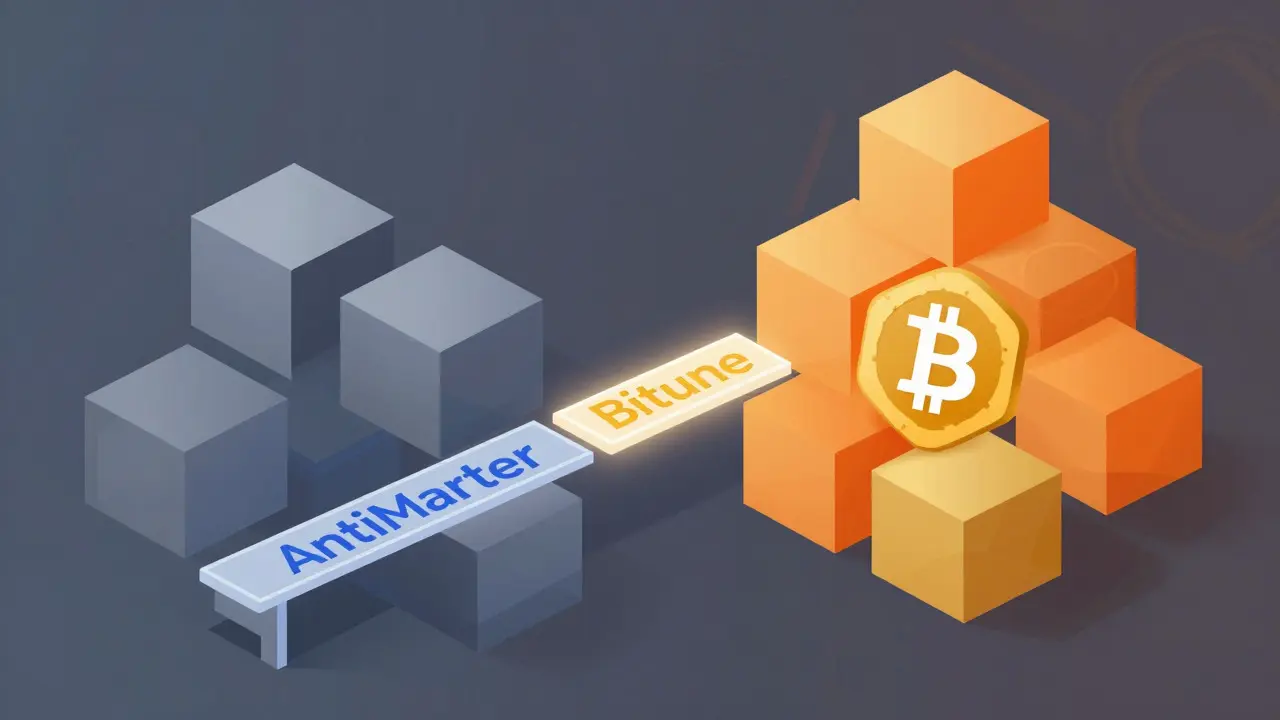
You might have stumbled across a token tickered as TUNE on an exchange and wondered what it actually does. It’s not just another meme coin hoping for a viral moment. Bitune (TUNE) is tied to a specific piece of infrastructure aimed at solving a real problem: how do teams and institutions securely hold Bitcoin and its associated tokens without relying on a single point of failure?
If you are looking at this token in mid-2026, you are likely dealing with a micro-cap asset that has a very niche purpose. It represents a shift from its past life as a DeFi derivatives protocol to a modern Bitcoin-native custody solution. But before you buy or use it, you need to understand exactly what you are getting into, because there are traps-specifically regarding contract addresses and liquidity-that can cost you money.
The Origin Story: From AntiMatter to Bitune
To understand what Bitune is today, you have to look at where it came from. The project didn’t start as a Bitcoin wallet. It began as AntiMatter, which launched around February 2021. Back then, it was focused on decentralized finance (DeFi), specifically perpetual derivatives using a polarized token model called MATTER.
That initial run didn’t stick. The team behind it, also known as the Antimatter team, decided to pivot hard. They realized the future wasn't just in complex derivatives but in securing the foundational layer of crypto: Bitcoin itself. This led to a rebranding effort. The MATTER token was swapped for the TUNE token, and the mission shifted entirely. By late 2023, the migration was complete, and Bitune emerged as a platform dedicated to "building the Bitcoin infrastructure of tomorrow."
This history matters because it tells you about the team's experience. They aren't first-time founders chasing trends; they have operated in the volatile world of DeFi protocols before settling on this specific infrastructure play. However, it also means the token has undergone significant changes in utility and branding, which can confuse investors who remember the old MATTER days.
What Does the Bitune Platform Actually Do?
So, what is the product backing the TUNE token? Bitune offers a multi-signature (multi-sig) custody solution for Bitcoin. Let’s break that down, because "multi-sig" is a term thrown around loosely.
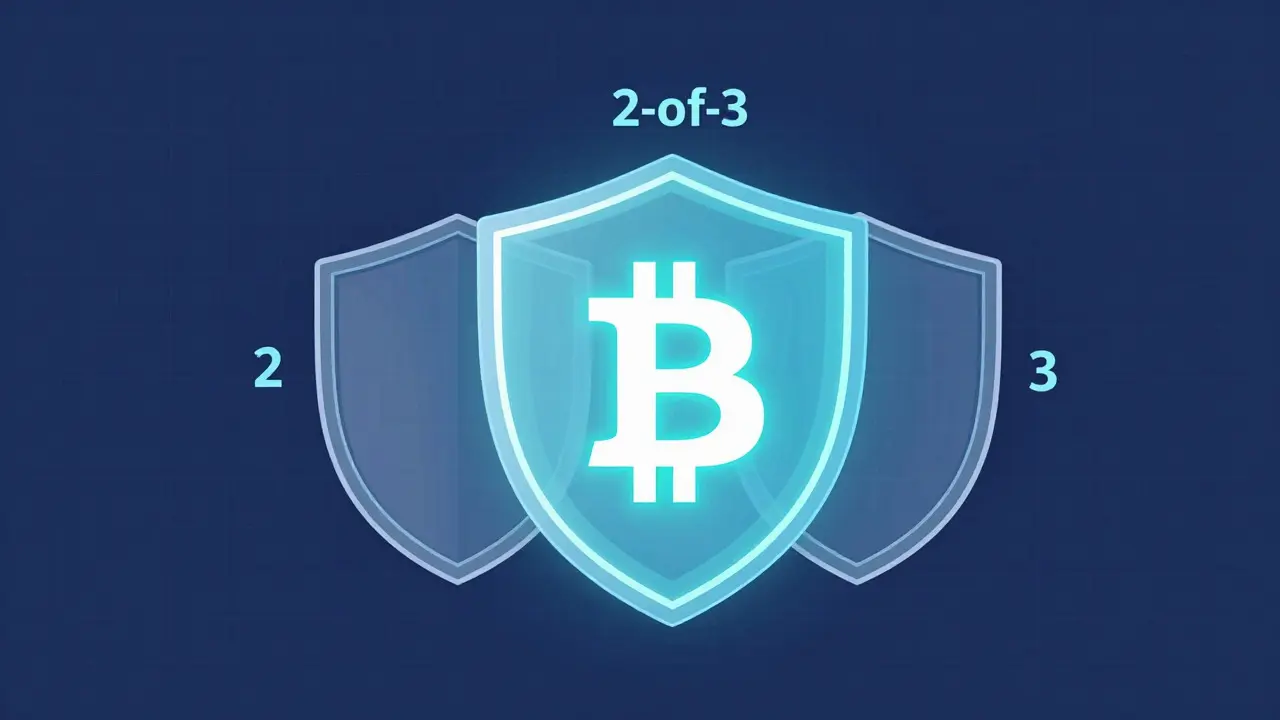
In traditional banking, if you want to move a large sum of money, you often need two or more people to sign off on it. In crypto, a standard wallet usually requires just one private key to spend funds. If that key is stolen, your funds are gone. A multi-sig wallet requires multiple keys (for example, 2 out of 3) to authorize a transaction. This is the gold standard for security for companies, DAOs (Decentralized Autonomous Organizations), and serious investors.
Bitune takes this concept and makes it "Bitcoin-native." This means it handles actual BTC stored on the Bitcoin blockchain. But here is the twist: Bitcoin doesn’t natively support smart contracts like Ethereum does. So, how does Bitune manage the logic?
They use EVM (Ethereum Virtual Machine) cross-chain communication. Think of it this way: the heavy lifting of governance, user interface, and coordination happens on Ethereum-compatible chains (where smart contracts are easy to write), but the actual value-the Bitcoin and BRC-20 tokens-stays safely on the Bitcoin network. This hybrid approach allows them to offer sophisticated management tools for BRC-20 assets, which are tokens issued on Bitcoin, while keeping the security benefits of Bitcoin’s ledger.
| Attribute | Details |
|---|---|
| Token Standard | ERC-20 (on Ethereum) |
| Total Supply | 100,000,000 TUNE |
| Circulating Supply (July 2026) | ~31.3 million - 33 million TUNE |
| Primary Use Case | Governance and utility for Bitune custody platform |
| Contract Address | 0x1fac00ccee478eced6a120a50ed2ab28ee7fe32b |
| Underlying Tech | EVM cross-chain communication + Bitcoin Native Multi-sig |
The Tokenomics: Supply and Scarcity
When evaluating any crypto coin, you need to know how many exist and how many are actually available to trade. Bitune (TUNE) has a fixed total supply of 100,000,000 tokens. There is no inflationary mechanism minting new tokens endlessly; the maximum supply equals the total supply.
However, not all of those tokens are in circulation. As of July 2026, data aggregators show a circulating supply between roughly 31.3 million and 33 million TUNE. This means about 67% of the tokens are still locked, held by the team, reserved for future development, or allocated to early investors. For a trader, this is crucial information. If those locked tokens are released suddenly, it could flood the market and drop the price. Currently, the gradual increase in circulating supply suggests a structured unlock schedule rather than a sudden dump.
The token acts as a utility and governance asset within the Bitune ecosystem. While the provided data doesn't detail every specific governance right, typically in such platforms, holding TUNE might allow users to vote on platform upgrades, fee structures, or new features for the multi-sig tool. It is not designed primarily as a store of value like Bitcoin, but as a functional key to access and influence the platform.
Market Reality: Price, Liquidity, and Risk
Here is where things get tricky. Bitune (TUNE) is a micro-cap cryptocurrency. As of mid-2026, its market capitalization hovers between $87,000 and $94,000 USD. To put that in perspective, this is less than 0.01% of the total crypto market cap. It ranks outside the top 3,000 cryptocurrencies on major trackers like CoinGecko and CoinMarketCap.
Why does this matter? Because of liquidity. Daily trading volumes for TUNE are extremely low, often ranging between $600 and $2,000 USD. This means if you try to buy or sell a significant amount, you will likely experience high slippage. Your order could move the price drastically because there aren't enough buyers or sellers in the order book to absorb it.
The price itself is volatile and sensitive to small trades. In recent weeks, prices have fluctuated between $0.0026 and $0.0030 per TUNE. A single large trade can cause a percentage swing that looks dramatic on paper but involves very little actual money changing hands. This makes TUNE unsuitable for short-term day trading strategies that rely on tight spreads and deep liquidity.
The Critical Warning: Beware of Fake Tokens
This is the most important section for anyone considering interacting with TUNE. There is confusion in the market due to shared tickers. You may see listings for a "Bitune AI Platform Token" also using the ticker TUNE. These are different projects.
The Bitune we are discussing-the Bitcoin custody solution by the Antimatter team-is an ERC-20 token on Ethereum with the contract address: 0x1fac00ccee478eced6a120a50ed2ab28ee7fe32b.
Always verify this address. If you buy a token labeled TUNE from a different contract, you might be buying an unrelated AI-themed token or, worse, a scam token designed to steal your funds. The "AI Platform Token" version has different metrics, higher reported volumes, and a completely different use case. Never assume the ticker alone identifies the asset. Always check the underlying contract address on a block explorer like Etherscan.
How to Get Started with Bitune (TUNE)
If you have verified the correct contract and decided you want exposure to this micro-cap infrastructure play, here is how you typically proceed:
- Choose an Exchange: TUNE is primarily traded on centralized exchanges (CEX). Gate.io has been identified as a primary venue for the TUNE/USDT pair. Check if your preferred exchange lists this specific contract.
- Use a Compatible Wallet: Since TUNE is an ERC-20 token, you can hold it in any Ethereum-compatible wallet like MetaMask, Trust Wallet, or Ledger. Ensure you add the custom token using the correct contract address mentioned above.
- Consider Slippage: When swapping on decentralized exchanges (if pools exist) or buying on CEXs with low volume, set your slippage tolerance carefully. With daily volumes under $2,000, a default 1% slippage might fail, while a 5-10% slippage might result in a much worse entry price.
- Monitor Unlock Schedules: Keep an eye on the circulating supply. If it jumps significantly without corresponding news or adoption, it indicates a token unlock event, which often puts downward pressure on the price.
Is Bitune (TUNE) Right for You?
Bitune (TUNE) is not for everyone. It is a high-risk, high-reward speculative asset tied to a niche infrastructure product. If you believe in the thesis that Bitcoin needs better institutional-grade custody solutions that integrate with modern smart contract logic, then Bitune represents an early-stage bet on that technology.
However, if you are looking for stability, deep liquidity, or broad mainstream adoption, this token falls short. The lack of detailed public audits, limited community feedback channels, and tiny market cap mean you are investing based on trust in the Antimatter team’s execution rather than proven, widespread usage. Treat it as a small satellite position in a diversified portfolio, not a core holding. Always do your own research, verify contract addresses, and never invest more than you can afford to lose in the volatile world of micro-cap crypto.
What is the main difference between Bitune (TUNE) and the old AntiMatter (MATTER) token?
AntiMatter (MATTER) was originally a DeFi derivatives protocol token launched in 2021. Bitune (TUNE) is the rebranded successor that pivoted away from derivatives to focus on Bitcoin-native multi-signature custody and BRC-20 asset management. The token was migrated from older contracts to a new Ethereum ERC-20 contract, maintaining the same total supply of 100 million but changing its utility and ecosystem focus entirely.
Is Bitune (TUNE) a safe investment?
No crypto investment is guaranteed safe, but Bitune carries significant risk. TUNE is classified as a micro-cap asset with very low liquidity and a small market capitalization (under $100k). This makes it highly volatile and susceptible to price manipulation. Additionally, the lack of extensive public security audits and limited adoption metrics mean it is considered a high-risk, speculative play suitable only for investors who understand these risks.
How do I avoid buying the wrong TUNE token?
Always verify the smart contract address. The legitimate Bitune (TUNE) token associated with the Bitcoin custody platform has the Ethereum contract address: 0x1fac00ccee478eced6a120a50ed2ab28ee7fe32b. Be wary of other tokens with the same ticker, such as "Bitune AI Platform Token," which are unrelated projects. Never transfer funds to unverified contracts.
What is the total supply of Bitune (TUNE)?
The total supply of Bitune (TUNE) is fixed at 100,000,000 tokens. As of mid-2026, approximately 31.3 to 33 million tokens are in circulation, meaning roughly 67% of the supply is still locked or reserved for future distribution.
Where can I buy Bitune (TUNE)?
Bitune (TUNE) is primarily traded on centralized exchanges, with Gate.io being a notable venue for the TUNE/USDT pair. Due to low liquidity, trading volumes are small, so expect potential slippage when executing larger orders. It may also be accessible via some Ethereum-compatible wallets through decentralized swaps, though specific DEX pools are not widely documented.
Does Bitune support BRC-20 tokens?
Yes, the Bitune platform is designed to handle multi-signature management for both native Bitcoin (BTC) and BRC-20 assets. It uses EVM cross-chain communication to facilitate the governance and logic layer while keeping the actual assets secured on the Bitcoin network.


Author
Ronan Caverly
I'm a blockchain analyst and market strategist bridging crypto and equities. I research protocols, decode tokenomics, and track exchange flows to spot risk and opportunity. I invest privately and advise fintech teams on go-to-market and compliance-aware growth. I also publish weekly insights to help retail and funds navigate digital asset cycles.