

Imagine a library where every single book is copied onto thousands of computers around the world. No one owns the library. No central authority controls it. If someone tries to tear out a page from one copy, the other thousands of copies prove that the page was never missing. That is essentially how Bitcoin is a decentralized digital currency secured by a global network of independent computers known as nodes.
You might have heard that Bitcoin is secure because of its cryptography or its mining difficulty. Those are true, but they are only half the story. The real backbone of Bitcoin’s resilience is its node count. As of mid-2026, there are approximately 24,000 publicly accessible Bitcoin nodes operating worldwide. This number isn’t just a statistic; it is the measure of the network’s independence. But why does this specific number matter? And what happens if those numbers drop?
What Exactly Is a Bitcoin Node?
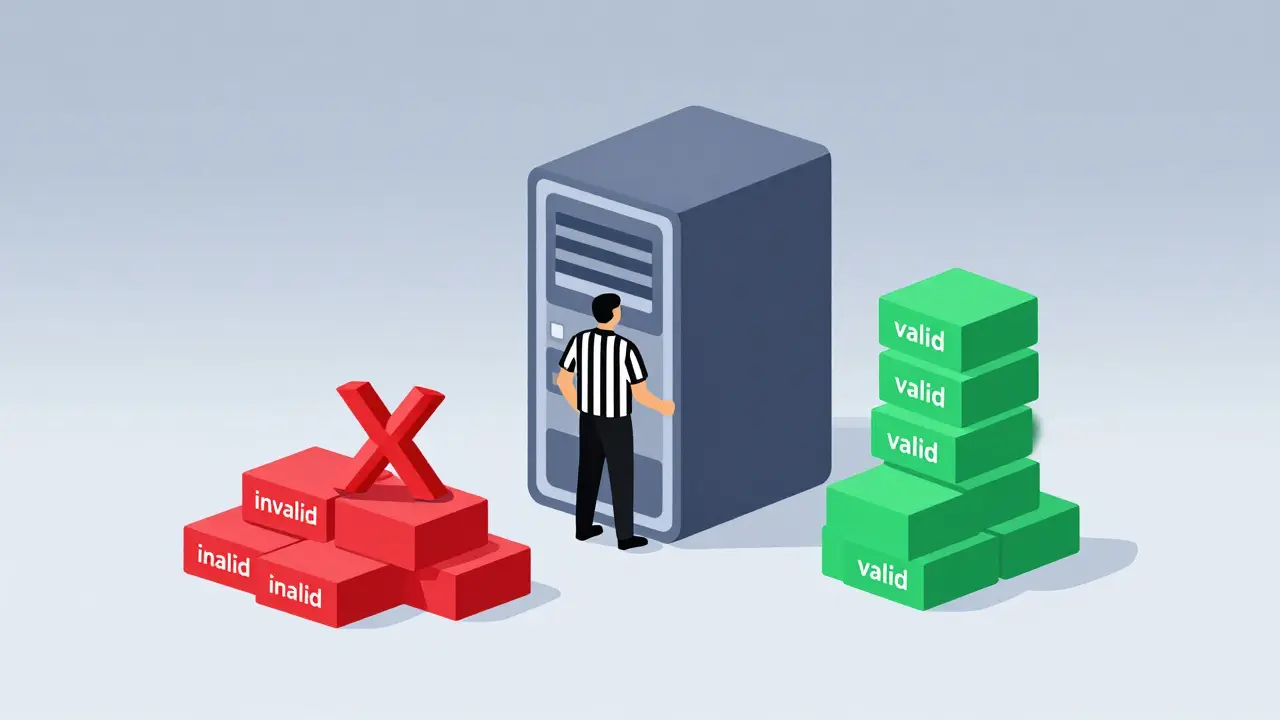
To understand why the count matters, you first need to know what these machines actually do. A Bitcoin node is any computer running Bitcoin software that connects to the peer-to-peer network to validate transactions and blocks. Think of them as the referees of the Bitcoin game. Miners are the players trying to score points (create blocks), but the nodes are the ones checking if the play was legal.
There are different types of nodes, but the most critical ones are Full nodes are computers that download and verify the entire history of the Bitcoin blockchain, ensuring strict adherence to protocol rules. As of 2025 and continuing into 2026, storing the complete blockchain requires about 500 GB to 673 GB of hard drive space. These nodes don’t just store data; they actively reject invalid transactions. If a miner tries to include a transaction that violates the rules-like spending money twice-the full nodes will simply ignore that block. Without enough full nodes, bad actors could force invalid changes through the system.
Then there are lightweight nodes, often called SPV (Simplified Payment Verification) nodes. Your mobile wallet likely acts like an SPV node. It doesn’t download the whole ledger. Instead, it asks full nodes to check if your transaction is valid. This hierarchy means that while millions of people use Bitcoin wallets, only thousands run the infrastructure that keeps the system honest.
The Current State of the Network: By the Numbers
Let’s look at the hard data. Monitoring services like Bitnodes.io and Coin.dance track these connections in real-time. In late 2025, reports showed roughly 24,266 reachable nodes. Of these, nearly all were running Bitcoin Core is the reference implementation of the Bitcoin protocol, serving as the standard software for full nodes. Specifically, about 19,000 of these public nodes were identified as running Bitcoin Core software.
| Metric | Value / Detail |
|---|---|
| Total Public Nodes | ~24,000 - 24,500 |
| Bitcoin Core Users | ~19,000+ |
| Blockchain Size | ~673 GB (growing ~1 GB every few days) |
| Geographic Reach | 102+ Countries |
| Top Identifiable Country | United States (~10%) |
This growth hasn’t happened overnight. Since January 2009, when the network started with virtually zero nodes, we’ve seen steady expansion. Recently, IPv6 nodes grew by over 14%, and Tor-based (.onion) nodes expanded by 3%. This indicates that users are finding new ways to connect privately and securely, even as hardware requirements get heavier.
Where Are These Nodes Located?
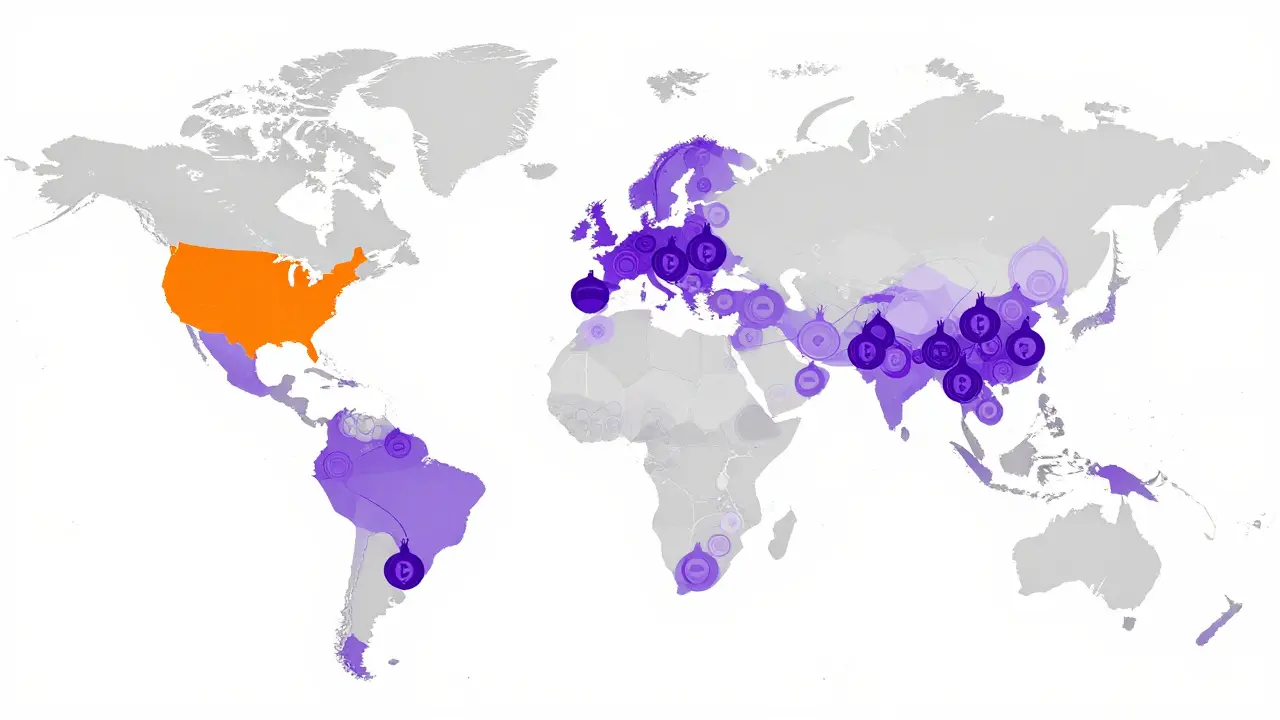
If you map these 24,000 nodes, you might expect a perfect global spread. The reality is more complex. About 64.6% of nodes show up as "n/a" for country location. Don’t panic-this doesn’t mean they don’t exist. It means they are hiding behind privacy tools like Tor is an anonymity network that allows users to communicate securely by routing traffic through multiple volunteer-operated relays. or VPNs. This is actually a good sign. It shows that a majority of node operators care deeply about privacy and resisting surveillance, which aligns perfectly with Bitcoin’s original philosophy.
For the identifiable nodes, the distribution looks like this:
- United States: Leads with roughly 2,440 nodes (10% of total).
- Germany: Follows with 1,319 nodes (5.4%).
- France: Holds about 698 nodes (2.9%).
- Canada & Finland: Each contribute around 1.6-1.7%.
This concentration in developed nations raises a question: Is Bitcoin becoming centralized? Not necessarily. While the US and Germany hold a significant chunk, the network spans over 100 countries. This geographic diversity ensures that a regional internet outage or government shutdown in one area won’t kill the network. However, it does highlight a dependency on stable electricity and high-speed internet in Western economies.
Why the Node Count Is Critical for Security
Here is the core reason you should care about this number. Satoshi Nakamoto, Bitcoin’s creator, wrote in the original whitepaper that the system is secure as long as "honest nodes collectively control more CPU power than any cooperating group of attacker nodes."
Nodes provide three layers of security:
- Consensus Enforcement: Nodes decide what is valid. If a hacker tries to change the rules (e.g., allowing inflation beyond 21 million coins), the nodes will reject those blocks. The more nodes there are, the harder it is to coordinate a takeover.
- Censorship Resistance: Because nodes relay transactions independently, no single entity can stop a payment. If you send Bitcoin, dozens of nodes pick it up and broadcast it. To censor you, an attacker would need to shut down a massive percentage of these independent computers simultaneously.
- Data Redundancy: With 24,000+ copies of the ledger, destroying the Bitcoin blockchain is practically impossible. You’d need to physically destroy thousands of servers across different continents at the exact same moment.
If the node count drops significantly, the network becomes vulnerable. Fewer nodes mean fewer eyes checking the work. It lowers the barrier for attackers to manipulate the network or launch a "51% attack" on the consensus layer. Therefore, maintaining and growing this number is not just technical maintenance; it is an act of economic defense.
Challenges to Running a Node in 2026
So, if nodes are so important, why aren’t there millions of them? The barrier to entry has risen. Running a full node today is not as simple as clicking an app button.
Storage Costs: The blockchain is now nearly 700 GB. While SSD prices have dropped, keeping a drive constantly synced and writing new data requires reliable hardware. For users in developing regions with limited access to cheap storage, this is a hurdle.
Bandwidth Requirements: Nodes must download new blocks instantly. When a block is found, it propagates across the network. If your internet connection is slow or metered, your node might fall behind, making it less useful to the network.
Technical Knowledge: Setting up Bitcoin Core involves configuring ports, managing updates, and troubleshooting sync issues. It’s not user-friendly for the average person who just wants to buy coffee with crypto.
However, solutions are emerging. Pruned nodes are full nodes that delete old blockchain data after verification, significantly reducing storage needs while maintaining validation capabilities. allow users to participate without storing the entire history. This technology is crucial for keeping the network decentralized among users with limited resources.
The Future of Bitcoin’s Infrastructure
Looking ahead, the trend is clear: the network is getting bigger and more robust, but also more demanding. The shift toward IPv6 and increased use of Tor suggests a maturing infrastructure that prioritizes both connectivity and privacy.
We are also seeing a cultural shift. More individuals are realizing that relying on third-party wallets (like exchanges) means trusting someone else’s word. Running your own node lets you verify transactions yourself. This "do-it-yourself" ethos is driving the node count upward despite the technical challenges.
As blockchain size continues to grow by roughly 1 GB every few days, the community faces a long-term challenge: balancing scalability with decentralization. If nodes become too expensive to run, only corporations can afford them, leading to centralization. Innovations in light client protocols and state channels may help alleviate this pressure, allowing more participants to join without needing terabytes of storage.
How many Bitcoin nodes are there in 2026?
As of mid-2026, there are approximately 24,000 to 24,500 publicly accessible Bitcoin nodes globally. This number fluctuates daily as nodes come online or go offline, but it represents a steady increase from previous years.
Why is the node count important for Bitcoin?
The node count determines the network's decentralization and security. More nodes mean more independent validators enforcing the rules, making it harder for attackers to manipulate the ledger or censor transactions. It ensures no single entity controls the network.
What is the difference between a full node and a lightweight node?
A full node downloads and verifies the entire blockchain history (currently ~673 GB), acting as a referee for all transactions. A lightweight (SPV) node only downloads block headers and relies on full nodes to verify transactions, using less storage but offering less independence.
Where are most Bitcoin nodes located?
About 65% of nodes are hidden via Tor or VPNs, showing unknown locations. Among identifiable nodes, the United States leads with roughly 10%, followed by Germany (5.4%), France, Canada, and Finland. The network spans over 100 countries.
Can I run a Bitcoin node at home?
Yes, but you need a computer with at least 700 GB of free storage, a reliable high-speed internet connection, and some technical knowledge to configure Bitcoin Core. Alternatively, you can run a pruned node to save disk space.
What happens if the number of nodes decreases?
A decrease in nodes reduces network redundancy and makes it easier for malicious actors to coordinate attacks or enforce rule changes. It increases the risk of centralization, where fewer entities control the validation process.
Do miners also run nodes?
Ideally, yes. Miners should run full nodes to ensure they are only proposing valid blocks. However, some miners rely on external services for block templates, which introduces a slight centralization risk if those services are compromised.
Author
Ronan Caverly
I'm a blockchain analyst and market strategist bridging crypto and equities. I research protocols, decode tokenomics, and track exchange flows to spot risk and opportunity. I invest privately and advise fintech teams on go-to-market and compliance-aware growth. I also publish weekly insights to help retail and funds navigate digital asset cycles.