

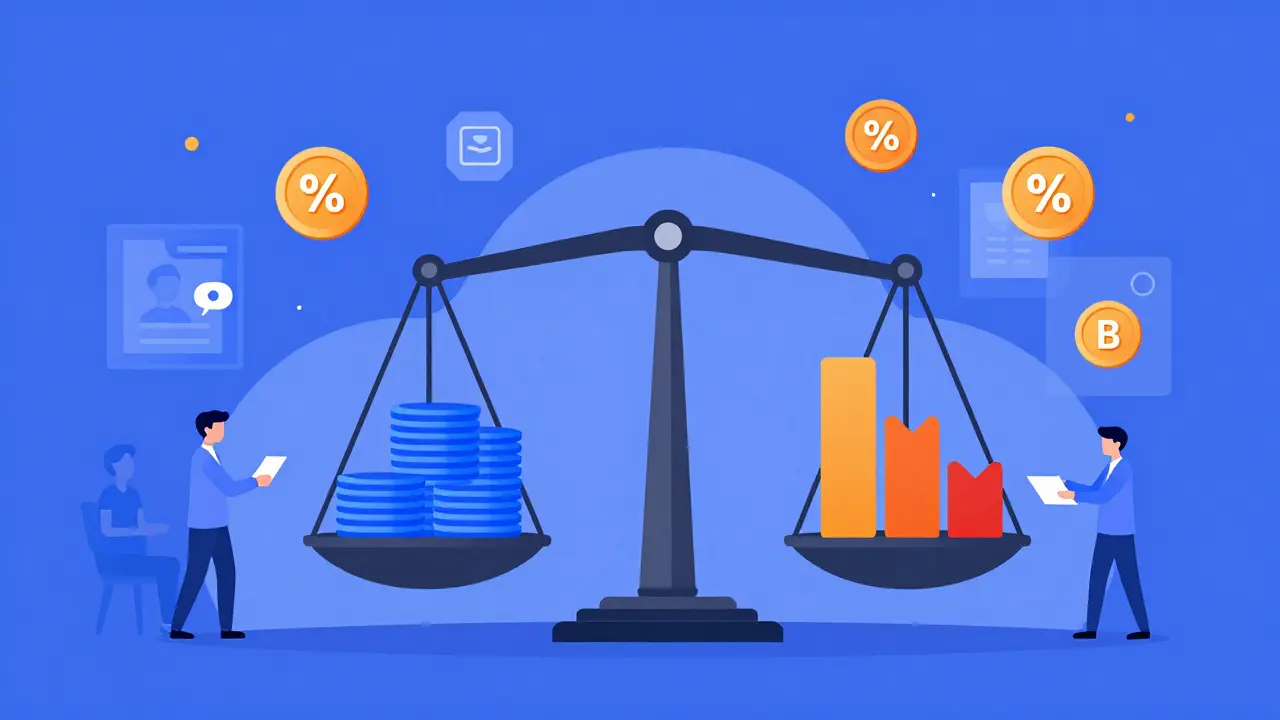
Choosing between OpenSea and Blur isn't just about picking a website; it's about deciding who you are as an NFT participant. Are you a casual collector looking to buy your first digital art piece without getting lost in technical jargon? Or are you a power user trying to execute high-volume trades with the lowest possible friction? The gap between these two platforms has widened significantly since 2024, making this choice critical for your wallet balance and long-term strategy.
The core difference is simple: OpenSea is a general-purpose marketplace designed for beginners and creators, while Blur is a specialized trading terminal built for professional 'whale' traders. As of early 2026, Blur dominates raw trading volume, but OpenSea still holds the largest unique user base. Understanding which platform aligns with your specific goals will save you time, money, and headaches.
Key Takeaways
- OpenSea is best for beginners, multi-chain collectors, and artists who need royalty enforcement and customer support.
- Blur is best for advanced traders seeking zero buyer fees, faster execution speeds, and advanced analytics tools.
- Blur currently controls roughly 71.5% of market share by volume, while OpenSea leads in daily active users.
- Creator royalties are enforced on OpenSea but largely ignored on Blur, impacting artist income significantly.
- Your choice depends on whether you prioritize ease of use (OpenSea) or trading efficiency (Blur).
Who Should Use Which Platform?
Let's strip away the hype and look at the actual user personas. If you stumbled into NFTs because you saw a cool Bored Ape Yacht Club image or want to mint your own artwork, OpenSea is your home base. It supports 19 different blockchains, including Ethereum, Polygon, and Solana, meaning you don't have to switch wallets or platforms if you move assets around. The interface is intuitive, with step-by-step guides that can get you from zero to your first sale in under an hour. For someone new to Web3, this low barrier to entry is invaluable.
On the other hand, if you spend more time watching floor prices than creating art, Blur was built for you. Launched in late 2022 by a trader known as Pacman, Blur strips away everything unnecessary. There are no tutorials, no fluff, just a dense dashboard packed with real-time data, batch buying options, and bid sniping tools. It assumes you already know what a "floor sweep" is. If you don't, you might feel overwhelmed. But if you do, you'll appreciate that Blur processes transactions up to 37% faster than OpenSea, giving you a crucial edge in competitive markets.
| Feature | OpenSea | Blur |
|---|---|---|
| Primary Audience | Beginners, Collectors, Artists | Professional Traders, Whales |
| Supported Chains | 19 (Ethereum, Polygon, Solana, etc.) | Ethereum, Solana (Aggregator) |
| Seller Fee | 2.5% | 0.5% - 2% (Variable) |
| Buyer Fee | 0% | 0% |
| Royalty Enforcement | Yes (Standard 5-10%) | No (Optional/Ignored) |
| Learning Curve | Low | High |
| Customer Support | 24/7 Live Chat | Email Only (72h response) |
Fees, Royalties, and Hidden Costs
Money talks, especially in crypto. On the surface, both platforms charge zero fees to buyers, which is great news for anyone purchasing NFTs. However, the seller side tells a different story. OpenSea maintains a flat 2.5% fee for sellers. It’s predictable and straightforward. Blur, conversely, uses a variable fee structure ranging from 0.5% to 2%, depending on the collection and current liquidity. For high-volume traders, shaving off even 0.5% per transaction adds up quickly. One Reddit user reported saving $1,850 in a single month by using Blur’s batch tools for 47 transactions-a significant chunk of change in the volatile NFT world.
But fees aren’t the only cost to consider. Creator royalties are a major point of contention. OpenSea enforces standard royalties, typically set by artists at 5-10%. This means every time an NFT changes hands, the original creator gets a cut. This model supports sustainable careers for digital artists. Blur, however, effectively ignores royalties unless the smart contract strictly enforces them. This attracted many traders who wanted to avoid these extra costs, but it angered the artistic community. David Marcus, former Meta blockchain head, noted that Blur’s zero-fee model risks long-term ecosystem health by undermining these payments. If you care about supporting artists, OpenSea is the ethical choice. If you care purely about maximizing profit margins, Blur offers more flexibility.
Technical Performance and User Experience
When you’re trading, speed matters. Blur’s architecture is optimized for speed. It functions partly as an aggregator, pulling listings from other platforms to show you the best available price. This design allows for near-instant execution. In benchmarks from early 2026, Blur processed transactions 37% faster than OpenSea. For a sniper trying to grab a rare drop before the price jumps, those milliseconds are everything.
OpenSea, having launched its second-generation OS2 platform in late 2025, has improved significantly. They reduced gas fees by 42% through smart contract optimization. While not as fast as Blur for pure trading, OpenSea offers a smoother experience for browsing and managing collections. The interface is clean, mobile-friendly, and includes robust educational resources. If you ever get stuck, OpenSea’s 24/7 live chat support is a lifesaver. Blur, by contrast, relies on email support with an average 72-hour response time. If something goes wrong with a trade on Blur, you’re mostly on your own.
Another technical distinction is chain support. OpenSea is a true multi-chain giant, supporting 19 networks. This makes it ideal if you collect across different ecosystems. Blur focuses primarily on Ethereum and Solana, acting as an aggregator rather than a standalone chain host. This focus allows Blur to optimize deeply for these two high-value chains, but it limits your options if you want to explore niche chains like Avalanche or Base.
Market Share and Trading Volume Trends
The numbers tell a dramatic story of shift. In early 2023, OpenSea dominated with nearly 95% of the market. By January 2026, that figure had plummeted to around 15% by volume, while Blur surged to capture approximately 71.5% of the market share according to DappRadar. How did this happen? Blur targeted the "whales"-the large holders and professional traders who drive the majority of volume. By offering lower fees and better tools, they siphoned off the high-value activity.
However, volume doesn’t equal popularity. Nansen analytics revealed that OpenSea still leads in unique user count, with 16,000 more daily active users than Blur. This suggests that while the big money has moved to Blur, the mass market-the everyday collectors and fans-remains on OpenSea. This split creates an interesting dynamic: OpenSea is the social hub, while Blur is the trading floor. If you want to see what’s trending among the general public, check OpenSea. If you want to see where the serious capital is flowing, look at Blur.

Future Outlook: Tokens and Ecosystems
Both platforms are betting big on their future utility tokens. OpenSea is planning an airdrop of its $SEA token in Q2 2026, targeting 1.2 million eligible users. This move aims to lock in loyalty and subsidize royalties, reinforcing its position as a creator-first ecosystem. Blur, meanwhile, already distributed 1 billion BLUR tokens in 2023, creating a strong network effect among its early adopters. Now, Blur is focusing on premium features, such as machine learning-powered price predictions and DeFi lending against NFT collateral, scheduled for launch by Q4 2026.
Which path is more sustainable? Messari predicts OpenSea will retain 25-30% market share as the go-to for beginners, while Blur captures 45-50% among professionals. Delphi Digital warns that Blur’s reliance on professional traders makes it vulnerable to bear markets, potentially seeing a 60% volume drop during downturns. OpenSea’s broader user base provides a buffer against such volatility. For now, the industry is moving toward efficiency and user empowerment, but the battle over who controls the next generation of NFT users is far from over.
How to Choose: A Decision Guide
Still on the fence? Here is a simple framework to help you decide:
- If you are new to NFTs: Start with OpenSea. The learning curve is gentle, support is available, and the multi-chain support lets you explore safely.
- If you are an artist: Use OpenSea to ensure your royalties are paid. Consider listing on Blur later if you want to attract high-volume buyers willing to ignore royalties.
- If you are a high-frequency trader: Switch to Blur. The fee savings and speed advantages will compound over time. Be prepared to invest 8-12 hours learning the interface.
- If you hold multiple chains: Stick with OpenSea. Managing assets across 19 chains is much easier on one unified platform.
Ultimately, there is no "better" platform, only the right tool for your job. Many savvy users actually keep both open: they browse and discover on OpenSea, then execute complex trades on Blur. Don’t be afraid to use both to maximize your experience in the evolving NFT landscape.
Is Blur really free to use?
Blur charges zero fees to buyers and a variable 0.5-2% fee to sellers. While it's cheaper than OpenSea for sellers, you still pay standard Ethereum or Solana gas fees for transactions. The "zero fee" claim usually refers to platform-specific trading fees, not network costs.
Can I use Blur if I am a beginner?
Yes, but it will be challenging. Blur lacks the hand-holding guides and customer support found on OpenSea. You will need to understand basic trading concepts like bids, asks, and floor prices. If you are comfortable with spreadsheets or stock trading apps, you will likely adapt quickly. Otherwise, start with OpenSea.
Which platform has better security?
Both are non-custodial, meaning you control your assets via your wallet. Security depends more on your wallet management than the marketplace itself. However, OpenSea has a longer track record and more extensive audit history. Blur is newer but has gained trust through high volume. Always double-check contract addresses before connecting your wallet on either platform.
Do royalties work on Blur?
Royalties on Blur depend on the specific NFT collection's smart contract. If the contract enforces royalties, they will be paid. If not, Blur does not force them. This is why many artists prefer OpenSea, where royalty enforcement is a standard feature of the platform.
Will OpenSea lose its market share completely?
Unlikely. Experts predict OpenSea will stabilize at 25-30% market share by serving the beginner and creator segments. Its strength lies in diversity and ease of use, which Blur does not replicate. The two platforms serve different niches, allowing both to coexist.
Author
Ronan Caverly
I'm a blockchain analyst and market strategist bridging crypto and equities. I research protocols, decode tokenomics, and track exchange flows to spot risk and opportunity. I invest privately and advise fintech teams on go-to-market and compliance-aware growth. I also publish weekly insights to help retail and funds navigate digital asset cycles.