
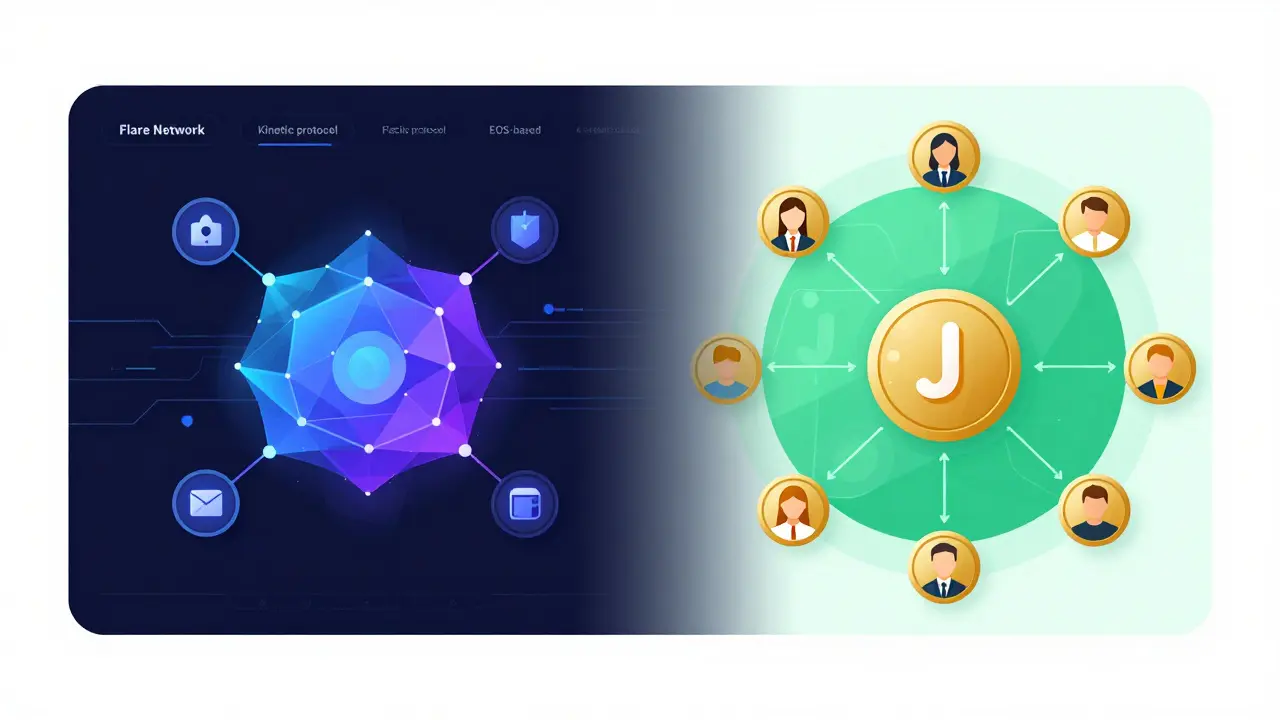
You might have seen the ticker JOULE popping up on your screen and wondered what it actually does. Here is the catch: there isn't just one story here. Depending on where you look, Joule (JOULE) is either a community-driven social token on the EOS blockchain or the governance fuel for Kinetic, a lending protocol running on the Flare Network. This confusion is real, and it’s the first thing you need to untangle before you think about buying or holding these tokens.
If you are looking at the charts right now in mid-2026, you are likely seeing the version tied to the Flare ecosystem. The price hovers around fractions of a cent, trading quietly on decentralized exchanges. But if you dig into older forums or specific apps, you’ll find references to a completely different project built on EOS that focuses on popularity indices and referrals. Let’s break down exactly what each of these is, how they work, and which one matches the data you are seeing today.
The Two Faces of JOULE
Before we dive into the numbers, we need to clear up the identity crisis. In the crypto world, ticker symbols can sometimes overlap, or projects can pivot so hard that old descriptions stick around. For JOULE, we have two distinct narratives competing for attention.
1. The Flare Network Implementation (Current Market Leader)
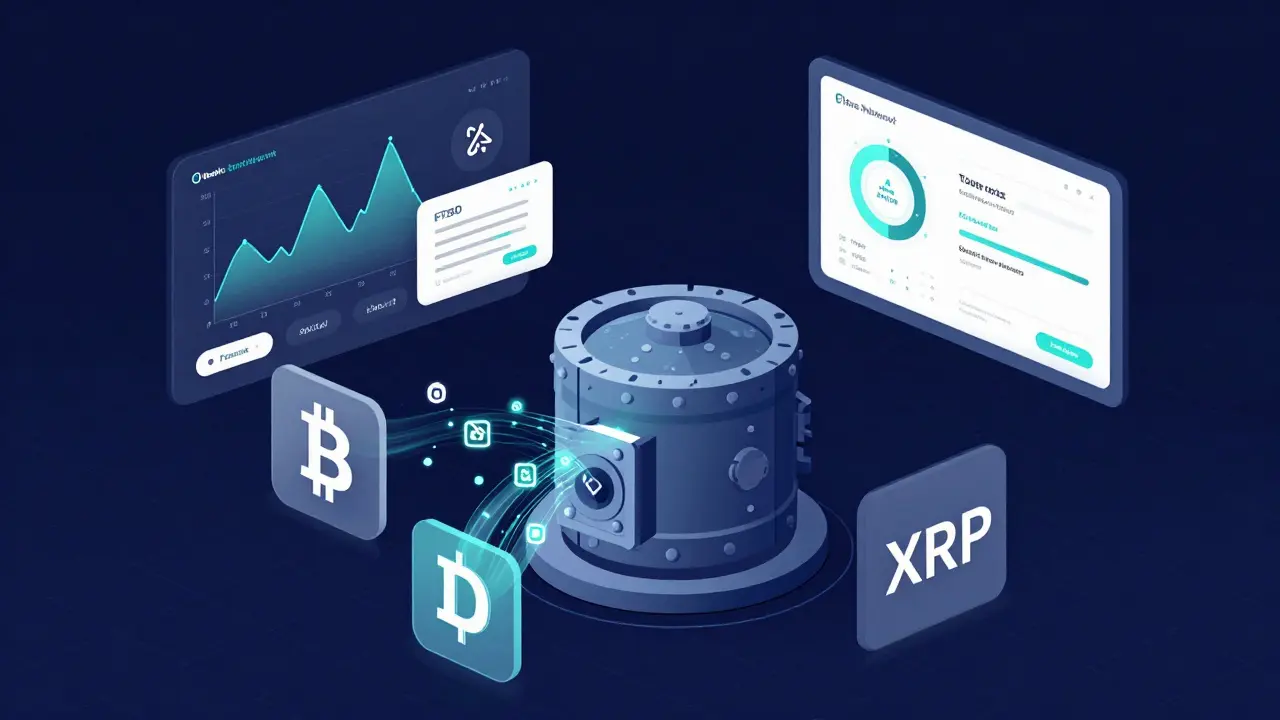
This is the JOULE token you will find on major trackers like CoinMarketCap and CoinGecko today. It serves as the utility and governance token for Kinetic, a decentralized lending protocol built on the Flare Network. Kinetic uses Flare’s unique technology-specifically FTSO (Flare Time Series Oracle) and FAssets-to allow users to lend and borrow assets that don’t natively exist on Flare, such as Bitcoin, Dogecoin, and XRP. Think of it as a bridge that lets you use your BTC to get liquidity in the Flare ecosystem without moving the actual coins off their home chain.
2. The EOS Blockchain Implementation (Legacy/Social Focus)
This version describes a global community platform focused on a "Global Popularity Index." Users trade on the popularity levels of public figures. It relies heavily on a referral-based membership model where income is generated from transaction fees paid by merchants who accept JOULE. While this project exists and has an active user base in certain circles, it is not the primary driver of the market capitalization and volume you see on standard crypto aggregators right now.
For the rest of this guide, we will focus primarily on the Kinetic/Flare iteration because that is where the bulk of the liquid trading volume and technical development is happening in 2026. However, knowing the EOS version exists helps explain why some older articles might talk about "referral commissions" instead of "lending yields."
How Kinetic and JOULE Work on Flare
To understand the value of the JOULE token in its current form, you have to understand the problem it solves. Most blockchains are silos. You can’t easily use Ethereum ETH to collateralize a loan on Solana. Flare Network was built to fix this with interoperability, and Kinetic is the financial engine sitting on top of it.
Here is the workflow:
- FAssets Technology: Kinetic uses FAssets to create representations of non-native tokens. If you want to lend against your Bitcoin, Kinetic locks that value (via oracle feeds) and issues a representation on Flare. This allows Bitcoin holders to participate in DeFi on Flare without wrapping tokens through risky bridges.
- FTSO Price Feeds: Decentralized finance needs accurate prices. Flare’s FTSO provides decentralized, tamper-resistant price data. Kinetic relies on this to determine the value of your collateral in real-time, preventing exploits where bad actors manipulate price feeds to drain the protocol.
- JOULE Utility: So, what do you do with the token? Primarily, it is used for governance. Holders vote on which new assets should be supported, what interest rate models to use, and how treasury funds are allocated. It also often acts as a reward mechanism for liquidity providers who help keep the lending pools deep.
This setup makes JOULE a "governance token" rather than a "currency" in the traditional sense. You aren't meant to buy coffee with it; you hold it to influence the future of the lending protocol and earn rewards for securing the network.
Market Performance and Volatility (2026 Context)
Let’s talk numbers, because they tell a story of extreme volatility. As of July 2026, JOULE is not a household name like Bitcoin or Ethereum. It ranks outside the top 5,000 cryptocurrencies by market cap, which signals low liquidity and high risk.
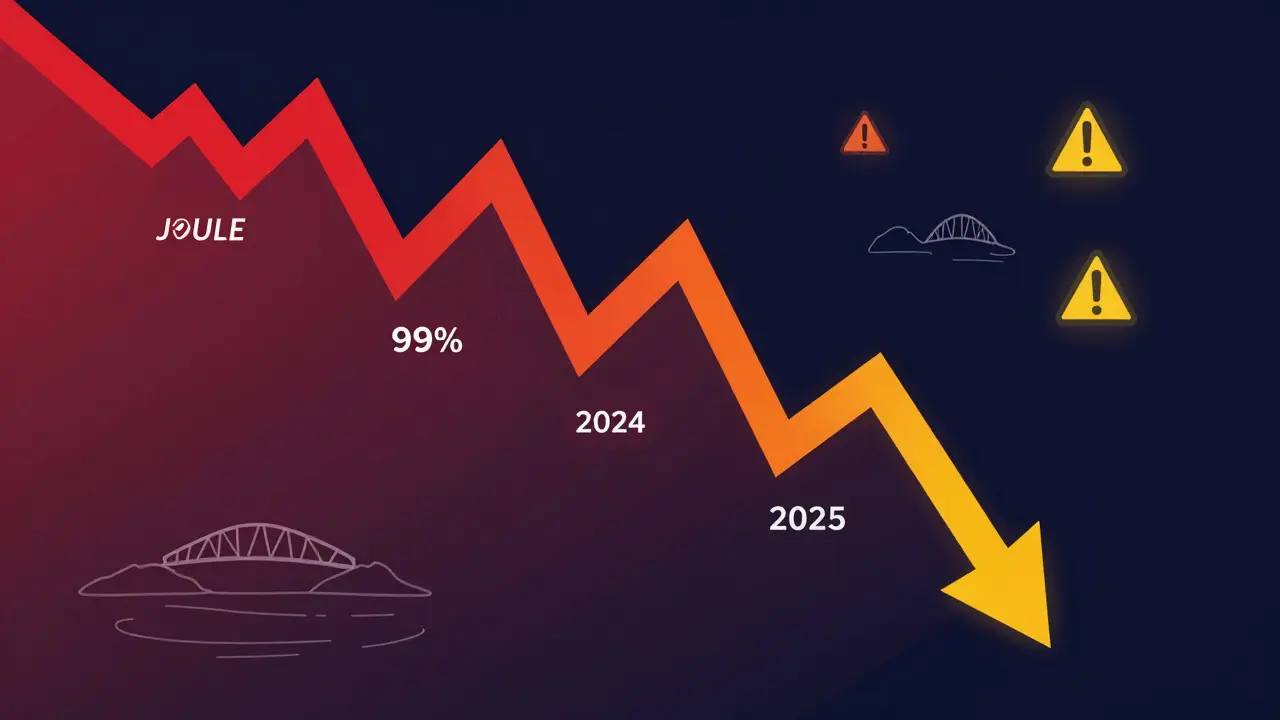
Recent data shows JOULE trading in the range of $0.0005 to $0.0006 USD. To put that in perspective, the token hit an all-time high of roughly $0.067 back in late 2024. That means the price has dropped over 99% from its peak. However, crypto markets are cyclical. From its absolute bottom in November 2025 (around $0.00004), the token has recovered nearly 1,000%. This kind of swing-crashing 99% then bouncing back 10x-is typical for small-cap DeFi tokens.
| Metric | Value / Detail |
|---|---|
| Current Price Range | $0.0005 - $0.0006 USD |
| All-Time High (ATH) | ~$0.067 (Late 2024) |
| All-Time Low (ATL) | ~$0.000046 (Nov 2025) |
| Primary Trading Pairs | JOULE/FLR, JOULE/USDT |
| Dominant Exchanges | Blazeswap, SparkDEX v3 (Decentralized) |
| Market Cap Rank | #5184+ (Low Tier) |
The low trading volume-often under $400 in a single day on some pairs-means that large buys or sells can move the price significantly. If you are considering entering this position, slippage (the difference between expected price and executed price) is a real factor you must account for.
Where and How to Trade JOULE
You won’t find JOULE on major centralized exchanges like Coinbase or Binance. It lives in the decentralized finance (DeFi) layer. To interact with it, you need a few things:
- A Web3 Wallet: You’ll need a wallet compatible with the Flare Network, such as Trust Wallet or MetaMask configured for Flare Coston/Testnet or Mainnet.
- Flare (FLR) Tokens: You need FLR to pay for gas fees (transaction costs) on the network. You can buy FLR on a centralized exchange and send it to your wallet.
- Access to DEXs: The primary venues for swapping FLR for JOULE are Blazeswap and SparkDEX v3. These are automated market makers (AMMs). You connect your wallet, approve the transaction, and swap.
Warning on Contract Addresses: Because JOULE is a smaller token, scammers often create fake versions with similar names. Always verify the contract address. The widely recognized address for the Kinetic JOULE token is 0xE6505f92583103AF7ed9974DEC451A7Af4e3A3bE. Double-check this against official Kinetic or Flare documentation before sending any funds.
Risks and Red Flags
Investing in a token ranked #5,000+ is speculative at best. Here is what you need to watch out for:
- Liquidity Risk: With daily volumes sometimes dipping below $1,000 across all pairs, exiting a large position could crash the price. You might not be able to sell quickly without losing significant value.
- Smart Contract Risk: Kinetic relies on complex interactions between FAssets and oracles. If there is a bug in the code or a failure in the price feed mechanism, funds could be at risk. Always check if the protocol has undergone audits by reputable firms.
- Identity Confusion: The existence of the EOS-based "Joule Index" project creates noise. Make sure you are researching the correct team, whitepaper, and roadmap. Do not mix up the referral schemes of the EOS project with the lending mechanics of the Flare project.
- Regulatory Uncertainty: Governance tokens are in a gray area globally. While they are generally treated as utilities, regulations in the US and EU are tightening around tokens that offer passive yield or voting rights that resemble securities.
Is JOULE Worth Your Attention?
It depends on your appetite for risk and your belief in the Flare Network’s long-term vision. If you believe that cross-chain interoperability is the next big wave in crypto, and that protocols like Kinetic will capture value by letting Bitcoin and other assets live seamlessly on Flare, then JOULE represents a leveraged bet on that ecosystem.
However, if you are looking for stability or mainstream adoption, JOULE is currently too small and too illiquid. The 99% drop from its 2024 highs serves as a stark reminder of how brutal altcoin cycles can be. The recent recovery from the 2025 lows shows resilience, but resilience doesn’t guarantee future growth.
Do your own due diligence. Look at the Kinetic protocol’s total value locked (TVL). Is it growing? Are more users borrowing against BTC via Flare? Those metrics matter more than the token price alone. If the underlying protocol is healthy, the token may eventually reflect that value. If not, it remains a speculative gamble.
What is the main use case for the JOULE token?
In its current primary implementation on the Flare Network, JOULE is the governance and utility token for the Kinetic lending protocol. It allows holders to vote on protocol parameters and supports the ecosystem that enables lending/borrowing of non-native assets like Bitcoin on Flare.
Why are there two different descriptions for JOULE?
There appears to be a naming overlap or legacy confusion. One version is a social/referral-based token on the EOS blockchain (Joule Index). The other, which dominates current market data, is the DeFi governance token on the Flare Network. Always check the blockchain and contract address to ensure you are looking at the right asset.
Can I buy JOULE on Coinbase or Binance?
No, JOULE is not listed on major centralized exchanges. It is traded exclusively on decentralized exchanges (DEXs) like Blazeswap and SparkDEX v3 within the Flare Network ecosystem. You will need a Web3 wallet and FLR tokens to facilitate trades.
What happened to the JOULE price since 2024?
The token experienced extreme volatility, dropping over 99% from its all-time high of ~$0.067 in late 2024 to a low of ~$0.00004 in late 2025. As of mid-2026, it has partially recovered to trade around $0.0005-$0.0006, indicating high speculative risk and sensitivity to market cycles.
Is JOULE a safe investment?
Like most low-market-cap cryptocurrencies, JOULE carries high risk. Factors include low liquidity, smart contract vulnerabilities, and regulatory uncertainty. It should only be considered with capital you can afford to lose entirely, after thorough personal research.
Author
Ronan Caverly
I'm a blockchain analyst and market strategist bridging crypto and equities. I research protocols, decode tokenomics, and track exchange flows to spot risk and opportunity. I invest privately and advise fintech teams on go-to-market and compliance-aware growth. I also publish weekly insights to help retail and funds navigate digital asset cycles.