
You might have seen the ticker SENATE flash across a trading screen or mentioned in a crypto forum. It sounds like a political term, but in the world of digital assets, it is something entirely different. SENATE is the governance and high-value utility token for the SIDUS HEROES metaverse. If you are wondering whether this coin is worth your attention, you need to understand that it is not just another speculative asset. It is designed to function as the "political currency" of a specific space-themed video game ecosystem.
The reality of holding SENATE is starkly different from holding Bitcoin or Ethereum. This is a niche asset tied directly to the success of one specific project: SIDUS HEROES, an AI-powered, Web3 gaming metaverse built on the Ethereum network. The token’s value relies on players wanting to vote on game decisions, buy virtual land, or construct spaceships. When we look at the data from mid-2026, the picture is complex. The token has experienced extreme volatility, dropping more than 99% from its all-time high, which signals high risk but also highlights the specific mechanics that drive its price.
Understanding the Role of SENATE in SIDUS HEROES
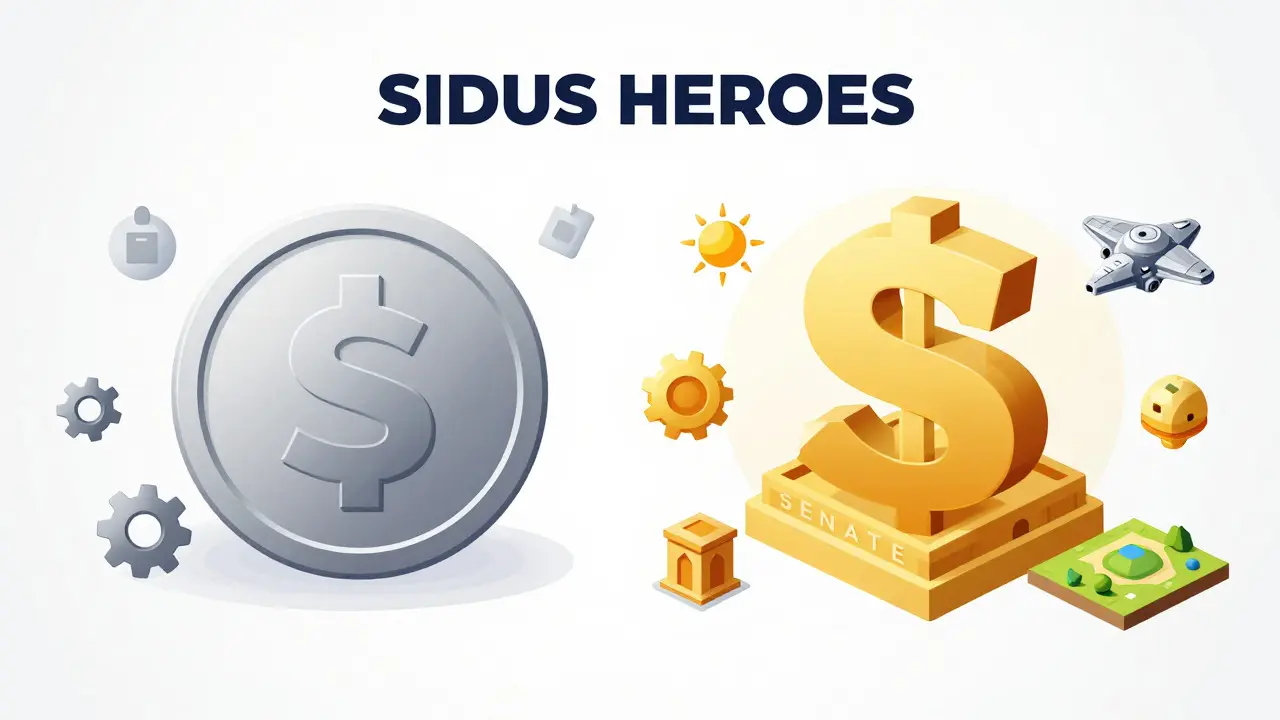
To grasp what SENATE actually does, you first need to understand the environment it lives in. SIDUS HEROES is not a single game; it is described as a pioneering, space-based gaming metaverse with multiple studios and unified lore. Think of it as a persistent universe where your progress transfers between different games. Within this universe, there are two main currencies, and confusing them is a common mistake for new users.
There is SIDUS, which acts as the general utility currency for buying and selling standard NFT content and receiving rewards. Then there is SENATE. While SIDUS handles everyday transactions, SENATE is reserved for high-stakes activities. It is the "heavy lifter" of the economy. You use SENATE for things that matter to the structure of the game itself:
- Political Governance: Holders can vote in presidential and senate elections within the game. They influence faction creation and decide on major development paths.
- High-Value Assets: You cannot buy premium spaceships, space station modules, or large land plots using SIDUS. These expensive items are priced exclusively in SENATE.
- Staking: Users can stake their SENATE tokens to potentially earn rewards, though specific yield rates vary based on current protocol settings.
This dual-token structure is common in Web3 gaming. It separates inflationary utility spending (SIDUS) from deflationary governance and luxury spending (SENATE). The idea is that as the game grows, demand for governance power and exclusive assets drives up the need for SENATE, while the burning mechanism reduces supply.
Tokenomics: Supply, Burns, and Vesting
If you are looking at the numbers, SENATE has a fixed maximum supply of 300,000,000 units. This cap is crucial because it means no new tokens can ever be created beyond this limit. However, the circulating supply-the amount actually available to trade-changes over time due to two opposing forces: unlocks and burns.
When the token launched via the Sidus Heroes DAO Initial DEX Offering (IDO) in December 2021, the total supply allocated was approximately 294.63 million tokens. About 25% went to private and pre-sale investors, while less than 2% was sold publicly. The rest was reserved for the team, advisors, ecosystem growth, and liquidity. These reserved tokens do not appear all at once. They follow a vesting schedule, meaning they unlock gradually over months or years. This prevents early insiders from dumping all their tokens on the market immediately.
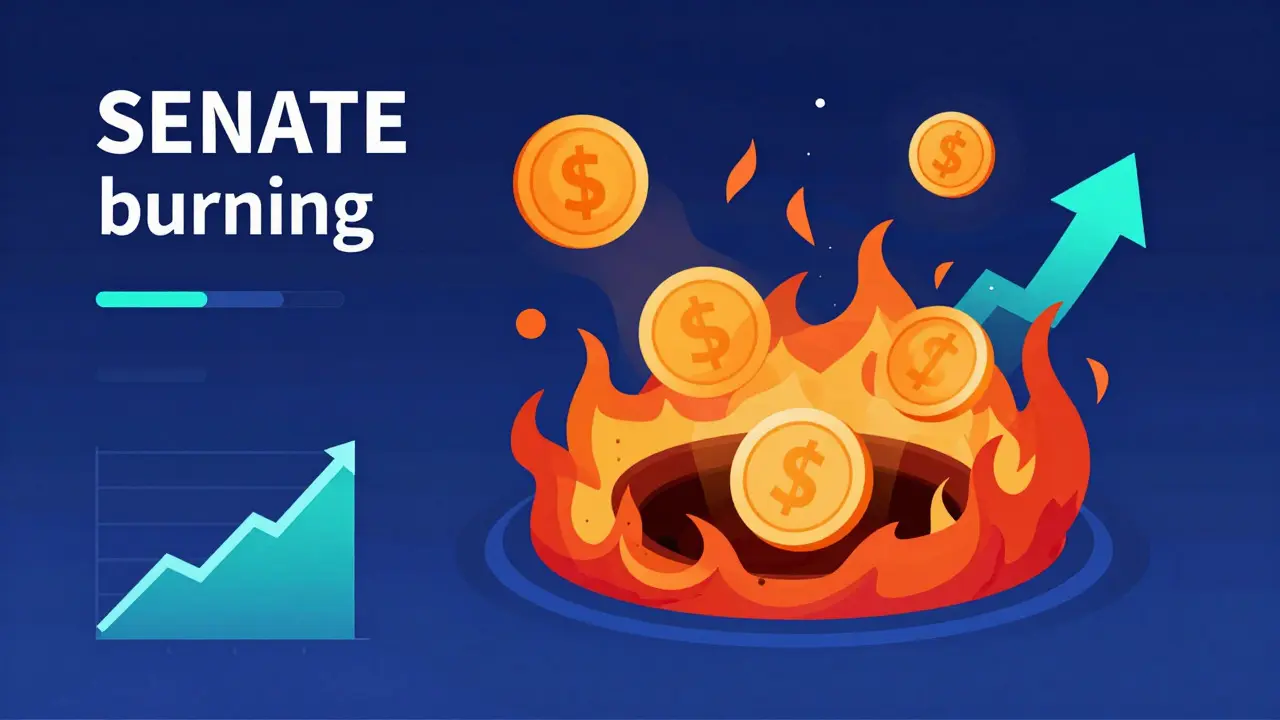
On the flip side, SENATE is deflationary by design. Every time a player spends SENATE in-game-whether to buy a spaceship module or vote on a proposal-a portion of those tokens is burned. Burning means sending them to a dead wallet address where they can never be recovered. This permanently removes them from circulation. Theoretically, if the game becomes popular and people spend a lot of SENATE, the burn rate could outpace the unlock rate, creating scarcity. In practice, however, low player activity can mean fewer burns, allowing the unlocked supply to dilute the price.
| Attribute | Details |
|---|---|
| Blockchain | Ethereum (ERC-20) |
| Max Supply | 300,000,000 SENATE |
| Primary Use Case | Governance, High-Value Asset Purchase |
| Burn Mechanism | Tied to in-game spending |
| All-Time High Price | $5.85 (January 1, 2022) |
| All-Time Low Price | $0.0137 (February 28, 2025) |
Market Performance and Volatility Risks
Let’s talk about the money, because that is usually why you are reading this. SENATE is a highly volatile asset. Its price history tells a story of a classic crypto boom and bust cycle. The token reached its peak price of roughly $5.85 in early January 2022. At that time, the excitement around play-to-earn gaming was at its highest point. Investors were pouring money into any project promising a Web3 metaverse.
Since then, the price has fallen dramatically. By late February 2025, it hit an all-time low of about $0.0137. As of mid-2026, prices reported by various aggregators show significant discrepancies, ranging from fractions of a cent on decentralized exchanges like Uniswap V2 to slightly higher figures on centralized platforms. For example, CoinMarketCap listed it around $0.023 in March 2026, while Coingecko showed much lower values later in the year. This inconsistency often points to thin liquidity.
Low liquidity is a major risk here. Trading volumes have dropped significantly. On some days, the entire 24-hour trading volume on major decentralized exchanges is less than $25. This means if you try to sell a large amount of SENATE, you might crash the price yourself because there aren’t enough buyers waiting on the other side. It places SENATE firmly in the category of "micro-cap" or "small-cap" cryptocurrencies, which are suitable only for investors who can afford to lose their entire investment.
How to Buy and Trade SENATE
If you decide you want to take the risk, acquiring SENATE requires interacting with the Ethereum network. Since it is an ERC-20 token, you will need a compatible wallet like MetaMask. You will also need ETH to pay for gas fees when transferring tokens or swapping them on decentralized exchanges.
There are two main ways to get your hands on SENATE:
- Decentralized Exchanges (DEXs): The most direct route is through Uniswap V2 on Ethereum. You would connect your wallet, swap ETH for SENATE, and approve the transaction. Be aware that slippage might be high due to low liquidity, so you may receive fewer tokens than expected.
- Centralized Exchanges (CEXs): Platforms like Gate.io, Bybit, and Coinbase have listed SENATE at various times. Gate.io has historically shown higher trading volumes compared to DEXs. Using a CEX can be easier for beginners as it avoids complex wallet setups and gas fee calculations, but availability can change if the exchange delists the token due to low interest.
Once you have the tokens, you can hold them in your personal wallet or deposit them into the SIDUS HEROES ecosystem to participate in governance. Voting typically happens through third-party interfaces or smart contracts integrated into the game’s dashboard. You don’t need to be a developer to vote; you just need to connect your wallet and select your preferred candidates or proposals.
Is SENATE a Good Investment?
That depends entirely on your belief in the future of SIDUS HEROES. SENATE is not a standalone financial instrument; it is a bet on a video game company. If SIDUS HEROES attracts millions of active players who want to own virtual real estate and influence the game’s direction, the demand for SENATE could rise, and the burn mechanism could start working effectively to reduce supply.
However, the current metrics suggest a struggle. The massive drawdown from its all-time high indicates that much of the initial speculative hype has faded. The low trading volumes imply that retail interest is currently low. For SENATE to recover, the project needs to deliver consistent updates, retain its existing player base, and attract new users to the metaverse. Without active gameplay, the token’s utility is theoretical rather than practical.
Investors should also consider the broader market context. Gaming tokens are notoriously cyclical. They tend to surge when new, innovative games launch and crash when the novelty wears off. SENATE is part of this cycle. It offers unique utility within its niche, but it lacks the broad adoption of larger tokens. Treat it as a high-risk speculative position, not a core holding in a diversified portfolio.
What is the difference between SIDUS and SENATE tokens?
SIDUS is the general utility token used for everyday transactions, such as buying standard NFTs and earning rewards. SENATE is the governance token used for high-value purchases like spaceships and land, as well as voting on game development decisions. You generally cannot buy premium assets with SIDUS.
Where can I buy SENATE crypto coin?
You can trade SENATE on decentralized exchanges like Uniswap V2 (using Ethereum) or on centralized exchanges such as Gate.io, Bybit, and Coinbase, depending on current listings. Always check the latest availability on these platforms before attempting to trade.
Is SENATE a safe investment?
SENATE is considered a high-risk investment. It has a small market cap, low liquidity, and has experienced a drop of over 99% from its all-time high. Its value is tightly coupled to the success of the SIDUS HEROES game, making it volatile and speculative.
How does the SENATE burn mechanism work?
The burn mechanism is deflationary. When players spend SENATE in the SIDUS HEROES metaverse-for example, to buy land or vote-a portion of those tokens is permanently destroyed. This reduces the circulating supply over time, theoretically increasing scarcity if spending remains high.
What blockchain is SENATE built on?
SENATE is an ERC-20 token deployed on the Ethereum blockchain. This means it requires ETH for transaction fees and is compatible with standard Ethereum wallets like MetaMask.
Author
Ronan Caverly
I'm a blockchain analyst and market strategist bridging crypto and equities. I research protocols, decode tokenomics, and track exchange flows to spot risk and opportunity. I invest privately and advise fintech teams on go-to-market and compliance-aware growth. I also publish weekly insights to help retail and funds navigate digital asset cycles.