
Blockchain: The Backbone of Modern Transparency
When working with Blockchain, a decentralized digital ledger that records transactions across many computers. Also known as distributed ledger technology, it offers immutability, peer‑to‑peer verification, and real‑time data sharing. This foundation lets industries move from opaque paperwork to clear, auditable records.
Why Supply Chain Transparency Matters
Enter Supply Chain Transparency, the practice of making every step of a product’s journey visible to all stakeholders. It relies on blockchain’s immutable logs to prove provenance, cut fraud, and improve trust. Supply Chain Transparency enables brands to answer consumer questions instantly, while regulators get a reliable audit trail. To make this work, companies often embed Smart Contracts, self‑executing code that triggers actions when predefined conditions are met. These contracts automate payments, release shipments, and enforce compliance without manual oversight. The result is a smoother, faster flow of goods that reduces paperwork and error rates.
Another key piece is Traceability, the ability to track a product’s history, location, and transformation throughout its lifecycle. Traceability benefits from both blockchain’s permanent record and smart contracts’ automated checks, creating a closed loop where each handoff is recorded and verified. In practice, a coffee bean harvested in Brazil can be traced through processing, shipping, and retail, giving consumers confidence about origin and ethical sourcing. Logistics firms use this data to optimize routes, predict delays, and lower carbon footprints, turning raw blockchain data into actionable insights. All these pieces—blockchain’s core ledger, supply chain transparency, smart contracts, and traceability—form an ecosystem that upgrades traditional logistics into a data‑driven, trustworthy network. Below you’ll find articles that break down each component, showcase real‑world case studies, and give step‑by‑step guidance on how to adopt the technology in your own operations. Whether you’re a beginner curious about the basics or a manager ready to pilot a pilot program, the collection ahead equips you with the practical knowledge to move forward.

Crypto-Backed Stablecoins: How Decentralized Stability Works
Apr 4, 2026, Posted by Ronan Caverly
Learn how crypto-backed stablecoins use overcollateralization and smart contracts to maintain a steady value without relying on centralized banks.
MORE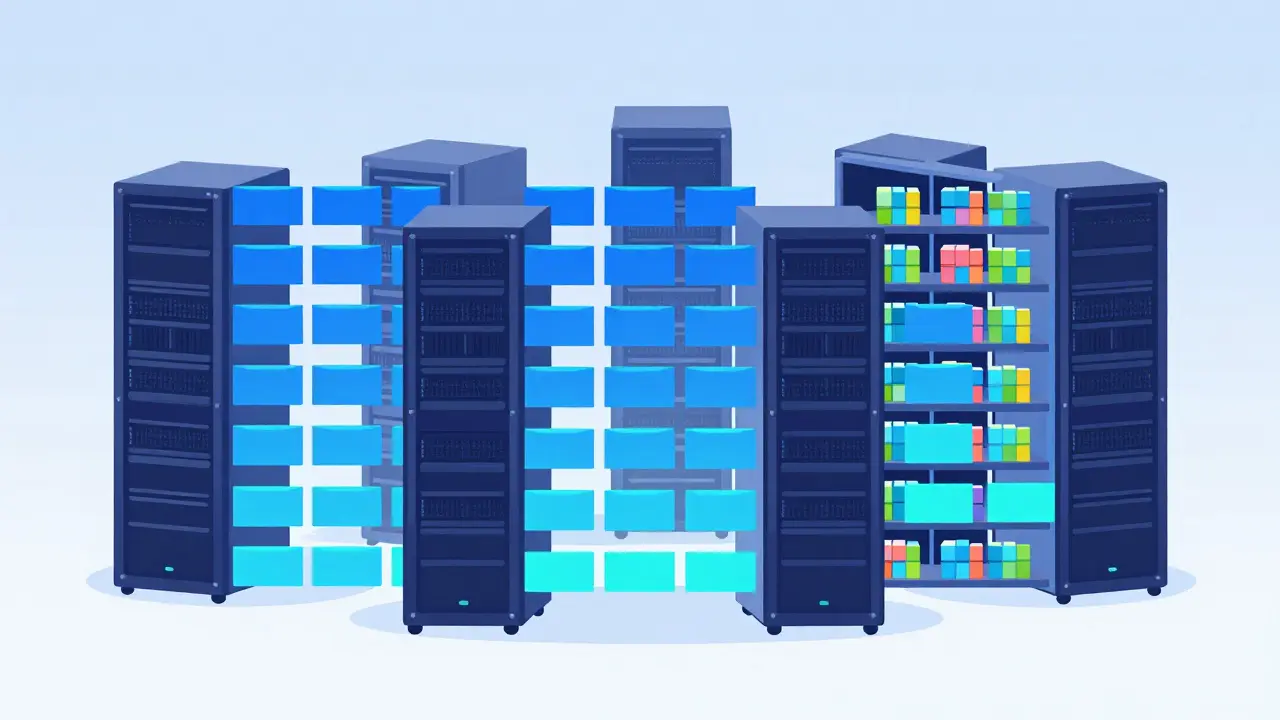
Data Sharding vs Transaction Sharding: Understanding the Architecture Reality
Mar 30, 2026, Posted by Ronan Caverly
Clears up the confusion between data sharding and the myth of transaction sharding, explaining how distributed systems actually scale data versus managing logical transactions.
MORE
Sybil Attack on Peer-to-Peer Networks: How Fake Nodes Threaten Blockchain Security
Mar 23, 2026, Posted by Ronan Caverly
A Sybil attack lets one attacker control hundreds of fake nodes in a peer-to-peer network, threatening blockchain security. Learn how Bitcoin stays safe, why small chains get hacked, and what Proof of Stake and social trust graphs do to stop them.
MORE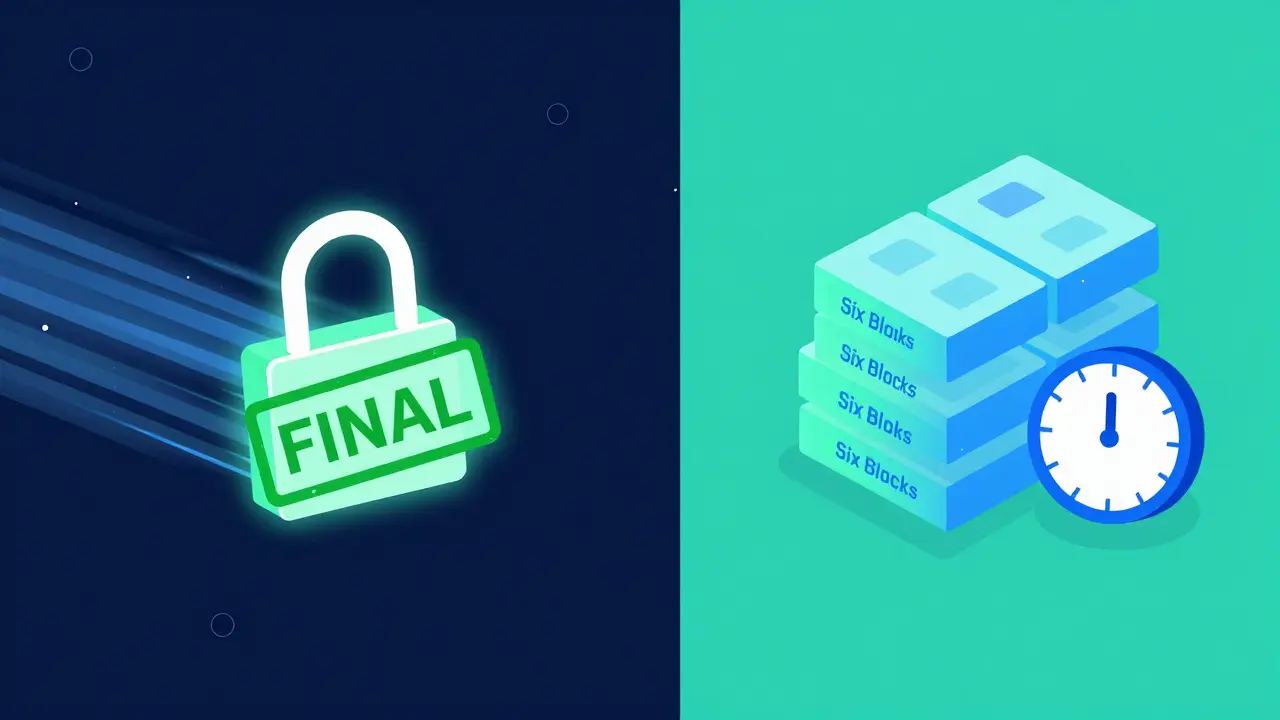
Fast Finality Trade-offs in Blockchain: Speed vs. Security Explained
Jan 20, 2026, Posted by Ronan Caverly
Fast finality in blockchain lets transactions settle in seconds, but it comes with trade-offs in security, decentralization, and cross-chain reliability. Understand how speed impacts your crypto use cases.
MORE
Understanding Private Blockchain for Enterprises: How It Works and When to Use It
Jan 12, 2026, Posted by Ronan Caverly
Private blockchains let enterprises control access, improve privacy, and automate processes without public exposure. Learn how Hyperledger Fabric, Corda, and Quorum solve real business problems - and when to avoid them.
MORE
Top Blockchain as a Service (BaaS) Providers in 2025
Jan 1, 2026, Posted by Ronan Caverly
In 2025, leading Blockchain as a Service providers like Rapid Innovation, Kaleido, and BlockApps let enterprises deploy secure, scalable blockchain networks without managing infrastructure. Discover who’s leading the market and how to choose the right platform.
MORE
Validator vs Full Node Differences: What You Need to Know in 2025
Dec 7, 2025, Posted by Ronan Caverly
Understand the key differences between validator and full nodes in blockchain networks in 2025. Learn what each does, their costs, rewards, risks, and who should run which one.
MORE
Decentralized Exchange Order Books Explained: How They Work and Why They Matter
Dec 1, 2025, Posted by Ronan Caverly
Decentralized exchange order books let traders buy and sell crypto directly with others, using real-time bid and ask prices. Unlike AMMs, they offer precise control, deeper liquidity for large trades, and transparent market data-ideal for serious traders.
MORE
Privacy Protocols on Public Blockchains: How They Protect Your Transactions
Oct 25, 2025, Posted by Ronan Caverly
Explore how privacy protocols like Monero, Zcash, Aztec and Tornado Cash hide transaction details on public blockchains, their cryptographic methods, regulatory challenges, and future trends.
MORE
Blockchain Technology: Key Benefits and Major Limitations Explained
Oct 20, 2025, Posted by Ronan Caverly
Explore the real advantages and key drawbacks of blockchain technology, learn where it shines, why it struggles, and how emerging solutions aim to close the gap.
MORE
Blockchain for Supply Chain Transparency: How It Works & Benefits
Oct 12, 2024, Posted by Ronan Caverly
Discover how blockchain creates transparent, tamper‑proof supply chains, the benefits over traditional systems, real‑world case studies, challenges, and a step‑by‑step adoption roadmap.
MORESEARCH HERE
Categories
TAGS
- decentralized exchange
- crypto exchange review
- crypto exchange
- cryptocurrency
- crypto coin
- crypto airdrop
- CoinMarketCap airdrop
- smart contracts
- MiCA
- cryptocurrency trading
- tokenomics
- DeFi
- cryptocurrency exchange safety
- crypto airdrop 2025
- cryptocurrency airdrop
- cryptocurrency exchange
- meme coin
- blockchain security
- blockchain gaming
- crypto airdrop guide